
We earn a commission if you buy through these links. Learn more
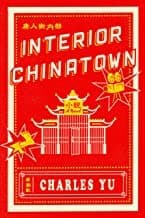
Interior Chinatown
by Charles Yu
A National Book Award winner that turns a cop show set in Chinatown into a sharp, funny look at race, family, and who gets to be a full person.
What It's About
Interior Chinatown is a novel that borrows the shape of a screenplay. Its narrator, Willis Wu, is a background actor who has spent years playing 'Generic Asian Man' on a long-running police drama called Black and White. The show's Chinatown exists mostly as a set, and the book's formal trick is to lay out its pages as scene headings, stage directions, and script dialogue, so the reader keeps seeing how the story is being staged.
The novel moves between Willis's life inside the show's world and his life offscreen, where he is a son trying to understand his father and a man trying to imagine a role bigger than the one he has been handed. The humor is dry and quick, and the sadness tends to arrive sideways. The sections are short, so the book reads fast even while it is doing serious thinking about how Asian Americans have been cast, described, and overlooked.
Reading it feels like watching a clever show that keeps pausing to ask why it is built the way it is. Some readers find the format cold or the gags repetitive. Others find the form is the whole point. It rewards close attention to small details and is worth rereading.
Read this if you…
- want a funny, formally inventive novel about Hollywood and identity
- are interested in how representation works on screen and in everyday life
- enjoy books where the structure carries as much meaning as the plot
Skip it if you…
- want a conventional novel with long, immersive narrative prose
- prefer a clear plot with steady forward momentum
Key Ideas
- 1
Being cast as background in your own life
Willis is a man who keeps getting written as a supporting figure, even by himself. The book asks what it costs to accept a small part in other people's stories and how easily that habit spreads from the set into ordinary life, family included.
- 2
Stereotype as a set people live inside
The Chinatown on the show is a rented backdrop built from shorthand about mystery, food, and danger. Yu shows how a fake place can still shape real lives, because people who work there and people who watch it both start to treat the shorthand as the truth.
- 3
Screenplay form as an argument
The script layout is not decoration. It makes the reader aware of who is directing, who speaks, and who is only a line of description. Each formatting choice pushes against the idea that Asian characters are defined from outside the frame.
- 4
Family and inheritance across generations
Alongside the show's satire runs a more personal thread about a father and son who have different ideas about success, survival, and what it means to be seen. The emotional core is quieter than the premise suggests and comes through in small exchanges.
- 5
Humor as a way of surviving erasure
The jokes are not just relief. They are how Willis and the people around him deal with being reduced. The book treats comedy as both a defense and a trap, and it lets the reader feel the difference between laughing with a character and laughing at him.
Limitations
Some readers find the screenplay format distancing and feel the satire sometimes lands on the same point more than once. The book is focused on the experience of Asian American men in a specific media world, so readers looking for a broad survey of Asian American life may find it narrow. Its commentary on Hollywood also reflects the industry as it was around its 2020 publication, and some of its targets may feel dated to newer readers.
Questions Readers Ask
- Is Interior Chinatown hard to read?
- The sentences are plain and the format is quick to follow, so the book is accessible. The harder part is the ideas: it asks you to notice how the form itself makes arguments about who is central and who is background. Most adult readers can finish it in a few sittings, but it rewards slowing down.
- Is it similar to other novels about race and Hollywood?
- It shares ground with satirical novels about race and media, but its screenplay structure sets it apart. If you liked the blend of comedy and critique in other award-winning fiction about identity, you will likely find this one fresh. Readers wanting a more traditional narrative may prefer a different choice.
- Published
- 2020
- ISBN
- 9780307907196
- Difficulty
- intermediate
- Category
- Fiction
Book details and cover from Google Books.
Ready to read Interior Chinatown?
Get your copy on Amazon, or listen to it on Audible. We earn a commission if you buy through these links.