
We earn a commission if you buy through these links. Learn more
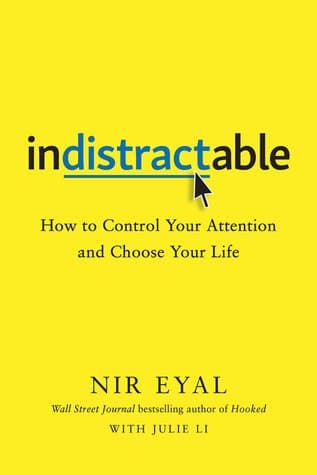
Indistractable
by Nir Eyal
Guide by the Books of the Day editors · Updated · How we write our guides
A practical, tool-heavy guide to resisting phone and app pulls by managing internal triggers, scheduling time deliberately, and setting pre-commitments, from a writer who knows how these products are built.
What Creators Say About Indistractable
2 creators reviewed Indistractable on YouTube between 2019 and 2020, with 206.7K views between them. Their opinions are their own; we picked these reviews, we didn't write them.
What It's About
Indistractable is Nir Eyal's follow-up to Hooked, his book about how products build habits. Here he turns the lens toward the reader. The central claim is that distraction is mostly not caused by screens themselves but by our attempts to escape uncomfortable feelings, such as boredom, anxiety, or fatigue. Once you see that, the fix is less about willpower and more about changing how you plan your days, respond to cues, and arrange your surroundings.
The book is organized as a set of named concepts and exercises rather than a narrative. Eyal introduces ideas like traction (moving toward what you care about) and distraction (drifting away from it), then offers methods such as timeboxing your calendar, making pre-commitments that make unwanted behavior harder, and adjusting notifications and apps so that outside prompts lose their grip. Many examples come from his own family life and work, and the tone is upbeat, direct, and fairly quick to read.
The experience is less like absorbing a theory and more like working through a checklist with a coach. You will likely finish with specific settings to change and a plan for the week ahead. Readers who want deep research or a critique of the technology industry will find it lighter than they might hope.
Read this if you…
- Feel that your phone and apps are taking time you meant to spend on work or people you care about
- Want concrete routines, calendar methods, and settings you can apply this week
- Prefer a practical, encouraging voice over academic research or cultural criticism
Skip it if you…
- Want a deep investigation into how technology companies design addictive products, since Eyal's own earlier book covers that ground in more depth
- Find self-help advice that frames attention as purely a personal responsibility unhelpful
Key Ideas
- 1
Distraction starts with discomfort
Eyal argues that we reach for our phones to escape an unpleasant internal state, not simply because a notification appeared. Recognizing the feeling that prompts the escape, whether boredom, uncertainty, or a task you dread, is the first step to changing the pattern. This reframes distraction as an emotional management problem rather than a character flaw.
- 2
Traction versus distraction
The book proposes a simple test: does a given activity move you toward what you value, or away from it? Eyal uses this idea to help readers audit their days and separate work and relationships that matter from time lost to drift. The framing is practical because it asks you to define your own priorities before judging any app.
- 3
Timeboxing your schedule
Rather than working from an open to-do list, Eyal recommends assigning every block of time a specific purpose on a calendar. This makes it easier to notice when you are drifting and to decide in advance what should happen next. The method is simple to try and is one of the book's most transferable tools.
- 4
Pre-commitment through pacts
Pacts are arrangements you make ahead of time that raise the cost of a distraction, such as leaving your phone in another room or using tools that block certain sites. Eyal argues that deciding under calm conditions beats relying on in-the-moment self-control. The idea rests on the reasoning that environment shapes behavior more than resolve does.
Limitations
Critics say the book puts most of the responsibility for distraction on the individual and gives less attention to the business models and design choices of the platforms involved. Some readers find the examples and anecdotes repetitive, and the tone can feel salesy to those who prefer a more skeptical approach. Because it draws on the author's own experience and general behavioral observations, the advice is more practical than rigorously tested, and some of its tactics will work better for some people, jobs, and households than for others.
Questions Readers Ask
- Is Indistractable worth reading if I already use productivity apps?
- Often yes, because the book is less about which app to use and more about the emotional triggers and planning habits behind distraction. Even experienced planners tend to pick up a few useful ideas about pre-commitment and timeboxing. If you already have a system that works, you may only need to skim the chapters on triggers and pacts.
- How does it compare to Hooked by the same author?
- Hooked explains how companies build habit-forming products from the designer's point of view. Indistractable turns to the individual user and asks how to resist those products and manage your own attention. Read Hooked first if you want to understand the mechanics; read Indistractable if you want to act on them.
- Published
- 2019
- ISBN
- 9781526610201
- Difficulty
- beginner
- Category
- Psychology
Book details and cover from Google Books.
Ready to read Indistractable?
Get your copy on Amazon, or listen to it on Audible. We earn a commission if you buy through these links.