
We earn a commission if you buy through these links. Learn more
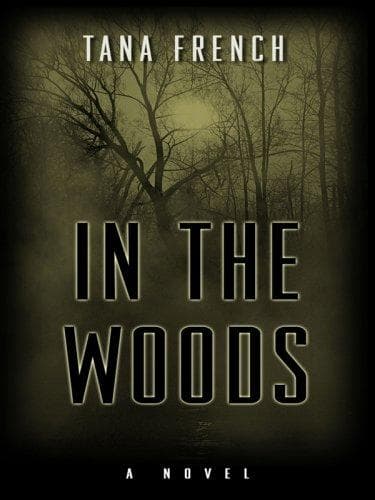
In the Woods
by Tana French
Tana French's debut opens the Dublin Murder Squad series with a murder case that digs into a detective's own buried childhood, and a psychological puzzle that rewards patience.
What It's About
In the Woods follows Rob Ryan, a Dublin detective assigned to a murder in a patch of suburban woodland near his childhood home. A twelve-year-old girl has been killed, and the case lands in the place where Rob, as a boy, was one of three children who vanished for weeks in 1984. He was found alive, but he remembers almost nothing of what happened, and he has built a new identity around not looking back. Because the investigation keeps pulling him toward that past, the book becomes as much about memory and self-deception as about who killed the girl.
French writes in close first person, so the reader lives inside Rob's head. His observations are sharp and often funny, but they are also unreliable in a way that slowly becomes part of the mystery. The pacing is deliberate. Much of the pleasure comes from atmosphere, from the texture of squad-room banter, interviews with neighbours and parents, and the gradual accumulation of small contradictions. Readers who want quick clues and a brisk plot may find it slow at first.
Reading it feels less like solving a puzzle and more like sitting with a damaged man while he works out what he is willing to know. The crime story is absorbing on its own terms, but the emotional undertow is what lingers after the last page.
Read this if you…
- enjoy slow-burn crime novels where character and atmosphere matter as much as the plot
- want a psychologically complex narrator whose reliability you have to test as you read
- like Irish settings and the texture of everyday Dublin life
Skip it if you…
- need a fast, clue-driven puzzle with a quick pace from the first chapter
- find unreliable narrators frustrating rather than engaging
Key Ideas
- 1
Memory as the central mystery
The case is a murder investigation, but the deeper question is what Rob has chosen to forget and why. French treats amnesia less as a plot device than as a form of self-protection, and the investigation forces him to weigh the cost of remembering against the comfort of a constructed life.
- 2
Unreliable first-person narration
Rob tells the story from inside his own head, and his perceptions are shaped by his need to stay composed. The gaps and evasions in his account are deliberate, and part of the reading experience is noticing where he is shading the truth, including from himself.
- 3
Identity built on concealment
Rob has deliberately become someone other than the boy he was, and the book examines how fragile that reinvention is. Each interview with someone from his past threatens to expose the seams, and the tension between the person he presents and the person he was drives much of the story.
- 4
Friendship and partnership under strain
Rob's relationship with his partner Cassie is one of the most carefully drawn parts of the book. Their working bond, with its trust, jokes, and unspoken limits, gives the procedural scenes warmth and gives the reader someone to measure Rob's honesty against.
- 5
A small community and its silences
The suburban setting is less a backdrop than a character. French shows how a close-knit neighbourhood holds onto old stories, protects its own, and withholds information, so the investigation is as much about social loyalty as about evidence.
Limitations
Some readers find the pacing slow, particularly in the middle, where the investigation circles the same people and memories. The first-person voice is charming but can feel self-indulgent to readers who want more distance from the detective. The book is also heavily tied to the Dublin setting and its police culture, so the dialogue and references may take some adjustment for readers unfamiliar with Irish English. Its gender and class dynamics reflect the mid-2000s and may read as dated to some.
Questions Readers Ask
- Do I need to read the Dublin Murder Squad books in order?
- Each novel in the series has a different lead detective and a self-contained case, so you can start here without confusion. However, this first book sets up the squad, the working relationships, and some background that later books build on. Reading it first gives you the most context and is the most common recommendation for newcomers.
- How does it compare to Gillian Flynn's thrillers?
- Both use an unsettling narrator and a psychological focus, but French is more patient and more interested in place and community than in twists. Flynn tends to be sharper and more plot-driven. Readers who enjoy Flynn's dark interiority often find French rewarding, though the reveals here build more slowly and quietly.
- Published
- 2001
- ISBN
- 9783502101918
- Difficulty
- intermediate
- Category
- Mystery & Thriller
Book details and cover from Google Books.
Ready to read In the Woods?
Get your copy on Amazon, or listen to it on Audible. We earn a commission if you buy through these links.