
We earn a commission if you buy through these links. Learn more
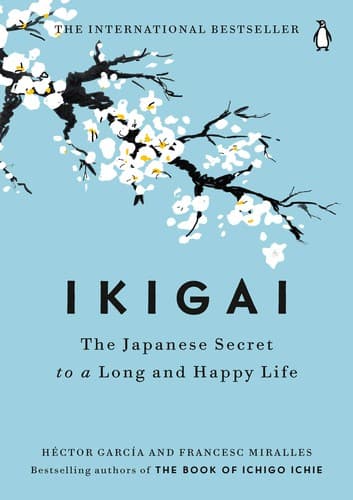
Ikigai
by Héctor García, Francesc Miralles
A short, warm guide to the habits of Okinawan villagers who live long lives, built around the idea of having a reason to get up each morning.
What It's About
Ikigai is a short, friendly book about a Japanese idea usually translated as a reason for being, the thing that makes life feel worth getting out of bed for. Its authors, Héctor García and Francesc Miralles, use the village of Ogimi on Okinawa as their main example, drawing on the stories of older residents to show how purpose, daily routine, and close friendships can shape how people age.
The approach is anecdotal and conversational rather than academic. Chapters move through a mix of practical habits and reflections, so the reading experience feels more like sitting with a thoughtful friend than working through a study. The tone is gentle and encouraging, and the book is easy to finish in a sitting or two.
What you get is a set of simple, everyday ideas you can test in your own life: keeping a small daily purpose, eating moderately, staying socially connected, moving without pressure, and worrying less. If you want a rigorous account of how Japanese culture or longevity science actually works, you will need to look further, because this book prefers inspiration and lived examples to detailed evidence.
Read this if you…
- want a gentle, practical starting point for thinking about purpose in later life
- are curious about the habits people associate with long lives in Okinawa
- prefer short, accessible reads full of human stories over dense argument
Skip it if you…
- want rigorous scientific evidence on longevity, diet, or aging
- expect a deep, scholarly account of Japanese culture and the meaning of ikigai
Key Ideas
- 1
A small purpose that gets you up
Ikigai is presented as something modest and personal rather than a grand life mission. The book argues that a daily reason to engage, such as tending a garden, caring for someone, or pursuing a craft, gives ordinary days a sense of direction. Its main appeal is the suggestion that meaning can be built from routines you already have.
- 2
Eating moderately, not strictly
The book describes the Okinawan saying hara hachi bu, which encourages stopping eating when you feel about eighty percent full. Presented as a practical habit rather than a diet, it is framed as one of several small choices that add up over decades. The point is restraint that feels sustainable, not deprivation.
- 3
Friendship groups as lifelong support
The book highlights the moai, a tradition of small groups who stay together over many years, offering practical and emotional support. It treats steady social bonds as one of the strongest predictors of a good later life. Readers may find this section the most actionable for building connection in their own communities.
- 4
Gentle movement and letting worries go
Rather than recommending intense exercise, the book describes activity woven into daily life, such as walking, gardening, and light work. It pairs this with a relaxed attitude toward stress and a habit of staying absorbed in the present. The emphasis is on steady, low-pressure engagement over time.
Limitations
Critics point out that the book leans heavily on anecdote and on a small number of people in one village, so its claims are not backed by controlled research. The Western, diagram-friendly version of ikigai that became popular is far from the nuanced Japanese concept, and the book simplifies cultural context. Some of the lifestyle advice is familiar and generic. The book is also listed here under Tech, though it is really a lifestyle and self-help title, so readers searching for technology content will not find it.
Questions Readers Ask
- Is Ikigai a tech book?
- No. Despite the Tech category listed for this page, Ikigai is a lifestyle and self-help book about purpose, habits, and healthy ageing, drawing on Japanese cultural ideas. It contains no technical subject matter, so readers looking for technology should choose a different title.
- Is the advice in Ikigai scientifically sound?
- Much of it is reasonable and consistent with general health advice, such as staying social, moving regularly, and eating moderately. However, the book relies on stories and observations rather than rigorous studies, so treat its claims as suggestions to try rather than proven facts.
- How does Ikigai compare to Man's Search for Meaning?
- Both explore purpose, but Ikigai is shorter, lighter, and focused on everyday habits and longevity. Frankl's book is a deeper, more intense reflection grounded in his experience of the Holocaust. Choose Ikigai for a gentle, practical start, and Frankl for a more profound and challenging read.
- Published
- 2016
- ISBN
- 9781469007434
- Difficulty
- beginner
- Category
- Tech
Book details and cover from Google Books.
Ready to read Ikigai?
Get your copy on Amazon, or listen to it on Audible. We earn a commission if you buy through these links.