
Eleanor & Park
Rainbow Rowell
Like Nelson's novel, it is a young adult love story told with close, emotionally sharp attention to how teenagers feel things, and it lingers on the awkwardness and tenderness of first real connection.
Reader-supported: when you buy through links on our site, we may earn an affiliate commission. Learn more
We earn a commission if you buy through these links. Learn more
Find Similar Booksby Jandy Nelson
Guide by the Books of the Day editors · Updated · How we write our guides
A lyrical, grief-soaked YA novel about twins whose bond frays after a family loss, told with an emotional intensity that lingers long after the last page.
2 creators reviewed I'll Give You the Sun on YouTube in 2015, with 53K views between them. Their opinions are their own; we picked these reviews, we didn't write them.
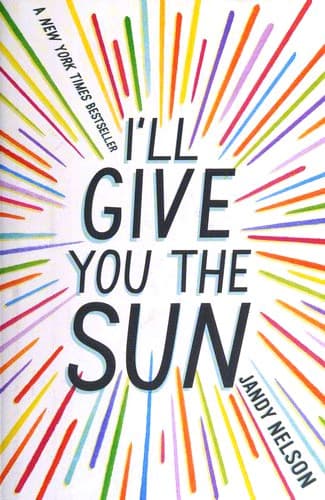
I'll Give You the Sun is a young adult novel by Jandy Nelson that follows twins Noah and Jude Sweetwine across two timelines. Noah narrates the earlier period, when the two are young and nearly inseparable, and Jude narrates a later stretch as a teenager, after something has broken between them. The chapters alternate so you see the same family events from two angles, and the gaps between what each sibling knows become a source of tension.
The prose is the main event. Nelson writes in a dense, image-heavy style, with long run-on sentences, metaphors that stack up, and lists that sound like someone talking fast to keep from crying. Art runs through everything: the twins see the world through their creative work, and the book often reads more like a series of brushstrokes than a plot-driven story. Expect a slower start than many contemporary YA novels and a lot of sensory detail about the coastal California setting.
Reading it feels like sitting with two grieving people who love each other badly and then, slowly, better. It is romantic, funny in places, and often painful, and its emotional payoff depends on your patience with the style. Think of it as a book you live inside rather than one you race through.
The death of the twins' mother is the wound under everything. Nelson is less interested in the event itself than in how each sibling responds to it, often in ways that hurt the other. The book treats grief as something that changes how people speak, make art, and decide who to trust.
Alternating narrators let the reader see how the same period looked to two people who shared a childhood but not a perspective. Noah and Jude misread each other constantly. Part of the pleasure is piecing together what each one is hiding, and why.
Making art is how both characters process the world, and the prose mirrors that habit of noticing. The book asks what it means to create something when you feel unable to speak plainly. Readers who care about creative life will find this thread especially rich.
Superstitions, private routines, and half-believed rules show up as ways the characters try to control what they cannot. Nelson presents these habits with sympathy rather than mockery. They reveal how fear and hope get tangled when people are grieving.
Romance runs alongside the family story, and both threads push the characters to figure out their own desires and identities. The love stories are tender and intense, and they often expose how much the characters have been hiding from themselves and each other.
The style is the book's greatest strength and its biggest obstacle. Some readers find the figurative language overwrought and repetitive, and the long run-on passages can feel tiring over hundreds of pages. The emotional register rarely lets up, so the grief can start to feel relentless. Others find the mix of tragedy and romance uneven, with some threads more convincing than others. The novel also leans heavily on coincidence and symbolism, which not every reader will accept.
Book details and cover from Google Books.
Ready to read I'll Give You the Sun?
Get your copy on Amazon, or listen to it on Audible. We earn a commission if you buy through these links.
Rainbow Rowell
Like Nelson's novel, it is a young adult love story told with close, emotionally sharp attention to how teenagers feel things, and it lingers on the awkwardness and tenderness of first real connection.
R. J. Palacio
It shares the warm focus on family, a sibling's place in a household, and kindness under pressure, offering the same emotional payoff of seeing people from more than one point of view.
Stephen Chbosky
Its intimate, confessional voice and honest look at grief and identity echo the raw inner life that makes I'll Give You the Sun so affecting.
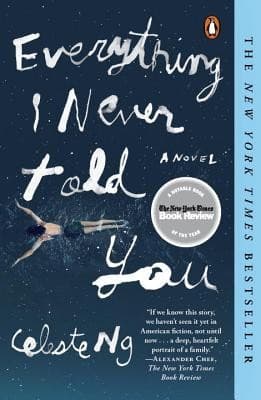
Celeste Ng
A family shattered by loss and the secrets siblings and parents keep from one another, written with the same careful attention to how grief distorts the people left behind.