
We earn a commission if you buy through these links. Learn more
I Am a Strange Loop
A patient, sprawling attempt to explain how a self can arise from a brain's tangled symbol-making, offering a vivid frame for consciousness but asking a lot of readers.
What It's About
I Am a Strange Loop is Douglas Hofstadter's late attempt to say what a self is. His central move is to treat the self not as a mysterious inner spark but as a pattern: a self-referring structure that emerges when a system is complex enough to represent itself. He calls this a strange loop, a sequence of climbing levels that unexpectedly returns to where it started. The image lets him talk about minds, selves, and even the soul without dismissing them as illusions.
The book moves slowly and circles back on itself, much like its subject. Hofstadter builds his argument through analogies, extended thought experiments, and recurring motifs drawn from his earlier work, including Gödel's incompleteness theorem, Escher's drawings, and Bach's canons. He writes in a conversational, often playful voice, and he makes room for personal reflection, including grief over losses in his own life. Readers should expect digressions and repetition, and the pace can feel either leisurely or padded depending on your patience.
Reading it feels less like absorbing a finished theory and more like sitting with a thinker who keeps returning to the same question from new angles. Some passages are dazzling, while others strain to make an analogy carry more weight than it can hold. The reward is a sustained, humane meditation on what it means to be a self, written by an author who clearly wants the reader to follow along.
Read this if you…
- are curious about how the mind relates to physical brain processes and want a long philosophical treatment of selfhood.
- enjoyed Gödel, Escher, Bach and want to see its themes extended to questions of personhood.
- are comfortable with slow, repetitive writing that rewards rereading.
Skip it if you…
- want a concise, evidence-driven account of neuroscience or consciousness research.
- want a clear, linear argument rather than analogies and digressions.
Key Ideas
- 1
The self as a self-referring pattern
Hofstadter proposes that the 'I' is a symbol the brain uses to represent itself, a pattern that refers back to the system producing it. On this view the self is not a separate thing sitting on top of neurons but a recurring structure in the brain's symbol activity. The idea reframes identity as something that is organized rather than located in one place.
- 2
Strange loops across levels of description
A strange loop is a hierarchy in which moving upward through levels eventually brings you back to the bottom. Hofstadter finds such loops in formal logic, in visual art, and in language and perception. He uses them as a template for how a mind can contain a model of itself without any single component being in charge.
- 3
Minds modeling other minds
Hofstadter argues that we build internal models of other people and then turn those same models on ourselves. Our sense of who we are is partly borrowed from how we perceive others. This social dimension of selfhood is one of the book's more intuitive threads, and it helps explain why the self feels both private and shared.
- 4
Resisting the view that selves are illusions
Hofstadter pushes back against reductive claims that the self is nothing more than an illusion or a story the brain tells. He argues that a pattern made of physical parts can still be real and meaningful. The position is philosophically careful, though readers who expect a clean stance from a scientist may find it more poetic than decisive.
- 5
Persistence of minds in others
The book explores how a person's patterns can live on in the minds of those who knew them. Hofstadter treats this as a partial and imperfect continuation rather than a mystical survival. The discussion is tied to his own experience of loss, which gives the argument an emotional weight that more abstract philosophy often lacks.
Limitations
Critics argue that the book leans heavily on analogy and metaphor where precise argument is needed, and that its central claims are hard to test. Its discussion of the brain is more speculative than current neuroscience of consciousness, and it engages less with rival theories from philosophy of mind and cognitive science. The length and repetition are common complaints, and some readers find the personal passages and authorial self-regard distracting. It is a late-career synthesis, so it reflects one thinker's long preoccupations more than a survey of the field.
Questions Readers Ask
- Who is this book best suited to?
- It suits readers who already enjoy Hofstadter's earlier work or who like long, essayistic philosophy of mind and identity. Newcomers to the subject can read it, but they should expect a demanding, meandering text. Patience with repetition matters more than prior technical knowledge.
- Should I read it before Gödel, Escher, Bach?
- Not necessarily. Gödel, Escher, Bach is broader and more playful, covering mathematics, art, and music. I Am a Strange Loop narrows its focus to selfhood and is more personal in tone. Either can be read first, though the earlier book gives useful background for the recurring ideas.
- Published
- 2007
- ISBN
- 9780465030781
- Difficulty
- advanced
- Category
- Psychology
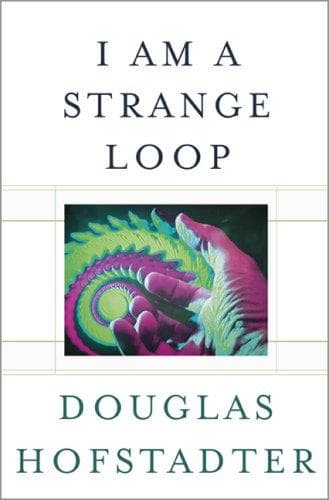
Book details and cover from Google Books.
Ready to read I Am a Strange Loop?
Get your copy on Amazon, or listen to it on Audible. We earn a commission if you buy through these links.