
We earn a commission if you buy through these links. Learn more
Howl
Ginsberg's landmark 1956 poem turns a generation's grief and rage into breath-driven lines that read like prayer, protest, and jazz at once.
What It's About
Howl is a poem, not a novel, so the Fiction label on this listing is a mismatch. Readers should expect verse. The title poem runs several pages across three sections followed by a short footnote. Ginsberg first read it aloud in San Francisco in 1955, and it was published in 1956 as part of a small collection. It is built on long, breath-length lines that pile clause on clause, a style closer to speech, sermon, and jazz than to the tidy stanzas many people learned in school.
The poem speaks to a generation of friends and strangers whom Ginsberg saw as damaged by poverty, drugs, institutions, and a society he found hostile to dissent. The first section is a catalogue of people and places. The second turns to the forces the poet blames. The third speaks directly to a friend held in a psychiatric hospital, Carl Solomon, to whom the poem is dedicated. Throughout, Ginsberg borrows from Whitman's catalogues and from the cadences of prayer.
Reading it is less like following an argument than like being carried by a voice. Repetition does most of the work, and anger and tenderness arrive together. Expect explicit language and dense references to mid-century American places and names. A short commentary or notes section helps, and reading it aloud once makes the rhythm clear.
Read this if you…
- want poetry that sounds like speech, sermon, and music at once
- are curious about the Beat generation and mid-century American counterculture
- enjoy poems that build power through repetition and rhythm rather than rhyme
Skip it if you…
- need tight, quiet, highly compressed lyric poems with few words
- want a clear argument or story you can summarize neatly afterward
Key Ideas
- 1
A generation seen as wreckage
The poem's core claim is that the best people of its time were being ruined by madness, addiction, poverty, and a conformist culture. Ginsberg does not offer a neat diagnosis. He lists, mourns, and accuses, and the sheer accumulation of damaged lives becomes the argument. Readers should come ready to sit with grief and fury that are not resolved by the end.
- 2
Breath as the unit of form
Ginsberg organizes the lines by how long a single spoken breath can carry them, not by meter or rhyme. This makes the poem feel urgent and physical, as if it were being shouted or chanted in one sustained effort. Reading it silently still reveals the pattern, which is why many readers find the sound of it more important than any single image.
- 3
Catalogue and litany as method
The poem relies heavily on repeated opening words and long lists, drawing on Whitman's catalogues and on liturgical repetition. These lists build momentum and a sense of communal witness. The effect is cumulative: a single line may seem loose, but the full sweep of the repetitions produces a powerful emotional rhythm.
- 4
Private friendship inside public protest
The third section shifts from broad social accusation to a direct address to a single friend in a hospital. This move ties the poem's political anger to intimate loyalty. Readers who expect only social critique will find a surprisingly personal core, and the blend of tenderness with outrage is central to why the poem still moves people.
Limitations
The poem is tied closely to its moment. Its references to people, places, drug culture, and institutions often need footnotes for readers without that background. Some critics find the rhythms mannered and too indebted to Whitman, and the anger can feel repetitive to readers who prefer restraint. Because the poem's obscenity trial and shock value are now well known, it can feel tamer than its reputation suggests. It is also only one part of a slim collection, so readers may want the surrounding poems for context.
Questions Readers Ask
- Is Howl a novel or a poetry collection?
- It is a poem. The title piece is a long, multi-part work that appeared in the 1956 collection Howl and Other Poems. Despite the Fiction category on this listing, you should expect verse with strong narrative and personal elements rather than prose fiction. It takes about an evening to read carefully, and it works best aloud.
- Is Howl still worth reading today?
- Yes, especially if you want to see how modern American poetry broke from formal conventions. Its shock has faded, but its voice, its rhythm, and its mix of grief and defiance still feel direct. Reading it alongside a short biography or commentary helps younger readers understand the references and the stakes.
- How does Howl compare to Whitman's Leaves of Grass?
- Both use long lines, lists, and a bold public voice. Whitman's tone is expansive and celebratory, while Ginsberg's is angrier, more urgent, and more confessional. If you like Ginsberg, Whitman is the natural next step. If you find Whitman too sunny, Ginsberg offers a sharper and more wounded version of the same energy.
- Published
- 1959
- ISBN
- 9780670815999
- Difficulty
- intermediate
- Category
- Fiction
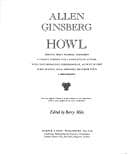
Book details and cover from Google Books.
Ready to read Howl?
Get your copy on Amazon, or listen to it on Audible. We earn a commission if you buy through these links.