
We earn a commission if you buy through these links. Learn more
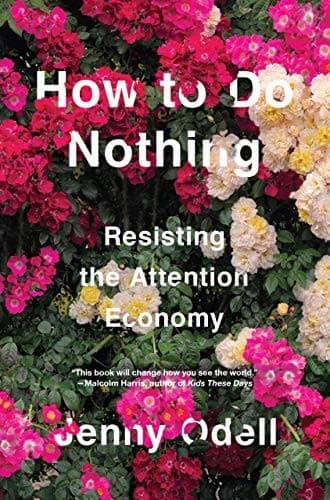
How to Do Nothing
by Jenny Odell
Guide by the Books of the Day editors · Updated · How we write our guides
Jenny Odell's essay-driven argument that attention is being harvested by platforms, and that the answer is reorienting where you look and who you look with, not a productivity fix.
What Creators Say About How to Do Nothing
2 creators reviewed How to Do Nothing on YouTube between 2019 and 2021, with 100.3K views between them. Their opinions are their own; we picked these reviews, we didn't write them.
What It's About
How to Do Nothing is an essay-driven book by Jenny Odell, an artist and writer based in the San Francisco Bay Area, about the way platforms built on advertising have turned human attention into something to be captured and sold. Rather than offering a productivity system or a weekend digital detox, Odell asks what attention is for in the first place and what it would mean to direct it toward things that matter to us. The book's answer is less a list of rules than a shift in how you stand toward your days.
The style is discursive and personal. Odell moves between critical theory, art history, ecology, and accounts of her own time spent in local places, such as a former landfill turned public art space near Berkeley and the birds she learns to recognize. Her examples are concrete and her sentences are careful, so the reading is slower than the topic might suggest. Expect detours and pauses rather than a single line of argument you can summarize in one sentence.
The experience is closer to a long walk with a thoughtful companion than to a manual. Odell is candid about her own ambivalence and about the privilege that shapes who can step away from feeds at all. Readers who want practical steps will find a framework and some suggestions, but the real payoff is a changed sense of what counts as attention worth giving. Plan to read it with a notebook and a willingness to be unsettled.
Read this if you…
- are tired of feeling that your phone is running your attention and want a serious argument rather than a tip list
- are interested in how ecology, art, and technology connect and enjoy essayistic writing
- want a reflective book that treats attention as a political and communal question, not only a personal habit
Skip it if you…
- want a practical plan with steps, schedules, or app settings to follow
- prefer fast, tightly structured nonfiction and find digressive essays frustrating
Key Ideas
- 1
Attention as a commodity
Odell argues that attention has become the product platforms sell to advertisers, so app design rewards constant, shallow engagement. She treats this as an economic arrangement rather than a personal failing, which moves the question away from willpower and toward the systems that shape our habits.
- 2
Refusal as reorientation, not escape
Doing nothing does not mean idleness or retreating from the world. Odell means a deliberate refusal of the attention economy's terms, paired with a turn toward what you actually care about. The emphasis falls on where your attention lands once you stop feeding the machine.
- 3
Attention to place and local ecology
A central move is redirecting attention to the immediate surroundings: a neighborhood, a patch of land, and the birds and plants that share it. Odell's own observations show how close looking can build context and belonging in ways that feeds rarely do.
- 4
The limits of individual digital detox
Odell is skeptical that personal abstinence alone fixes much. She questions whether a solo digital detox is a sufficient response and points toward collective forms of attention and care. Her critique of individualism runs through the whole book.
- 5
Art and the politics of looking
Odell draws on art and art history to argue that attentive practices can resist dominant ideas of value. Her background as an artist shapes how she thinks about noticing, making, and the social meaning of time spent looking closely.
Limitations
Common criticisms are that the book can feel loose or meandering, with arguments that circle rather than build, and that its anti-capitalist framing offers more diagnosis than concrete alternatives. Its privileged standpoint is a real issue, since stepping away from attention-harvesting platforms is far easier for some people than others, and Odell acknowledges this only in part. Because it was published in 2019, its references to specific platforms and the media landscape of the late 2010s feel somewhat dated now, though the core critique has held up.
Questions Readers Ask
- Is How to Do Nothing a digital detox guide?
- No. It is closer to a philosophical and political essay about attention than a how-to manual. Odell does discuss ways of withdrawing and reorienting, but her aim is to question why attention is captured in the first place and what we might direct it toward, especially through place and community.
- How does it compare to Cal Newport's Digital Minimalism?
- Newport offers a practical, structured framework for cutting digital clutter and reclaiming time. Odell is more philosophical and political, examining the economic logic behind attention and emphasizing local place and shared life. Readers who want actionable steps may prefer Newport, while those interested in the deeper critique will likely find Odell more rewarding.
- Is the book still relevant?
- Its central argument about the attention economy has become more relevant, not less. Some of the specific platform references are dated, but Odell's focus on how attention is shaped, sold, and reclaimed still speaks to current debates about feeds, notifications, and screen time.
- Published
- 2019
- ISBN
- 9781612197494
- Difficulty
- intermediate
- Category
- Tech
Book details and cover from Google Books.
Ready to read How to Do Nothing?
Get your copy on Amazon, or listen to it on Audible. We earn a commission if you buy through these links.