
We earn a commission if you buy through these links. Learn more
Housekeeping
Guide by the Books of the Day editors · Updated · How we write our guides
A slow, luminous novel about two orphaned sisters and the drifting aunt who raises them, asking what home and belonging really mean.
What Creators Say About Housekeeping
2 creators reviewed Housekeeping on YouTube between 2016 and 2023, with 8.4K views between them. Their opinions are their own; we picked these reviews, we didn't write them.
What It's About
Housekeeping is narrated by Ruth, who grows up in a small, cold lakeside town in Idaho alongside her younger sister, Lucille. After their mother's death, the girls are passed among relatives, and the most unsettling figure in their lives becomes their aunt Sylvie, a wanderer who seems to treat ordinary household routines as optional. Ruth looks back on these years with a reflective, patient voice, so the story arrives filtered through memory, half-understood and deeply felt.
The prose is lyrical and dense, with long sentences that drift the way the characters do. Robinson spends as much time on water, weather, light, and the textures of an old house as on what actually happens, so the book asks for slow reading and rewards it with images that linger. Plot is secondary; the pleasure lies in mood, observation, and the gradual sense that something important is slipping away.
It is a short novel, but it reads more like a meditation on grief, memory, and the obligations people owe one another than a conventional family drama. The experience is quiet, sometimes eerie, and emotionally generous, and it tends to stay with readers well after they finish.
Read this if you…
- love slow literary fiction where mood and imagery matter more than plot
- are drawn to novels about grief, memory, and unconventional families
- want a quiet, reflective story rooted in a specific American landscape
Skip it if you…
- need a clear plot with steady momentum or a tidy resolution
- find long, meandering sentences tiring rather than rewarding
Key Ideas
- 1
Home as something made, not inherited
The novel questions what makes a house a home. Sylvie's casual approach to cleaning, order, and routine clashes with the town's expectations of respectability. Robinson suggests that a home may depend less on tidiness or rules than on the people who keep it alive, and on what they are willing to care for.
- 2
The pull between drifting and belonging
Sylvie embodies a life of constant movement, while Lucille gradually moves toward the conventions of town life. Ruth sits between these pulls, and her choices show how strongly people are shaped by the desire to stay put or to leave. The tension is never resolved neatly, which is part of its honesty.
- 3
Grief that shapes everything without being named
The mother's death hangs over every chapter, yet the book rarely addresses it head on. Loss appears in the landscape, in the water, and in the girls' habits. Robinson trusts readers to feel absence as a presence, which makes the emotional weight quieter but more persistent.
- 4
A community's suspicion of the unconventional
The town watches the household closely and judges it by standards of propriety. The novel shows how communities define normal life and how quickly they punish those who depart from it. The girls' unusual circumstances become a lens for thinking about social pressure and the cost of conformity.
- 5
Lyrical sentences that carry the mood
Robinson's style is the main reason to read the book. Her long, looping sentences and attention to natural detail create a dreamlike rhythm. Readers who enjoy language for its own sake will find the book rich, while those who want clear, fast storytelling may need to adjust their pace.
Limitations
The plot is thin, and many readers find the book slow or hard to follow, especially in its early sections. Ruth's narration is deliberately elusive, and the novel withholds explanation in ways that can feel frustrating rather than mysterious. Some readers also find the characters more symbolic than fully realized. The book is an early work, and its style is more experimental and less accessible than Robinson's later novel Gilead, so it may not suit those expecting a conventional narrative arc.
Questions Readers Ask
- Is Housekeeping a good first Marilynne Robinson novel?
- It is a strong introduction to her voice, but it is more elusive and less plot-driven than her later work. Readers who want an easier entry point may prefer Gilead, which is more linear and direct. If you enjoy Housekeeping's mood and imagery, you will likely appreciate her other novels even more once you know her style.
- Is Housekeeping still worth reading today?
- Yes. Its themes of grief, belonging, and the tension between independence and community remain relevant. The setting and some attitudes reflect an earlier era, but the emotional core and the careful observation of domestic life feel fresh. Readers interested in quiet, character-focused fiction will find it especially rewarding.
- Who will enjoy this book most?
- Readers who like literary fiction that prioritizes atmosphere, language, and emotional subtlety will get the most out of it. It suits people who are comfortable with ambiguity and do not need every question answered. Those looking for suspense or a fast-paced family saga will likely find it too still.
- Published
- 1980
- ISBN
- 9780553262384
- Difficulty
- intermediate
- Category
- Fiction
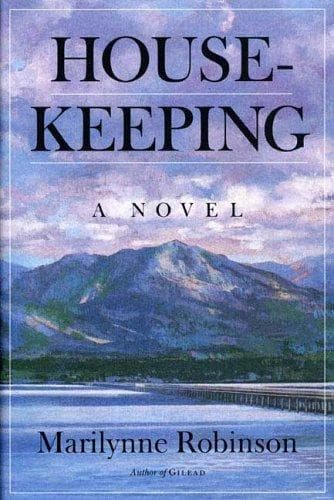
Book details and cover from Google Books.
Ready to read Housekeeping?
Get your copy on Amazon, or listen to it on Audible. We earn a commission if you buy through these links.