
We earn a commission if you buy through these links. Learn more
Hidden
Guide by the Books of the Day editors · Updated · How we write our guides
A short, quiet picture-led book about a child hiding from persecution in wartime France, useful for opening a hard history topic with younger readers.
What It's About
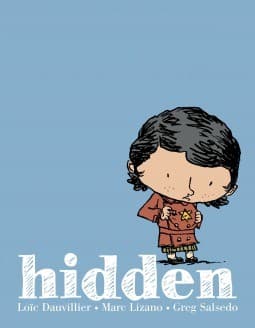
Hidden is a children's book by Loic Dauvillier that tells a story of a young child living in hiding during the German occupation of France. It is built around the everyday texture of concealment rather than around big battles or rescue heroics. The reader spends time with what it feels like to be told to stay quiet, to stay indoors, and to keep a secret that is larger than you are.
The approach is spare and visual. Pages lean on sequences of images and minimal text, so the emotional weight comes from pacing, silences, and what is shown rather than explained. Much of the emotion sits in small, concrete moments that a child will recognise: waiting, listening for footsteps, the strangeness of ordinary routines carried out under threat. Adults should expect to read it closely and to be ready for a few harder beats, since the book does not soften the fear that defines its world.
Reading it is less like being instructed about history and more like being placed inside a limited point of view. It works best as a shared reading experience, where a grown-up can pause, ask questions, and let a young reader sit with what they have seen. I am working mainly from my general knowledge of the book's premise and format, so treat the finer details here with some caution.
Read this if you…
- want a gentle but serious entry point into Holocaust history for children
- are a parent or teacher looking for a book to open a conversation about hiding and fear
- prefer quiet, image-led storytelling that leaves room for reflection
Skip it if you…
- want a fast-moving adventure with a clear plot and frequent action
- are looking for a detailed historical account with dates, places, and explanation
Key Ideas
- 1
Secrecy as a daily condition
The book shows concealment not as a single dramatic act but as a constant discipline. Keeping quiet, controlling your face, and remembering what not to say become routine. This helps young readers understand that persecution was often lived through long stretches of ordinary, anxious time rather than only through moments of crisis.
- 2
A child's limited, uncertain view
The story stays close to what a child can see and understand. Adult decisions and dangers arrive without full explanation, so the reader experiences the same confusion and partial knowledge. That restriction is part of the book's power, creating empathy through not knowing as much as the adults do.
- 3
Silence and the weight of small sounds
Because so much depends on not being noticed, sound and stillness become central to the mood. The visual and textual restraint mirrors the characters' need to stay unseen. Readers are invited to notice what is left out, which can open a useful discussion about fear and survival.
- 4
Ordinary life continuing under threat
Hidden does not treat its characters only as victims in a single frame. It acknowledges that people still eat, wait, worry about family, and try to hold onto normal moments. This gives younger readers a more human picture of the period than a list of facts would provide.
Limitations
Because the book is short and restrained, some readers will find it thin on context. It does not give a full account of the occupation, the deportations, or the wider network of people who helped hide children, so it works best alongside other material. Some critics may feel that its quiet style asks more of the adult reading along than of the child. Readers who need a plot with strong momentum may also find the pace slow. Its emotional register is serious, which suits many older children but may be heavy for very young ones.
Questions Readers Ask
- What age is Hidden best for?
- It is generally aimed at younger and middle-grade readers, and it suits being read aloud or read together. Its subject is serious, so parents and teachers should consider a child's sensitivity. Older readers can also appreciate its restraint, especially as a starting point before reading more detailed historical books about the period.
- How does Hidden compare to The Diary of a Young Girl?
- Anne Frank's diary is a long, first-person record with far more historical detail and personal reflection. Hidden is much shorter and more visual, and it focuses on the feeling of concealment in a child's world rather than on sustained personal writing. Readers who finish Hidden often move to Anne Frank's diary afterwards for more depth.
- Published
- 2014
- ISBN
- 9781596438736
- Difficulty
- beginner
- Category
- Children's Books
Book details and cover from Google Books.
Ready to read Hidden?
Get your copy on Amazon, or listen to it on Audible. We earn a commission if you buy through these links.