
We earn a commission if you buy through these links. Learn more
Hell's Angels
Hunter S. Thompson's 1966 immersion with the Hell's Angels: raw, funny, uneasy reportage that shows how a writer's presence shapes the story he tells.
What It's About
Hell's Angels is Hunter S. Thompson's 1966 account of the year he spent getting close to the Hell's Angels motorcycle club, mostly in the San Francisco Bay Area. He began as a writer chasing a magazine story after the notorious 1965 Labor Day rally at Hollister, and he kept going long after the assignment could have ended. The result sits between reportage and memoir: he reports what the club did, how its members talked, and how the outside world reacted, while keeping himself visibly in the frame.
The style is looser and more physical than most reporting of its era. Thompson writes in short bursts, shifts between scene and analysis, and does not hide his own discomfort, fear, or occasional complicity. He is less interested in tidy conclusions than in the texture of the club's world: the bars, the rides, the parties, the sudden flares of violence, and the uneasy relationships with police, residents, and the press.
Reading it feels like sitting with someone who has decided to tell you everything he saw, including what he did not understand. The pace is fast, the sentences often punchy, and the mood can swing from funny to grim within a paragraph. It is a book about a subculture, but also about how an observer's presence changes what he observes.
Read this if you…
- are curious about the fringes of 1960s American life and how they were covered
- want to see where Thompson's later, more famous style began
- like immersive reportage that does not pretend the reporter was neutral
Skip it if you…
- want a balanced, systematic history of the Hell's Angels or of motorcycle clubs
- find graphic violence, heavy drinking, and crude language hard to sit through
Key Ideas
- 1
Outsiders shaping the club's image
Thompson shows how much of the Angels' reputation was built by newspapers, police, and public anxiety rather than by the members themselves. He tries to separate the public myth from the club's own sense of who it is, and he is candid that he cannot fully do either.
- 2
Violence as part of daily life
Fights, threats, and the expectation of trouble run through the book as a normal part of the club's existence rather than as isolated shocks. Thompson treats this as something tied to how members build loyalty and identity, which makes the violence harder to dismiss as mere spectacle.
- 3
Brotherhood built on rejecting respectability
The bond among members rests on rejecting steady jobs, conventional family life, and polite society, and on a hunger for freedom expressed through motorcycles and the open road. Thompson makes this appeal understandable even when he is repelled by what it produces.
- 4
Reporting that admits its own position
Thompson places himself inside the story, reporting his own choices, mistakes, and fear. This openness anticipates the more famous gonzo style of his later work, though here it is more restrained and still anchored in reporting.
- 5
A fringe of the mid-1960s counterculture
The club is set against the wider youth culture of drugs, music, and politics in the mid-1960s, though the book is not a full history of that moment. Its value lies in showing one edge of that world at close range.
Limitations
The book is one reporter's perspective, shaped by how much access the club gave him and by his own mood and biases, and readers should weigh it as a personal account rather than a complete record. It covers a specific period and says little about the organization's later decades. Some readers find the narrator's swagger and self-mythologizing tiresome. Its treatment of women and of people outside the club is thin and reflects the attitudes of its time.
Questions Readers Ask
- Is Hell's Angels still worth reading today?
- Yes, if you want a vivid window into a specific moment in American subculture and into how a young reporter worked. The facts have been debated and the period detail is dated, so it is best read as a striking personal account rather than settled history. Its energy and honesty about the reporter's role still feel fresh.
- How does it compare to Fear and Loathing in Las Vegas?
- Hell's Angels is more grounded in conventional reporting, with less of the exaggerated, drug-fueled narration that defines Fear and Loathing in Las Vegas. Readers who love the later book will recognize Thompson's voice and his willingness to put himself in the story, but here the subject matter is the club itself rather than the author's own hallucinatory spiral.
- Published
- 1966
- ISBN
- 9780141041872
- Difficulty
- beginner
- Category
- Science
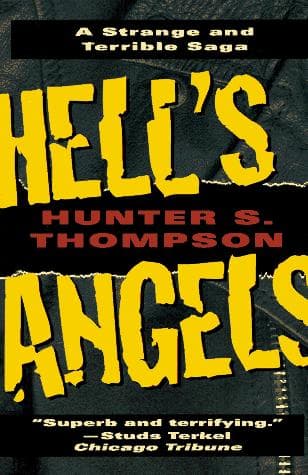
Book details and cover from Google Books.
Ready to read Hell's Angels?
Get your copy on Amazon, or listen to it on Audible. We earn a commission if you buy through these links.