
We earn a commission if you buy through these links. Learn more
Heidi
A warm, unhurried 1880 Swiss classic about a child who finds her place in the Alps, valuable for its atmosphere and emotional sincerity even where its moral tone feels dated.
What It's About
Heidi is a children's novel first published in German in two parts, in 1880 and 1881, by the Swiss writer Johanna Spyri. It opens with a young girl sent to live with her grandfather, a solitary man who keeps a hut high on a mountain above a village. Her days there are shaped by goats, weather, a few neighbours, and a stubborn independence that makes her hard for adults to manage.
The book is less a plot-driven adventure than a slow portrait of a child's character and the community around her. Spyri moves between scenes of everyday mountain life and longer stretches where Heidi adjusts to new expectations, misses home, and learns what kindness and obligation look like. The prose is plain and warm, with frequent attention to landscape, food, and seasons, and the tone is earnestly moral rather than ironic. Expect a gentle pace and an open, unembarrassed sentimentality.
Reading it now feels like stepping into an earlier era of children's writing. The emotional beats are big, the religious and virtue themes are direct, and the reader is often invited to feel alongside the characters rather than puzzle out what is happening. For a young reader, or an adult revisiting a childhood favourite, that directness is part of the charm. For others, it can read as overly sweet.
Read this if you…
- want a classic of gentle, emotionally open children's storytelling
- are curious about alpine rural life and its small, concrete daily routines
- are reading with a child and want a book that prompts conversation about home, kindness, and homesickness
Skip it if you…
- need fast plotting, twists, or a tightly constructed narrative
- find heavy moralizing and very sentimental tone hard to enjoy
Key Ideas
- 1
Nature as a source of health and character
The mountain is presented as a place that restores body and spirit. Fresh air, sunshine, and simple food carry real weight in the story, and the contrast between alpine life and town life drives much of the book's quiet argument about what a good life requires.
- 2
Belonging versus the pull of new comforts
Heidi is moved between a remote alpine home and a wealthy city household. The book tests what she values most, asking whether comfort and opportunity can replace attachment to a particular place and particular people, and it does not treat that question as easy.
- 3
Goodness shown through everyday generosity
Spyri's moral lens is openly Christian and direct. Virtue appears as sharing, humility, and patience with others. Characters are often sorted fairly clearly into good or flawed, which shapes how conflicts resolve and gives the book its reassuring, fable-like clarity.
- 4
Compassion for the sick and the lonely
A recurring interest is how a cheerful, forthright child affects people who feel stuck or isolated. The book's warmth comes from small acts that change someone's mood or outlook, and it treats illness and hardship as sources of both suffering and hope.
Limitations
The moral framework is openly Christian, and characters are often sorted neatly into good and bad, which can feel preachy to modern readers. Attitudes toward class, illness, and the supposed healing power of fresh air belong to their era. The idealized Alps owe more to literary romance than to the realities of mountain farming. Translations also vary considerably in how they handle dialect, length, and tone, so the experience depends partly on which edition you pick up.
Questions Readers Ask
- Is Heidi still worth reading as an adult?
- Yes, especially if you approach it as a period piece. Its vivid mountain scenes and sincere attention to a child's feelings still hold up. The sentiment and moral tone are heavier than most modern children's books, so reading it slowly, and noticing its historical assumptions, often makes it more rewarding than expected.
- How does Heidi compare to Anne of Green Gables?
- Both feature a spirited orphan who changes the adults around her. Anne is funnier and more episodic, with sharper dialogue and a stronger sense of comic irony. Heidi is quieter and more emotionally direct, with a stronger focus on nature and simple devotion. Choose Anne for wit and Heidi for atmosphere.
- Published
- 1885
- ISBN
- 9780694014538
- Difficulty
- beginner
- Category
- Children's Books
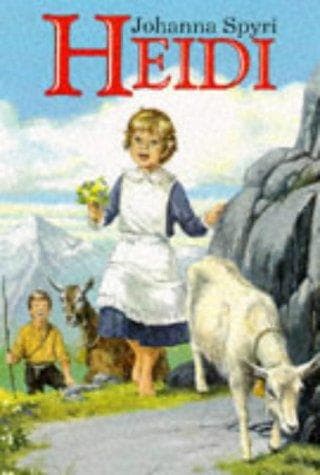
Book details and cover from Google Books.
Ready to read Heidi?
Get your copy on Amazon, or listen to it on Audible. We earn a commission if you buy through these links.