
We earn a commission if you buy through these links. Learn more
Hate list
Guide by the Books of the Day editors · Updated · How we write our guides
A raw, emotionally direct YA novel about a teenage girl who must live with what her boyfriend did at their high school, and with the question of what she should have seen.
What Creators Say About Hate list
2 creators reviewed Hate list on YouTube between 2011 and 2017, with 6.8K views between them. Their opinions are their own; we picked these reviews, we didn't write them.
What It's About
Hate List follows Valerie Leftman, a high school student whose life is upended when her boyfriend, Nick, opens fire at Sparta High School. The novel is narrated by Valerie in the aftermath, so the shooting is the event that shapes everything but is not the main subject. Jennifer Brown is more interested in the months that follow, when Valerie must work out who Nick really was, what she knew, and whether she should have known more.
Brown writes in a direct, emotionally open first-person voice aimed at teen readers without talking down to them. The story moves between the present-day fallout and Valerie's memories of her relationship with Nick, so the reader assembles a picture of him gradually and at the same pace as Valerie. Tension comes less from action than from the nagging question of what she missed.
Reading it feels uncomfortable in a useful way. It works less as a mystery than as an examination of guilt, loyalty, and how a community tries to recover from something it cannot explain. Expect grief and anger rather than comfort, and expect the book to dwell on the uncertainty that follows an act like this.
Read this if you…
- want a serious, emotionally demanding YA novel about violence and its aftermath
- are interested in how ordinary people live with guilt they did not earn
- prefer character-driven fiction over a plot built around twists
Skip it if you…
- want a fast-paced thriller with a tidy resolution
- are not ready to read closely about a school shooting, even in fiction
Key Ideas
- 1
Loving someone who did something unthinkable
The core of the novel is Valerie's struggle to reconcile the person she knew with the person who committed the violence. Brown does not let the reader settle into a simple view of Nick as a monster or as a misunderstood boy. Valerie's confusion becomes the reader's, and the book asks what it means to have trusted someone completely and been wrong.
- 2
Guilt without clear responsibility
Valerie is not the shooter, yet she keeps returning to what she might have noticed or prevented. The book explores how survivors and those close to a perpetrator can carry blame that is not really theirs, and how the search for a reason can become its own kind of burden. This theme gives the story much of its emotional weight.
- 3
A community trying to make sense of violence
Beyond Valerie, the novel shows a town reacting through grief, anger, suspicion, and the pressure of public attention. The reactions around her are not all sympathetic, which makes the social world of the book feel real. Readers see how a tragedy spreads outward and reshapes friendships and families.
- 4
A teenage narrator who stays close to the feeling
Brown keeps the perspective narrow and immediate, so the reader experiences events as Valerie does, often without the distance that news coverage provides. This closeness is the book's main strength and also its main demand, because the emotional texture is intense and sustained rather than occasional.
Limitations
Critics often note that the novel is more interested in emotional reaction than in explaining why the violence happened, so readers looking for analysis of causes such as mental health, access to guns, or school failures may come away wanting more. Because the story is limited to Valerie's perspective, the victims and the shooter receive less depth than the narrator. Some readers also find the prose plain and the emotional beats heavy-handed. The post-Columbine framing may feel more familiar now than it did when the book appeared.
Questions Readers Ask
- Is Hate List appropriate for middle schoolers?
- It is marketed to teen readers, typically high school age and up, and it depicts a school shooting and its aftermath with considerable emotional intensity. Parents and younger readers should consider whether they are ready for that subject. Brown handles the material seriously rather than sensationally, but the subject matter is heavy, and it can be worth reading alongside an adult who can talk about it.
- How does Hate List compare to We Need to Talk About Kevin?
- Both books examine a family or community after a young person commits mass violence, but they differ in perspective and audience. Hate List is a YA novel narrated by a teenage girl close to the shooter, while We Need to Talk About Kevin is an adult novel told by the shooter's mother, with a more literary and unsettling style. Readers who want a quicker, more accessible entry should start with Brown's book.
- Is Hate List still relevant today?
- Its central questions about guilt, warning signs, and community trauma remain relevant, and school violence is still a subject of public debate. Some of the framing reflects the period in which it was written, so readers may find the social details less fresh. The emotional core, a girl trying to understand someone she loved, still holds up well.
- Published
- 2009
- ISBN
- 9780316041447
- Difficulty
- beginner
- Category
- Fiction
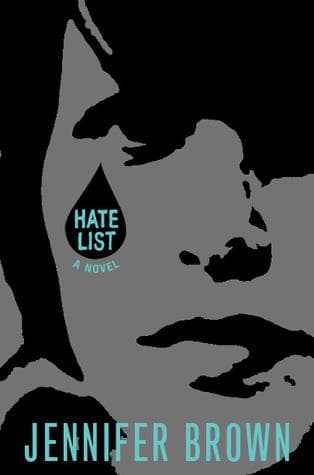
Book details and cover from Google Books.
Ready to read Hate list?
Get your copy on Amazon, or listen to it on Audible. We earn a commission if you buy through these links.