
We earn a commission if you buy through these links. Learn more
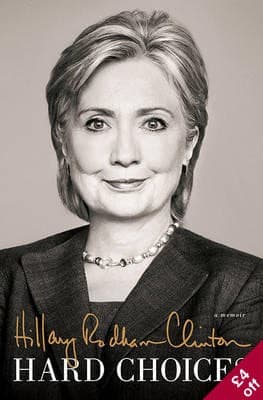
HARD CHOICES
A detailed, insider account of how U.S. foreign policy was debated and made during Clinton's four years as Secretary of State, worth reading for anyone curious about diplomacy's day-to-day trade-offs.
What It's About
Hard Choices is Hillary Rodham Clinton's account of her time as United States Secretary of State, from early 2009 to early 2013, during the first Obama administration. It is less a life story than a working record of a diplomat's decisions: how crises arrived, who argued for what, and what the options looked like from inside the room. Her personal background receives only brief treatment.
Much of the book moves by region and issue rather than in a strict timeline, so readers travel between Asia, the Middle East, Europe, and Russia, with attention to broader questions of development and global problems. Clinton writes in a measured, explanatory voice that favors process: the meetings, the travel, the back-channel talks, and her reasons for weighing one option above another.
The experience is closer to sitting in on a long briefing than reading a confession. Expect detail and caution, and expect the author to present her own choices in the most favorable light while still describing debates she lost. It rewards readers who care about how foreign policy gets made more than those hoping for intimate personal revelation.
Read this if you…
- want an inside view of how U.S. foreign policy decisions were debated and made
- are interested in the practical craft of diplomacy and negotiation
- follow Obama-era foreign policy and want a primary-source account from the State Department
Skip it if you…
- are looking for a warm, personal memoir about family, childhood, or private life
- want a neutral history of the period rather than one written by a participant with a stake in its outcome
Key Ideas
- 1
Diplomacy as slow, relationship-based work
A large share of the book shows how diplomacy actually operates: repeated meetings, long flights, personal rapport with foreign leaders, and patient negotiation over issues that rarely resolve quickly. Clinton treats relationships as a working tool, not a courtesy, and the book is useful for seeing why that matters in practice.
- 2
Smart power and the Asia pivot
Clinton describes her push to rebalance American attention toward Asia and her broader argument for combining military, economic, and diplomatic tools. Readers get a clear sense of the strategic reasoning behind the shift and the competing priorities that made it hard to sustain.
- 3
The limits of the Russia reset
The book examines the early effort to improve relations with Moscow and why that effort stalled. It is a useful case study in how good intentions on both sides can run into domestic politics and conflicting interests.
- 4
Hard calls in Libya and the Benghazi attack
Clinton explains the debates over military intervention in Libya and the aftermath of the 2012 attack on the U.S. diplomatic post in Benghazi. These sections show the pressure of making decisions with incomplete information, though readers should weigh her account alongside other sources.
- 5
Serving within someone else's administration
A recurring theme is the tension between advising a president, sometimes disagreeing privately, and carrying out policy in public. The book offers a candid look at how a cabinet officer balances loyalty, influence, and personal judgment.
Limitations
Critics across the political spectrum argue that the book is self-serving and selective, presenting Clinton's decisions in the most favorable light and leaving some controversies thinly explored. Because it is written by a figure who was then preparing for a possible presidential run, readers should expect careful framing throughout. The book also reflects the priorities and events of its moment, and some of the policy debates it covers have since moved on or been reassessed.
Questions Readers Ask
- Is Hard Choices worth reading if I'm not interested in politics?
- Probably not as a first pick. The book assumes some interest in international affairs and government process, and much of its value lies in policy detail. If your interest is more personal or biographical, a memoir focused on her life story would likely suit you better.
- How does it compare to other political memoirs by former cabinet members?
- It is more detailed on day-to-day diplomacy than many political memoirs, which often focus on campaigns or personal conflicts. Its tone is more cautious and process-oriented, so readers who want sharp behind-the-scenes gossip may find it restrained.
- Published
- 2014
- ISBN
- 9781476751443
- Difficulty
- intermediate
- Category
- Biographies
Book details and cover from Google Books.
Ready to read HARD CHOICES?
Get your copy on Amazon, or listen to it on Audible. We earn a commission if you buy through these links.