
We earn a commission if you buy through these links. Learn more
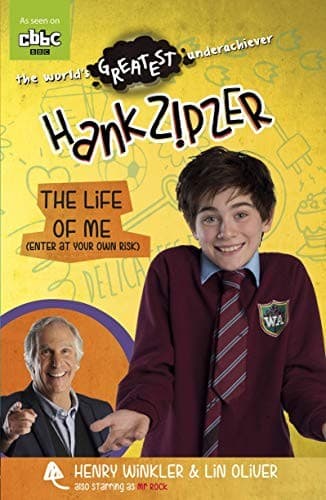
Hank Zipzer
by Henry Winkler and Lin Oliver
Guide by the Books of the Day editors · Updated · How we write our guides
Hank's voice is the reason to read this lively, funny series, which treats dyslexia with honesty and warmth rather than as a lesson.
What Creators Say About Hank Zipzer
2 creators reviewed Hank Zipzer on YouTube between 2015 and 2022, with 2.3K views between them. Their opinions are their own; we picked these reviews, we didn't write them.
What It's About
Hank Zipzer is a middle-grade series written by Henry Winkler and Lin Oliver, following a fifth grader named Hank who is bright, big-hearted, and constantly getting himself into trouble. The books are written in Hank's own first-person voice, so the reader spends the story inside his head, hearing his plans, his excuses, and his surprisingly sharp observations about school and family. Winkler has spoken publicly about his own experience with dyslexia, and that lived knowledge gives the series its grounding.
The stories are light, episodic, and built around everyday school and home life rather than a single large mystery. Hank's schemes tend to go sideways in ways that are funny and easy to follow, and the books move quickly, with short chapters and plenty of dialogue. Because the series has many entries, it works best as a set of comfortable episodes you can dip into, not a dense novel that rewards slow reading.
The experience is cheerful and gentle. Hank's struggles with reading and writing are real in the books, but they are handled as part of his character rather than as a problem to be solved in one tidy lesson. Readers who enjoy a funny, unpretentious narrator will find the series easy company, and it is especially suited to children who are still building confidence as readers.
Read this if you…
- want a funny, fast-moving series for children around the middle-grade age range
- are looking for a book that portrays dyslexia from the inside with warmth
- have a reluctant or struggling reader who responds well to a chatty, relatable narrator
Skip it if you…
- want a complex plot, deep character development, or a story with a strong overarching mystery
- are an adult reader looking for literary depth rather than light, episodic comedy
Key Ideas
- 1
A narrator who makes reading feel possible
Hank's first-person voice is conversational and quick, so the sentences feel more like talk than text. For a young reader who finds books tiring, that closeness can lower the barrier to finishing a chapter, which is a large part of the series' appeal.
- 2
Dyslexia shown from the inside
The series portrays learning differences through Hank's daily experience: the frustration of reading in front of others, the effort it takes, and the way adults can misread a struggling child as lazy. Winkler's own history with dyslexia informs this portrayal, though the books are fiction and not a clinical guide.
- 3
Optimism as a survival strategy
Hank keeps his spirits up even when things go badly, and the books treat that resilience as admirable without pretending that cheerfulness solves everything. Young readers may come away seeing persistence and humor as ways to handle setbacks.
- 4
Family and school as a comic backdrop
Much of the humor comes from ordinary friction with parents, teachers, and classmates. The scrapes are small-scale and relatable, which keeps the stakes readable for the target age without drifting into melodrama.
Limitations
The books are light by design, and some readers find the plots repetitive or the humor broad, especially after several volumes. Hank's school and family life are drawn in a fairly familiar way, and the series does not explore dyslexia in technical or instructional detail. Because the books are fiction, they should not be treated as a source on how to teach struggling readers. Some older readers may find the tone too gentle, and the series reflects the conventions of its era, so details of school life may feel dated.
Questions Readers Ask
- Who is Hank Zipzer written for?
- The series is aimed at middle-grade readers, roughly ages eight to twelve, and is especially suited to children who find reading a struggle. Its short chapters, conversational voice, and gentle humor make it approachable. Adults may enjoy it as a read-aloud or as an introduction to the series, but it is not written for an adult audience.
- Is Hank Zipzer a good book for a child with dyslexia?
- Many families and teachers recommend it because the protagonist has dyslexia and the books depict his experience without condescension. Each child is different, though, so it works best as a reading companion and conversation starter rather than a replacement for proper reading support. Reading the books together can open discussion about learning differences.
- Published
- 2014
- ISBN
- 9781406355772
- Difficulty
- beginner
- Category
- Children's Books
Book details and cover from Google Books.
Ready to read Hank Zipzer?
Get your copy on Amazon, or listen to it on Audible. We earn a commission if you buy through these links.