
We earn a commission if you buy through these links. Learn more
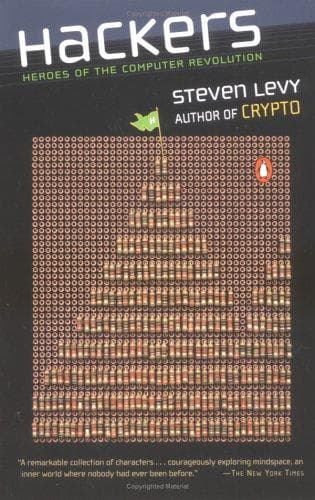
Hackers
by Steven Levy
Guide by the Books of the Day editors · Updated · How we write our guides
Levy's 1984 chronicle of the MIT, Stanford and Homebrew hobbyists who built personal computing is a vivid, people-first account of how a community's shared rules were formed and then tested by money.
What Creators Say About Hackers
2 creators reviewed Hackers on YouTube between 2010 and 2013, with 21.7K views between them. Their opinions are their own; we picked these reviews, we didn't write them.
What It's About
Hackers: Heroes of the Computer Revolution, published in 1984, is a history of the people who shaped the early computer world. Levy follows a loose cast of programmers, tinkerers and dreamers from the MIT model railroad club and the labs where time-sharing and early games took shape, through the Stanford AI lab and the Homebrew Computer Club, up to the young founders who turned hobby kits into companies. Rather than building one argument from start to finish, the book is organized around people and places, so the machines and the debates arrive through the lives that produced them.
The style is reportorial and warm. Levy spent long stretches with his subjects and writes scenes rather than summaries: late nights at the terminal, cramped offices, heated arguments over whether software should cost money. Technical detail stays light enough that a non-programmer can follow the stakes, though some passages about early hardware and code will feel opaque, and you will sometimes have to trust the narrator's enthusiasm.
Reading it feels like eavesdropping on a community still inventing its own rules. The mood swings between exhilaration and rivalry. The book is generous to its heroes without hiding their stubbornness, pettiness, or the costs of total absorption in the work. It is a chronicle of a scene, written close enough to that scene to feel immediate, and it does not try to deliver a final verdict on where that world ended up.
Read this if you…
- want the human story behind personal computing rather than a timeline of products
- are curious where today's open-source and maker culture came from
- enjoy reportage with vivid scenes and a sense of a community forming in real time
Skip it if you…
- need a technically precise account of how early machines or programming languages actually worked
- want an up-to-date history covering the internet era, smartphones, or the later decades of the industry
Key Ideas
- 1
A shared ethic of open machines
The book's central thread is a loose code that lab programmers and hobbyists followed. Access to computers should be unlimited, information should flow freely, and people should be judged by what they can build rather than by credentials. Levy traces how these convictions formed inside lab culture and then collided with commerce once software became something people sold.
- 2
Software as a commercial question
The story turns on the moment when copying programs for free and selling them ran into each other. Levy shows how the sharing of code split a community that had worked together, pitting people who wanted to keep building openly against people who wanted to be paid. Readers see how this disagreement shaped the industry's later ideas about ownership.
- 3
Hardware moves into the home
Cheap microprocessors and kit machines such as the Altair moved computing from institutional rooms to kitchen tables. Levy describes the clubs that swapped parts and tips and the small companies that grew out of garages. The shift created the mass market that later, much larger firms would pursue.
- 4
Obsession as both gift and cost
The people here are driven, often solitary, and their devotion to the craft is the source of their brilliance and a real cost to their lives. Levy neither mocks nor fully romanticizes this. He lets the reader weigh the joy of making something against what it demanded, which gives the portraits more depth than simple hero worship.
Limitations
The book ends before the commercial internet, so it cannot tell you how the hacker ethic fared once networks, social platforms and large-scale data collection arrived. The cast is overwhelmingly male, American and white, and the contributions of women and of people outside the main Bay Area and Cambridge circles receive little space. Some readers find the narrator's affection for the ethic uncritical, and later debates about privacy, security and labor are largely absent. The machines and anecdotes are dated, though the people remain interesting.
Questions Readers Ask
- Do I need programming knowledge to enjoy Hackers?
- No. Levy explains concepts in plain terms and keeps the focus on people, decisions and arguments. Some passages about early hardware and code will be hard to picture, but you can follow the narrative without understanding every technical detail. Curiosity about computers is enough.
- How does it compare with Walter Isaacson's The Innovators?
- Isaacson covers a longer span and many more figures in a survey format. Levy goes deeper into fewer communities and gives a stronger sense of their day-to-day atmosphere. If you want breadth, choose Isaacson. If you want intimacy and a single scene brought to life, Levy is the better pick.
- Is Hackers still relevant today?
- Yes, especially for understanding the roots of open-source software and the hacker ethic. The machines are dated, but the arguments about who controls software, who gets access, and whether information should be free still echo in current debates about technology and ownership.
- Published
- 1984
- ISBN
- 9780613922081
- Difficulty
- beginner
- Category
- Tech
Book details and cover from Google Books.
Ready to read Hackers?
Get your copy on Amazon, or listen to it on Audible. We earn a commission if you buy through these links.