
We earn a commission if you buy through these links. Learn more
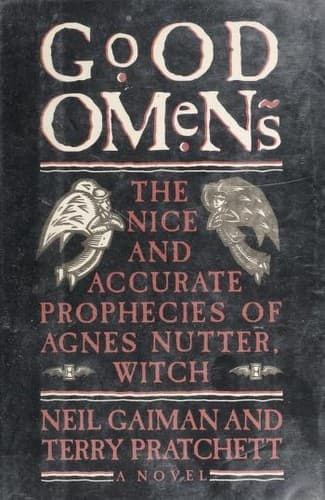
Good Omens
by Terry Pratchett, Neil Gaiman
Guide by the Books of the Day editors · Updated · How we write our guides
A comic novel about an angel and a demon, long settled on Earth, who team up to stop the Apocalypse, with wit, warmth, and a very large cast.
What Creators Say About Good Omens
2 creators reviewed Good Omens on YouTube between 2018 and 2023, with 27K views between them. Their opinions are their own; we picked these reviews, we didn't write them.
What It's About
Good Omens is a comic fantasy novel from 1990, written by Terry Pratchett and Neil Gaiman. Its two central figures are Aziraphale, a fussy angel who runs a secondhand bookshop in Soho, and Crowley, a demon who has spent six thousand years on Earth getting rather too comfortable. Both have grown fond of humanity and have no wish to see it wiped out, so when a hospital mix-up puts the wrong child in line to become the Antichrist, they begin quietly working against the official plan from their respective sides.
The book's approach blends farce, satire, and affection. It jumps between a sprawling cast: a suburban boy and his small gang of friends, a witch whose prophecy book has been circulating for centuries, a witchfinder with ambition far exceeding his talent, and a motorcycle-riding quartet of the apocalypse. Pratchett's dry, quick sense of absurdity sits alongside Gaiman's interest in myth and the odd corners of belief, and the result is a book that pokes fun at religion, bureaucracy, and English village life without much malice.
Reading it feels like watching a brisk, well-written sitcom that occasionally turns tender. The chapters are short, the jokes arrive steadily, and the tone is playful rather than frightening. It rewards attention to its running gags and asides, and it is the kind of book people often pass to friends with a warning that they will be quoting it for weeks.
Read this if you…
- enjoy British comedy with a sharp edge and a warm center
- want an end-of-the-world story that refuses to take itself seriously
- liked Gaiman's mythic fantasy or Pratchett's Discworld and want a lighter, standalone read
Skip it if you…
- want real suspense, dread, or a grim tone about the apocalypse
- find irreverent satire of religion off-putting or prefer a single, tightly focused narrator
Key Ideas
- 1
Goodness born of habit, not heroics
Aziraphale and Crowley are not dramatic heroes. Their decency is mostly the product of having lived among people for millennia, learning to enjoy good food, music, and small kindnesses. The book suggests that ordinary attachment to the world can matter more than grand moral declarations, and it treats their reluctant loyalty to humans as both funny and quietly moving.
- 2
Prophecy versus free will
Agnes Nutter's centuries-old book of predictions is famously accurate, which raises the question of whether anything people do really changes the outcome. The novel plays with this tension, showing characters who try to outmaneuver fate while the reader is invited to wonder how much room for choice there really is in a world where the future seems already written.
- 3
Satire of certainty and institutions
Religious bodies, government departments, and self-appointed experts all come in for gentle mockery. The witchfinder's zeal and the bureaucratic workings of heaven and hell show how organizations can lose sight of the people they claim to serve. The satire is affectionate rather than vicious, aimed more at human pomposity than at belief itself.
- 4
Children as the honest counterweight
The gang of children at the heart of the story, who are rather proud of their name, behave with a directness and common sense that the adults lack. Their blunt, practical reactions to the impending disaster provide some of the book's sharpest comedy and a reminder of what the angel and demon have come to care about.
Limitations
The plot is loosely structured and often meanders through its many subplots, which can make it feel episodic. Some of its cultural references, especially to 1980s and early 1990s technology, music, and British life, now read as dated. Critics have also noted that the female characters are less fully developed than the male leads, and some readers find the comic voice a little too pleased with itself. The book is more concerned with jokes and character than with the mechanics of its own mythology.
Questions Readers Ask
- Do I need to read Pratchett's Discworld books or Gaiman's other novels first?
- No. Good Omens is a standalone novel with no prior knowledge required. Fans of either author will notice familiar sensibilities, such as Pratchett's comic bent and Gaiman's interest in myth, but the story introduces everything it needs and works fine as a first book by either writer.
- Is Good Omens still funny today?
- For most readers, yes. The core jokes about angels, demons, and bureaucracy hold up well, and the characters remain charming. Some topical references and period details feel dated, but they are minor and rarely disrupt the fun. The humor depends more on character and wordplay than on current events.
- How does it compare to Gaiman's American Gods?
- American Gods is darker, longer, and more melancholy, focusing on gods adrift in modern America. Good Omens is lighter, faster, and much more comic, with a tighter cast and a playful tone. If you want something emotionally weighty, American Gods is the better choice; if you want to laugh, start here.
- Published
- 1990
- ISBN
- 9780613673297
- Difficulty
- beginner
- Category
- Fantasy
Book details and cover from Google Books.
Ready to read Good Omens?
Get your copy on Amazon, or listen to it on Audible. We earn a commission if you buy through these links.