
We earn a commission if you buy through these links. Learn more
Gone With the Wind
A sweeping, page-turning Civil War novel that is less about battles than about one headstrong woman surviving a collapsing world, and the uncomfortable views it carries.
What It's About
Gone With the Wind is a novel, not a work of history, despite the category it is often shelved under. It follows Scarlett O'Hara, a Georgia planter's daughter whose comfortable world of barbecues, courtship, and plantation life is shattered by the Civil War and the hard years that follow. Mitchell tracks her from girlhood through war, siege, and Reconstruction in Atlanta, surrounded by a large cast that includes restless friends, rivals, and a sharp-tongued outsider who becomes central to her life.
The book's approach is immersive and episodic. Mitchell writes in a brisk, vivid, often wry voice, moving quickly through scenes with strong momentum and a great deal of dialogue. She is less interested in military strategy than in how households, money, and social standing rise and fall. Scarlett is a flawed, driven protagonist whom readers tend to argue about, and much of the pleasure comes from that argument.
Reading it is a long immersion rather than a quick escape. The pace varies, the length is considerable, and the novel asks you to stay with a single voice and its assumptions for many hundreds of pages. What you get is an emotional saga with a clear sense of a vanished social order, provided you stay alert to the perspective it is told from.
Read this if you…
- want a sweeping, character-driven saga with a strong and difficult heroine
- are curious how a 1930s Southern writer imagined the Civil War and Reconstruction
- enjoy long novels you can live inside for a few weeks
Skip it if you…
- want an accurate account of slavery, the war, or Reconstruction, since the novel's view is distorted
- dislike long melodramatic romance plots or find an unlikable protagonist hard to spend time with
Key Ideas
- 1
Survival as the engine of the story
Scarlett's central drive is to hold on to land, family, and status when nearly everything around her is gone. Her determination is the book's main source of momentum, and it is what makes her hard to dismiss. Mitchell presents her grit as admirable even when her choices are ruthless, which asks the reader to weigh pragmatism against cruelty on every page.
- 2
A social order seen from inside
The novel captures the manners, class lines, and hierarchies of antebellum Southern society from the viewpoint of those who benefited from it. Its detail about daily life, etiquette, and how status was performed is vivid and often memorable. That same closeness is why the book's assumptions need to be read critically rather than taken at face value.
- 3
Womanhood pushed against its limits
Scarlett runs businesses, makes hard financial decisions, and refuses many of the roles her world expects of women. For a 1936 readership this was a striking portrait, and it still reads as a fierce study of a woman forced to act outside the rules. The tension between her independence and the social codes around her drives much of the drama.
- 4
Romance used as a lens on history
The love stories that run through the book are tied closely to public upheaval. Relationships are shaped by war, scarcity, and shifting fortunes, so the personal plot becomes a way of showing the larger collapse. Readers who expect romance alone will find it more entangled with history than the genre usually is.
- 5
Melodrama with a worldly, wry tone
Mitchell mixes big set-piece scenes with intimate, sharp moments, and her narration often has a knowing, ironic edge. The result is more pointed and less sentimental than the genre's reputation suggests. The melodrama is real, but it is carried by energetic prose and a willingness to let characters be petty, funny, and contradictory.
Limitations
The novel presents the Old South in a nostalgic, romanticized light and portrays slavery in a paternalistic way that relies on racist stereotypes. Black characters appear mostly in the background, and the story is told almost entirely from a white, Southern viewpoint. Later sections include a sympathetic depiction of the Ku Klux Klan that many modern readers find troubling. The book is also long, and some stretches feel repetitive or padded. Its historical picture should be read as one perspective, not a balanced record.
Questions Readers Ask
- Is Gone With the Wind a history book?
- No. Although it is set during the Civil War and Reconstruction and shelved under history in some catalogs, it is a work of fiction. Mitchell draws on the period's atmosphere and events, but her characters and plot are invented, and her portrayal of the era reflects the views of her time and place. Readers who want an accurate history should pair it with a nonfiction account.
- Is it still worth reading today?
- Yes, if you read it with context. It remains influential and enormously readable, and it is a useful artifact of how the Lost Cause view shaped American popular culture. To balance it, consider reading novels about the same era by Black writers, such as Octavia Butler's Kindred, which examines slavery and its legacy from a very different angle.
- Published
- 1936
- ISBN
- 9789578477186
- Difficulty
- intermediate
- Category
- History
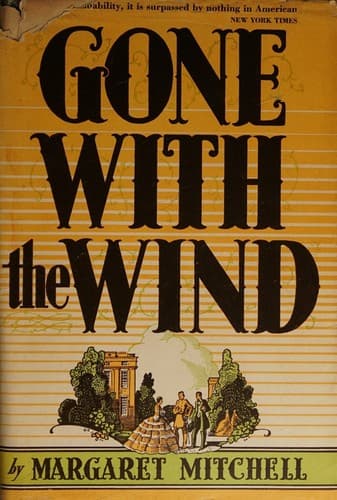
Book details and cover from Google Books.
Ready to read Gone With the Wind?
Get your copy on Amazon, or listen to it on Audible. We earn a commission if you buy through these links.