
We earn a commission if you buy through these links. Learn more
Go, Dog. Go!
A tiny, repeating vocabulary and busy, funny pictures of dogs on the move make this a classic first reader that still works as a read-aloud.
What It's About
Go, Dog. Go! is a 1961 Beginner Book by P. D. Eastman, written for children who are just learning to read on their own. Its text is built from a very small set of words, most of them short and repeated, so a beginner keeps meeting the same words on page after page. The story is light: dogs of different colors drive, race, and wander through a town, and much of the fun comes from checking what the illustrations show alongside the words.
The approach relies on pacing and repetition rather than plot. Each spread adds a new small situation and a new way of getting around, so the book moves like a string of vignettes that build toward a lively gathering. Eastman's cheerful drawings use bold color and clear action, which helps a child connect a word to what it describes. Read aloud, the rhythm is bouncy and the repetition invites children to join in.
For an adult, the experience is brisk. It takes only minutes, and its charm lies in the sense of motion and the satisfaction of a child reading a whole book unaided. Do not expect character development or a story that tightens tension. The pleasure here is in the pictures, the rhythm, and the feeling of being able to read.
Read this if you…
- are helping a child learn to read and want a book they can finish without help
- want a bright, simple picture book with a bouncy rhythm to read aloud to toddlers
- are curious how classic Beginner Books were designed and want to see the method up close
Skip it if you…
- want a story with characters, stakes, or a plot to follow
- are looking for something to read yourself for depth, challenge, or emotional payoff
Key Ideas
- 1
A controlled vocabulary built for beginners
The book is designed around what a new reader can manage. Words are limited, sentences are short, and patterns repeat, so a child can decode most of the text without help. The restraint is the point: each page is a small, winnable task rather than a test of unfamiliar vocabulary.
- 2
Pictures that carry half the meaning
Eastman's drawings do real work. Action, direction, and surprise are shown visually, so a child can use picture cues to confirm what a word says. This teaches reading as a skill of combining text and image, a habit that helps beginners when sentences get harder.
- 3
Motion as the organizing theme
Rather than following one character through a plot, the book is held together by movement. Dogs drive, ride, race, and wander, and each new mode of travel gives the reader a fresh reason to turn the page. The energy comes from variety and speed, not from suspense.
- 4
Rhythm and repetition for reading aloud
The predictable phrasing makes the book easy to chant and easy to memorize. Adults reading aloud can lean into the cadence, and children often start to recite sections on their own. That early sense of mastery is a big part of why the book has lasted.
Limitations
The book has almost no narrative, so readers who expect a story with a beginning, middle, and end will find it thin. The controlled vocabulary that makes it effective can feel mechanical to adults, and the repetition can wear thin after several readings. Its look and pacing reflect early 1960s picture-book design, which some modern readers find dated. It is best understood as a teaching tool and a playful object rather than a work of literary fiction.
Questions Readers Ask
- Is Go, Dog. Go! still worth reading today?
- Yes, especially for emerging readers. Its short, repeated sentences and strong picture support still match how many early reading programs work, and it remains a popular choice for children taking their first steps alone with a book. Adults looking for a rich story may find it slight, but for its intended audience it still does its job well.
- How does it compare to Are You My Mother?
- Both are early readers by Eastman with simple vocabularies and strong illustrations. Are You My Mother? has a clearer story, following a baby bird searching for its mother, so it gives young readers a more satisfying narrative. Go, Dog. Go! is looser and more playful, relying on movement and variety rather than a single quest.
- Published
- 1961
- ISBN
- 9781536417579
- Difficulty
- beginner
- Category
- Fiction
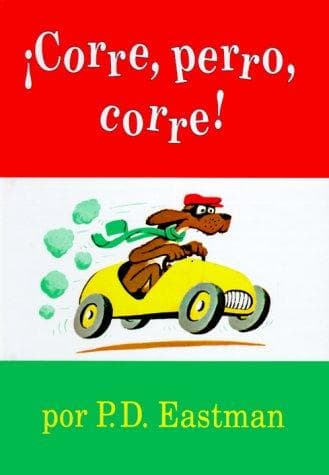
Book details and cover from Google Books.
Ready to read Go, Dog. Go!?
Get your copy on Amazon, or listen to it on Audible. We earn a commission if you buy through these links.