
We earn a commission if you buy through these links. Learn more
Giraffes can't dance
A bouncy, rhyming picture book that turns a playground fear, being teased for being clumsy, into a warm read-aloud about finding your own rhythm.
What It's About
Giraffes Can't Dance is a rhyming picture book for young children, first published in 2000, with illustrations by Guy Parker-Rees. Its hero, Gerald, is teased for being clumsy and is certain that dancing is simply not for him. The story is set in a jungle where every animal seems to have a natural beat, and Gerald's sense of being the odd one out drives the emotional core of the book.
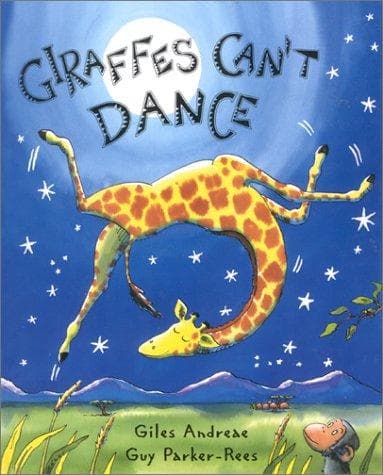
The verse is bouncy and built for reading aloud. Andreae relies on steady rhymes and repeated phrasing that invite children to join in, clap, and sway. The text works as a performance as much as a story. The illustrations are bright and full of motion, and they carry much of the comedy, often showing what the words only hint at.
Reading it is less about learning a lesson than about sharing a predictable pattern with a small child, enjoying a few gentle laughs, and ending on a hopeful note about finding your own way. It runs only a few minutes, so it suits bedtime or a classroom story circle. Adults may find the message a little obvious, but the rhythm is hard to resist.
Read this if you…
- want a short, rhythmic read-aloud for toddlers and preschoolers
- are looking for a gentle book about self-acceptance and being teased
- want a book that gets a young child clapping, chanting, and moving along
Skip it if you…
- want a story with a complex plot or emotional depth beyond a simple lesson
- are looking for a book to help a child read independently, since the text is best shared aloud
Key Ideas
- 1
Difference is not the same as failure
Gerald's problem is not that he lacks ability but that he measures himself against the other animals. The book frames his clumsiness as simply part of who he is, not a defect to be hidden. For a young child who feels out of step with classmates, this reframing is the book's most useful gift, and it is delivered without any heavy lecturing.
- 2
Everyone moves to a different beat
The central image is that dancing is not one correct style that everyone must copy. Gerald finds a way of moving that fits his body and his music. The idea that people can succeed by being themselves rather than by imitating others is easy for children to grasp and easy to talk about after the final page.
- 3
Responding to teasing with quiet resolve
The other animals mock Gerald, and the story shows him absorbing that hurt rather than retaliating. It is a gentle introduction to peer teasing. Parents and teachers can use it to open a conversation about how it feels to be laughed at and what a child can do about it, without the book itself delivering a long speech.
- 4
Rhyme and rhythm as a way in
The verse is designed to be heard as much as read. Its strong beats help very young children pick up the shape of language, and its repeated sounds make it easy to chant. Many readers will remember the rhythm long after the plot fades, which is part of why it works so well for early listening skills.
- 5
Pictures that do the comic work
Much of the humor sits in the illustrations rather than the text. Gerald's awkward movements and the crowd's reactions give children a second layer to notice. Looking closely at the pages rewards repeat readings, so the book stays interesting for adults as well as the children they read to.
Limitations
The message is stated plainly, and some adult readers will find the lesson more obvious than they would like. The plot is slight, with little tension and characters who function more as types than individuals. The jungle setting and the crowd of animals who mock Gerald are familiar picture-book shorthand rather than fresh invention. Because the verse depends on its beat, some rhymes feel forced when read silently, and the book is far more satisfying when performed aloud than read quietly to oneself.
Questions Readers Ask
- What age is Giraffes Can't Dance best for?
- It is aimed at toddlers and preschoolers, roughly three to six years old, who enjoy repetition and rhythm. Older children may still enjoy the pictures and the performance of the verse, but the story is simple enough that most will outgrow its plot by early primary school. It works especially well as a shared bedtime or classroom read.
- How does it compare to Dr Seuss?
- Both books rely on bouncy rhyme and playful animals, but Seuss tends toward more inventive wordplay and stranger worlds. Andreae's book is calmer and more conventional, with a single, clear message about self-acceptance. If a child loves the sound of Seuss, this will feel familiar, though it offers less linguistic surprise.
- Published
- 1999
- ISBN
- 9781843620693
- Difficulty
- beginner
- Category
- Children's Books
Book details and cover from Google Books.
Ready to read Giraffes can't dance?
Get your copy on Amazon, or listen to it on Audible. We earn a commission if you buy through these links.