
We earn a commission if you buy through these links. Learn more
Giovanni's Room
A compact, unflinching novel about a man hiding his desire from himself in 1950s Paris, written with a precision that still makes it hard to put down.
What It's About
Giovanni's Room is a short first-person novel narrated by David, an American living in Paris who, while his fiancée is away in Spain, falls into a relationship with Giovanni, a young Italian working in a bar in the city. Most of the book takes place over a tight stretch of time, moving between cramped rooms, streets and bars where the characters drink too much and talk too much. Baldwin keeps the frame narrow and lets the story unfold through David's memory, so the reader sees everything through a narrator who is trying to persuade himself of something.
The prose is lean and emotionally exact, with long passages of self-justification alternating with sudden flashes of clarity. Baldwin writes about sexuality, shame and self-deception with a directness that was rare when the book appeared in 1956, and the tension comes less from plot than from watching David circle the truth. Expect a book dense with feeling and short on incident.
Reading it is an uncomfortable, intimate experience. It asks you to stay inside a mind that is charming, evasive and often unkind to the people who love him, and to notice where his account stops adding up.
Read this if you…
- enjoy character-driven novels with a narrator you cannot fully trust
- want an early, serious treatment of queer life in mid-century fiction
- like short books that reward slow, careful rereading
Skip it if you…
- want a plot-driven story with a lot of external action
- need sympathetic narrators to stay engaged with a book
Key Ideas
- 1
Self-deception as the engine of the story
David's account is full of rationalizations, and much of the drama lies in the gap between what he says about himself and what he actually does. Baldwin trusts the reader to see through him, which makes the novel feel more like an examination of a mind than a conventional story with a clear moral.
- 2
Shame as something hidden and inherited
David's shame about his own desire shapes almost every choice he makes. Rather than facing it, he disowns what he feels and treats others badly to protect a version of himself he can live with. The book shows how private shame can quietly damage everyone nearby.
- 3
Exile and the myth of Paris as freedom
Paris is supposed to offer David an escape from American expectations, but he carries his anxieties with him wherever he goes. The city offers far less liberation than he hoped, and the novel questions whether moving abroad can ever solve a problem rooted in the self.
- 4
Love judged against social appearances
Relationships in the book are measured by how they look to others, with the engagement serving as a kind of cover. Baldwin asks who is allowed to be loved openly and what it costs people to be forced into concealment, a question that remains pointed.
- 5
Controlled prose as a lens on judgment
Baldwin's sentences are measured and precise, and the narrator's voice works like a lens that both reveals and distorts. Reading closely, you notice how word choice, repetition and what goes unsaid carry as much meaning as the events themselves.
Limitations
The narrator is hard to like, and some readers find his self-justification frustrating rather than revealing. The women are thinly drawn, and critics have noted that Hella is seen mostly through David's resentments. Its frankness about desire was bold for 1956, but its bleak view of gay men's lives sits uneasily with modern readers. It is not a guide to Paris or to queer history, and it offers a single, intense perspective rather than a broad picture.
Questions Readers Ask
- Is Giovanni's Room psychology or fiction?
- It is a novel, though it is often shelved under psychology because its real subject is a mind under strain. Baldwin's characters are invented, and the book works through emotional observation rather than clinical explanation. If you want a study of psychological theory, look to nonfiction; if you want a novel that thinks like a psychologist, this one fits.
- Is it still worth reading today?
- Yes, mostly for the prose and the portrait of self-deception. Some of its attitudes feel dated and its mood is bleak. But its honesty about desire, shame and the cost of hiding remains sharp, and its psychological insight still reads as current.
- How does it compare to Baldwin's Go Tell It on the Mountain?
- Go Tell It on the Mountain is wider in scope, rooted in a Harlem family and a religious upbringing, and it spreads its attention across several characters. Giovanni's Room is tighter, with one narrator and one city. If you want a broader entry into Baldwin, start with the earlier novel; if you want the sharper, more intimate book, this one is it.
- Published
- 1956
- ISBN
- 9780440328810
- Difficulty
- intermediate
- Category
- Psychology
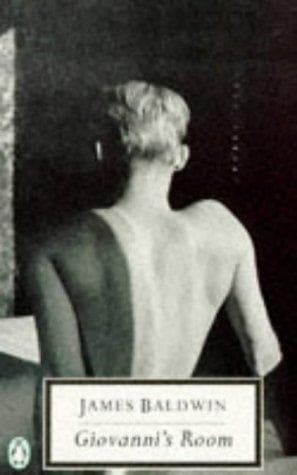
Book details and cover from Google Books.
Ready to read Giovanni's Room?
Get your copy on Amazon, or listen to it on Audible. We earn a commission if you buy through these links.