
We earn a commission if you buy through these links. Learn more
Get happy
by Clarke, Gerald, Gerald Clarke
A thorough, sympathetic account of Judy Garland's career and private struggles, showing how studio pressure and fame shaped one of Hollywood's most gifted performers.
What It's About
Get Happy is a full-length biography of Judy Garland, the singer and actress who became a film star as a teenager at MGM and later one of the most celebrated concert performers of her era. Gerald Clarke follows her from her early years in show business through the studio period, her marriages and comebacks, and her final decade of sold-out tours and money troubles, ending with her death in 1969. The title comes from a song she sang in the 1950 film Summer Stock.
Clarke's approach is chronological and reportorial. He leans on interviews, studio records, and the recollections of colleagues and friends to build a detailed portrait, and he is willing to describe the pressures that shaped her life: the diet pills and sleeping drugs supplied during her MGM years, the punishing work schedules, and the unstable relationships that followed her from one stage to the next. The prose is brisk and narrative rather than academic, so the book keeps moving even through dense stretches about contracts and tour logistics.
Reading it feels less like studying a legend than like following a hard, sometimes painful story about a gifted performer who was repeatedly handled as a product. It rewards readers who already know the films and recordings, and it adds context to songs that now seem to carry her history. Expect a sympathetic but unsentimental portrait rather than a hagiography.
Read this if you…
- want a detailed, chronological life of Judy Garland beyond the famous film roles
- are curious about how the studio system shaped young stars in classic Hollywood
- enjoy narrative biography that balances career facts with personal history
Skip it if you…
- want a short introduction or a quick read, since this is a long and detailed book
- are looking mainly for film criticism or analysis of her movies and performances
Key Ideas
- 1
Stardom built on a managed system
At MGM, Garland's image, weight, schedule, and health were shaped to keep her working as a dependable asset. The book shows how a studio machine treated a young performer as something to manage, and how those habits carried into her adult life and were hard to escape.
- 2
Talent as both gift and burden
Her ability to connect with an audience was real and rare, but it demanded everything from her. Clarke traces the tension between the triumph of a great performance and the exhaustion, fear, and dependence that often followed it, especially in the concert years.
- 3
Private life and the search for stability
Marriages, children, and the constant pull of work made it hard for Garland to find steady ground. Clarke shows how her private life and professional pressures fed each other, so that romantic setbacks often arrived alongside career crises.
- 4
A comeback that never fully settled
Garland's late concert career brought huge crowds and renewed admiration, but also financial strain and declining health. The book treats each return to the stage as both a real achievement and a sign of how precarious her position had become.
Limitations
As a book from 2000, it predates later research and the wider reassessment of Garland's life and the studio era, so some interpretations may look dated. It relies heavily on interviews and recollections from people who often disagreed with one another, which means some accounts are hard to verify. Clarke is strongest on career logistics and public events and lighter on Garland's inner life. Some readers find the sheer length and the repetition of similar struggles tiring.
Questions Readers Ask
- Do I need to know Judy Garland's films before reading this biography?
- It helps but is not required. Clarke introduces the major films and recordings as he goes, and the book is written for general readers. Those who have seen The Wizard of Oz and her musicals will get more out of the references to specific performances and studio decisions.
- Is Get Happy still a good choice for readers today?
- Yes, as a well-researched narrative of Garland's life. It is somewhat older than recent biographies and may not reflect the latest scholarship on the studio era. Readers who want the most current view might pair it with a newer book on the same subject.
- Published
- 2000
- ISBN
- 9780307556332
- Difficulty
- intermediate
- Category
- Biographies
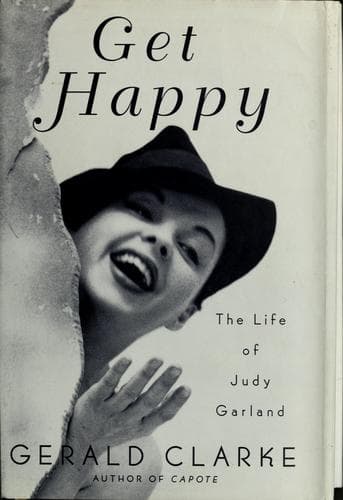
Book details and cover from Google Books.
Ready to read Get happy?
Get your copy on Amazon, or listen to it on Audible. We earn a commission if you buy through these links.