
We earn a commission if you buy through these links. Learn more
Game over
by David Sheff
Guide by the Books of the Day editors · Updated · How we write our guides
A sharp, readable history of how Nintendo rebuilt the American video game market after 1983, and why its control-first business model still matters.
What Creators Say About Game over
2 creators reviewed Game over on YouTube between 2014 and 2016, with 1.6K views between them. Their opinions are their own; we picked these reviews, we didn't write them.
What It's About
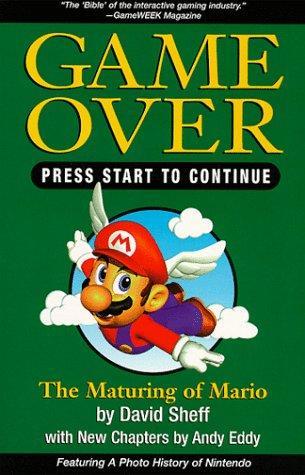
Game Over is David Sheff's 1993 business history of Nintendo, written while the company was reshaping the video game industry in America. It traces the firm's long road from a Kyoto maker of hanafuda playing cards to the creator of the Famicom in Japan and, later, the Nintendo Entertainment System in the United States, which revived a market that had collapsed after 1983.
Sheff works as a narrative reporter. He follows people as well as products: the executives who made hard calls, the designers whose ideas became Mario and other famous franchises, and the rivals who were squeezed out or outmaneuvered. The pace is brisk, and the book is more interested in strategy, control, and corporate culture than in the technical details of how games were built.
Reading it today is part time capsule, part cautionary study. The tone is sometimes sensational, and the book is firmly anchored in the early 1990s, so anyone hoping for an account of Nintendo's later consoles or the digital market will need other sources. It works best as a story about how one company used discipline and gatekeeping to win.
Read this if you…
- are curious how a consumer brand gained control of its market through business strategy
- enjoy narrative business histories with a single company at the center
- want to understand why the games you grew up with arrived in the form they did
Skip it if you…
- want a detailed account of how games were designed or programmed
- need an up-to-date picture of Nintendo or the modern games market
Key Ideas
- 1
Nintendo began far from electronics
The book starts well before the first video game, tracing a company that made playing cards and then toys. That history matters because it explains the firm's habits: a family-run business, a long memory for what sold, and a willingness to try unusual products. Sheff uses these early chapters to show that Nintendo's later success was the product of decades of trial and error rather than a single lucky break.
- 2
The 1983 crash reshaped the American market
The collapse of the American video game business is the backdrop for the book's central drama. Sheff shows how a flood of weak games had burned retailers and frustrated customers, and how Nintendo positioned its system as a return to quality. Readers come away understanding why the company's reputation mattered as much as its hardware.
- 3
Control as the core business strategy
Nintendo's approach to licensing is the book's most provocative thread. Outside developers had to go through the company, pay for the right to publish, and accept limits on how many titles they could release. Sheff argues this gatekeeping protected the platform, but he also shows the costs: resentment among publishers, pressure on retailers, and a closed system rivals struggled to match.
- 4
The creative people behind the hits
Beyond the boardroom, the book profiles the designers and managers whose work drove the company. Figures such as Shigeru Miyamoto and Gunpei Yokoi appear as creators working inside a demanding corporate culture. The tension between artistic experimentation and commercial discipline is a theme that still feels familiar to anyone who follows the games industry.
- 5
Games as a mainstream cultural force
The book makes the case that video games moved from a passing fad into a central part of childhood entertainment. Its subtitle is deliberately provocative, and readers should expect some alarmist framing about kids and screens. Still, the underlying point, that one company's choices could shape what millions of families played, holds up as a story about how modern entertainment took shape.
Limitations
The book is more than three decades old, so it misses Nintendo's later consoles, the rise of online and mobile gaming, and the shift toward digital storefronts. Its tone can lean dramatic, and some readers find the framing harsh toward the company. It is also a journalistic account rather than a technical study, so game design and engineering receive limited space.
Questions Readers Ask
- Is Game Over still relevant if I don't care about 1980s consoles?
- Yes, in a narrower way. The specific hardware is old, but the book helps explain how platform control, licensing rules, and retail relationships shaped the industry that followed. If your interest is current games or current Nintendo products, expect to supplement it with newer histories.
- How does it compare with Console Wars?
- Console Wars by Blake Harris, published much later, focuses tightly on the Sega and Nintendo rivalry in the early 1990s. Sheff's book is broader, covering Nintendo's origins and its rise in America. If you want one rivalry told in detail, Harris is the better pick; if you want the longer corporate story, choose Sheff.
- Who is this book best for?
- It suits readers who enjoy business narratives, especially those curious about how a consumer brand gained control of its market. It also works for gamers who want to know why the games they loved arrived in the form they did. Readers wanting technical depth or the latest industry news should look elsewhere.
- Published
- 1999
- ISBN
- 9780966961706
- Difficulty
- beginner
- Category
- Tech
Book details and cover from Google Books.
Ready to read Game over?
Get your copy on Amazon, or listen to it on Audible. We earn a commission if you buy through these links.