
We earn a commission if you buy through these links. Learn more
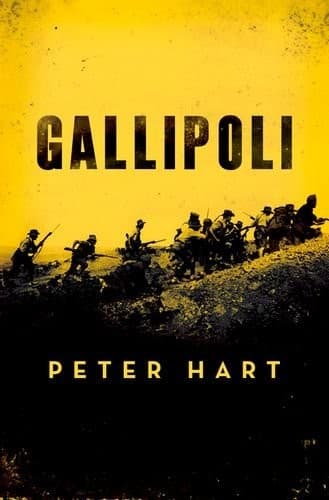
Gallipoli
by Peter Hart
A thorough, readable account of the 1915 Gallipoli campaign that weighs Allied planning failures against Ottoman defence, useful for anyone who wants the whole campaign rather than the Anzac legend.
What It's About
Peter Hart's Gallipoli covers the 1915 campaign in which British, Imperial, and French forces tried to force the Dardanelles and then fought for a foothold on a peninsula that proved far harder to take than planners expected. It runs from the naval attack and the landings of April through the stalemate of the summer and the evacuation at the turn of the year. It is a narrative history, organised largely in chronological order, and it moves between the staff officers making decisions far away and the men in the gullies and trenches.
Hart's method rests on archival records and a wide range of personal testimony, including letters and diaries, which gives the book a texture that official dispatches alone cannot. He is comfortable moving between the Allied and Ottoman sides, so the defenders are not reduced to obstacles in someone else's story. The prose is brisk and direct, and the fighting is described clearly enough that you can follow the geography, though a map at hand helps.
Reading it is a sober experience rather than a heroic one. Hart is less interested in confirming national legends than in asking why the operation went wrong, and the answers tend to be unglamorous: poor intelligence, hesitant command, and logistics that could not keep pace with ambition. The result is grim, detailed, and clear-eyed about the cost.
Read this if you…
- Want a full, chronological account of the whole Gallipoli campaign rather than one front or one national legend
- Are interested in how a military operation fails at the level of planning, command, and logistics
- Want the Ottoman side treated as a serious opponent rather than a backdrop
Skip it if you…
- Mainly want a short overview, since this is a long and dense book that rewards patience
- Are looking for a book about military technology or weapons; despite its catalogue category, this is military history of one campaign
Key Ideas
- 1
Planning built on optimistic assumptions
The operation rested on the belief that naval power alone could force the straits and that troops could move quickly inland once ashore. Hart shows how these assumptions unravelled on contact with the terrain and the defenders, and how slow the reaction to each setback was. Readers come away seeing the disaster as a series of decisions, not just bad luck.
- 2
The Ottoman defence as a serious contest
Hart gives the Ottoman army real attention rather than treating it as a passive obstacle. The defenders improvised, reinforced key positions, and were led in places by commanders such as Mustafa Kemal, whose sector decisions mattered. This makes the campaign read as a contest between two armies, not a one-sided failure.
- 3
Terrain that turned landings into trench warfare
The peninsula's ridges, scrub, and steep gullies broke up attacks and made coordination difficult. What was planned as a rapid advance became a siege-like stalemate on cramped ground. Hart explains how the geography shaped tactics and why later offensives, including the August attacks, struggled to change the situation.
- 4
Ordinary experience through individual voices
Much of the book's power comes from letting soldiers describe heat, thirst, disease, boredom, and fear in their own terms. These accounts make the human cost concrete without turning the narrative into a string of anecdotes. They also show how the campaign was experienced differently by units from different parts of the empire.
Limitations
The book stays focused on a single campaign, so readers hoping for wider context on the First World War or the Ottoman Empire's postwar fate will need other sources. Its length and dense unit detail can slow casual readers, and some will find the chronology hard to hold onto without notes. Although it uses Turkish material, the weight of the sources remains heavily Allied, which some critics note. It is also filed under Tech in the catalogue, which does not describe its subject.
Questions Readers Ask
- Is Gallipoli a good first book on the First World War?
- It can be, but it is better suited to readers who already know the broad outline of the war. Hart assumes you can follow the political and strategic background without much explanation. If you are new to the subject, pair it with a general survey of the war so the campaign's place in the larger conflict is clear.
- How does it compare with Alan Moorehead's Gallipoli?
- Moorehead's book is an older, more literary narrative that many readers still enjoy for its storytelling. Hart's is more archive-based and gives the Ottoman side more weight, with a more systematic look at why the campaign failed. Moorehead is the more vivid read; Hart is the more thorough one.
- Published
- 2011
- ISBN
- 9780199836871
- Difficulty
- intermediate
- Category
- Tech
Book details and cover from Google Books.
Ready to read Gallipoli?
Get your copy on Amazon, or listen to it on Audible. We earn a commission if you buy through these links.