
We earn a commission if you buy through these links. Learn more
From the Mixed-Up Files of Mrs. Basil E. Frankweiler
by E. L. Konigsburg, Jill Clayburgh
Guide by the Books of the Day editors · Updated · How we write our guides
A Newbery Medal classic about a twelve-year-old who runs away to hide inside the Metropolitan Museum of Art, and the wry, clever voice that makes it a pleasure for adults as well as children.
What It's About
From the Mixed-Up Files of Mrs. Basil E. Frankweiler is a 1967 children's novel by E. L. Konigsburg that won the Newbery Medal. Claudia Kincaid, the oldest of her siblings and tired of being the responsible one, decides to run away, and she picks an unusual hideout: the Metropolitan Museum of Art in New York. She brings her younger brother Jamie along, and the two of them set themselves a puzzle to solve while living out of sight of the staff. The museum's galleries and routines become their world, and Konigsburg makes you feel how strange and exciting it is to be a child managing an adult's world alone.
Konigsburg's style is brisk and funny. The narrator speaks directly to readers, with asides, lists, and a dry wit that treats Claudia's careful planning, budgeting, and self-regard with affection and a little teasing. The chapters are short and full of practical detail, so the logistics of hiding feel real. Much of the pleasure comes from watching a clever, slightly superior girl discover what she does not yet know.
The experience is less about the museum as a setting than about the questions it raises: what it means to be noticed, how families hold together, and whether independence can be earned by leaving. The pacing stays engaging even though the central mystery moves in small steps rather than dramatic action, and adults often reread it and find new layers.
Read this if you…
- Want a funny, smart children's novel that adults will also enjoy
- Like stories about clever kids solving a puzzle with careful planning
- Are curious about museums, art, or how a famous collection gets its stories
Skip it if you…
- Need fast action, danger, or a lot of plot twists to stay interested
- Want a realistic picture of how children would actually survive alone in a city
Key Ideas
- 1
Wanting independence without knowing its cost
Claudia's runaway plan is driven by a real frustration with being overlooked and overburdened as the eldest child. The book takes that impulse seriously while letting the reader see how much planning, money, and luck it takes to make a bold escape work. It treats the desire for freedom as understandable, but it also shows how quickly a clever scheme can become complicated when you are twelve.
- 2
The museum as a place of hidden knowledge
The Met is more than a backdrop. Claudia treats it as a library of objects and stories that rewards close looking, and the book suggests that art is a way of learning to pay attention. Readers who have never thought about museums as places of research and mystery may come away seeing them differently.
- 3
Siblings who need each other
Jamie is no simple sidekick. The two children depend on each other in ways that reveal their different temperaments, and the relationship gives the story its warmth. Their partnership shows how a sibling can be both a complication and the person you most need when a plan goes sideways.
- 4
Curiosity as the engine of the plot
The story moves forward through questions rather than chases or threats. Claudia's need to find answers drives every chapter, and the book rewards patient readers who enjoy following a line of inquiry, weighing evidence, and wondering what a person might be hiding. It is a quiet story whose tension grows from wanting to know.
Limitations
The book is a product of its time. The family roles, the expectations placed on Claudia, and the ease with which children move through a big city reflect 1960s assumptions and may feel dated to some readers. The mystery moves slowly, and a few plot turns depend on convenient coincidence, which some readers find less satisfying than the characters. The narrator's teasing voice can also feel self-consciously cute to readers who prefer plainer storytelling. Readers who expect a gritty survival tale should look elsewhere.
Questions Readers Ask
- Who is From the Mixed-Up Files of Mrs. Basil E. Frankweiler best for?
- It suits confident readers around ages nine to twelve, and it works well as a read-aloud or a shared book for a family. Adults who enjoy witty children's fiction will also find plenty to appreciate, especially the narrator's dry asides and the sharp portrait of Claudia. Readers who need a fast-moving adventure may find it slow, but those who like puzzles and character will be rewarded.
- Is the book still worth reading today?
- Yes, though it is best read with an awareness of its 1967 setting. Its humor, its attention to sibling relationships, and its focus on curiosity remain fresh. Some social details and the freedom given to children in the city will feel old-fashioned, which can be a useful conversation starter for younger readers.
- How does it compare to other classic children's novels about running away?
- It is lighter and more playful than many books on that theme, and it avoids the grim tone some runaway stories take. Where many such novels focus on hardship, this one is more interested in ingenuity and in the mystery at its center. Readers who enjoy it often move on to other Konigsburg books for the same wit and sharp observation.
- Published
- 1967
- ISBN
- 9780440910411
- Difficulty
- beginner
- Category
- Children's Books
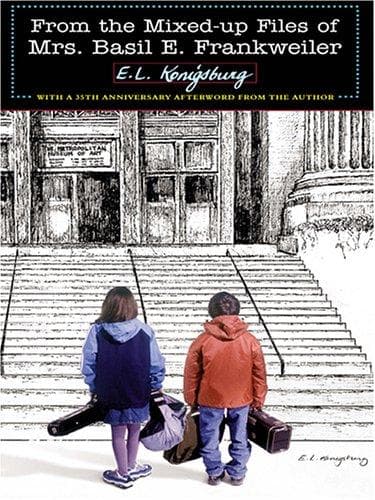
Book details and cover from Google Books.
Ready to read From the Mixed-Up Files of Mrs. Basil E. Frankweiler?
Get your copy on Amazon, or listen to it on Audible. We earn a commission if you buy through these links.