
We earn a commission if you buy through these links. Learn more
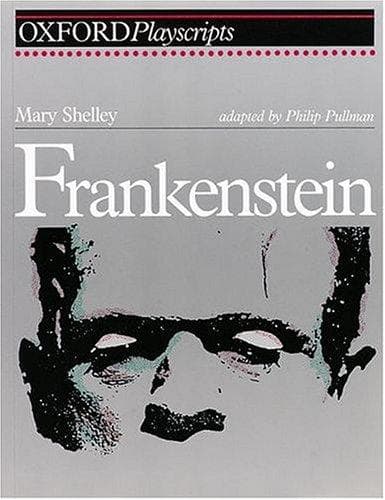
Frankenstein (Oxford Playscripts)
by Mary Shelley, Philip Pullman
Guide by the Books of the Day editors · Updated · How we write our guides
Pullman's stage adaptation of Shelley's gothic classic strips the novel to its dramatic core, making it a quick, vivid way to meet the creature, Victor, and their moral argument.
What Creators Say About Frankenstein (Oxford Playscripts)
2 creators reviewed Frankenstein (Oxford Playscripts) on YouTube between 2010 and 2025, with 17.2M views between them. Their opinions are their own; we picked these reviews, we didn't write them.
What It's About
This is a playscript rather than a novel: Philip Pullman's version of Mary Shelley's 1818 story, prepared for the Oxford Playscripts series for classroom and rehearsal use. It keeps the story's main shape, a scientist who builds a living being from assembled parts, abandons it, and then has to face what he has done. Instead of long description and nested letters, it works through dialogue, stage directions, and a small number of settings.
The experience is quick and direct. Without the novel's slower narration, the emotional pressure comes from confrontation: scenes where Victor and the creature face each other and argue over responsibility, pity, and what a made creature is owed. Pullman's writing is clean and speakable, so the lines carry more weight than the atmosphere. Reading it alone, you have to imagine the lighting, the mountains, and the sound, and in a classroom or theatre those choices become the production's job.
Shelley's concerns with creation, neglect, and the limits of science remain intact. Readers who know the novel will notice what is trimmed and what is sharpened, which is part of the interest. Treat it as a way in, or as a companion to the original, rather than a full substitute for it.
Read this if you…
- want a fast, vivid entry into Shelley's story, before or after reading the novel
- are studying Frankenstein in school or plan to stage it yourself
- enjoy dialogue-driven writing and arguments about responsibility more than atmosphere
Skip it if you…
- want the full novel's voices, letters, and landscapes
- expect a conventional horror thriller with monster set pieces
Key Ideas
- 1
Creation without responsibility
The central wrong in the play is not that Victor makes a creature but that he walks away from it. The script keeps returning to the gap between making something and caring for it, which gives the drama its moral weight. Victor's choices feel less like villainy and more like a failure to take ownership, and that makes his guilt uncomfortable to watch.
- 2
The creature as a reasoning, wounded figure
The creature learns language and moral feeling by observing people, then is rejected for his appearance. In dialogue, he becomes articulate and sharp, pressing Victor with logic and grievance. This makes him more than a monster: audiences are asked to weigh fear against pity and to decide how much of his anger comes from how he was treated.
- 3
Ambition and the cost of knowledge
Victor pursues discovery for glory and private obsession, not for the good of others. The play asks what it means to chase knowledge without considering who pays for it. The science itself is left vague, so attention stays on the human consequences of ambition rather than on laboratory method.
- 4
Adaptation as compression
Pullman cuts the novel's frame and many of its reflections to fit a stage, which makes the arguments easier to follow. The gain is clarity and pace. The cost is that some of the novel's interior texture disappears. Comparing the two versions shows how much of the story depends on narration rather than action.
Limitations
Because it is a playscript, it gives much less access to the inner lives of Victor and the creature than the novel does. The frame narrative and many of the reflective passages are gone, so some readers will find the emotional arc thinner. A script also reads differently from a performance, and reading alone asks more of your imagination than a staged version would. Anyone expecting the full philosophical texture of the 1818 text should go to the original as well.
Questions Readers Ask
- Is this the same as reading the Frankenstein novel?
- No. It keeps the main story and its central confrontations but drops much of the novel's narration and reflection. Think of it as a condensed version that foregrounds dialogue and conflict. Many readers use it alongside the novel, comparing what each version emphasizes.
- Is it suitable for teenagers?
- Yes. The language is clear and the play is widely taught in schools, so it suits teenage readers well. The themes of abandonment, guilt, and cruelty are serious, and they are handled directly. Younger readers may find the moral arguments demanding, but the script is short and accessible.
- Published
- 1990
- ISBN
- 9780198312673
- Difficulty
- beginner
- Category
- Children's Books
Book details and cover from Google Books.
Ready to read Frankenstein (Oxford Playscripts)?
Get your copy on Amazon, or listen to it on Audible. We earn a commission if you buy through these links.