
We earn a commission if you buy through these links. Learn more
Founding Mothers
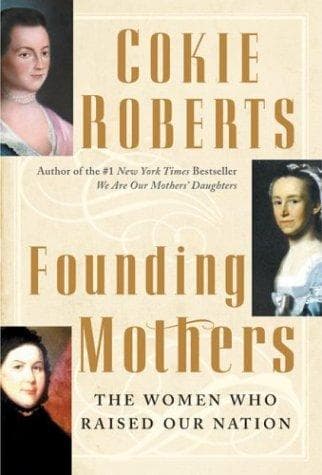
Cokie Roberts makes the founding era personal, telling the Revolution and early republic through the wives, mothers, and friends of famous men, using their own letters.
What It's About
Founding Mothers is nonfiction, although this page lists it under Fiction. Cokie Roberts, a longtime NPR and ABC News commentator, tells the story of the American Revolution and the early republic through the women around the men who usually fill textbooks: wives, mothers, sisters, and friends of figures such as George Washington, John Adams, and Alexander Hamilton. Dolley Madison and others appear as the country takes shape.
Roberts leans heavily on letters and personal papers, so the book moves at the pace of domestic life. Wartime separations, household finances, childbirth, illness, and political news reaching the kitchen table all receive as much attention as the battles and debates. Her style is conversational and narrative rather than argumentative. She builds a mostly chronological story and lets the women's own words carry the emotion.
Reading it feels like listening to a warm, well-informed storyteller who admires her subjects. It is quick and easy to follow, and it leaves you with a clearer sense of how much these women managed and how little formal power they had.
Read this if you…
- want an accessible entry point into early American history
- are curious about the private lives behind famous founders
- enjoy narrative history that centers personal relationships and family letters
Skip it if you…
- want a rigorous academic analysis of women's legal status in the 1700s
- prefer dense archival detail or heavily footnoted scholarship
Key Ideas
- 1
Politics ran through the household
Roberts shows that major decisions about money, property, and public reputation were often made at home. Wives and female relatives managed estates, handled correspondence with officials, and kept families functioning while their husbands were away, which gave them practical influence even without a formal public role.
- 2
Letters as the record of a partnership
Much of the book's warmth comes from the correspondence between spouses and close friends. These letters reveal affection, worry, and disagreement, and they show how couples argued about politics and family matters. Reading them gives a more intimate picture of the founders than official documents usually do.
- 3
Influence without the vote
The book examines how women shaped public life without voting, holding office, or owning much property in their own right under the law of the time. Roberts treats their influence through persuasion, social networks, and family ties, which invites readers to think about what counted as political power in this period.
- 4
The hardships of the home front
War and revolution brought danger, scarcity, and long separations to the households left behind. Roberts uses these experiences to show that the founding was also lived by people far from the battlefield, whose work and sacrifice rarely reached official histories.
Limitations
Roberts is a broadcaster writing for a general audience, so the book relies largely on published letters and existing secondary work rather than new archival research, and it does not engage deeply in debates among historians. Critics have said its admiration can tip into hero-worship, smoothing over the disputes, compromises, and contradictions of its subjects. Slavery and the lives of enslaved women receive less attention than the family story. Women who left few written records are largely absent. Published in 2004, it remains a useful introduction, but newer scholarship has added considerably to what we know about women in this period.
Questions Readers Ask
- Is Founding Mothers fiction?
- No. Although this page lists the category as Fiction, Founding Mothers is nonfiction history. Cokie Roberts draws on letters and documented accounts of the lives of women connected to the American Revolution and the early republic. If you want a novel about this era, you will need a different book.
- Who is this book best for?
- It suits readers who are new to the period or who want a human-scale view of the founders. It is especially good for people who found the usual textbook accounts of the Revolution too abstract. Readers who want a single, deeply researched biography of one founder should look elsewhere.
- How does it compare to David McCullough's John Adams?
- McCullough's John Adams follows one man in depth across his whole career, while Founding Mothers spreads across several women and their households. Roberts is lighter and more conversational, and she covers a wider cast. If you want a detailed portrait of one political life, McCullough is the better choice.
- Published
- 2004
- ISBN
- 9780061867460
- Difficulty
- beginner
- Category
- Fiction
Book details and cover from Google Books.
Ready to read Founding Mothers?
Get your copy on Amazon, or listen to it on Audible. We earn a commission if you buy through these links.