
We earn a commission if you buy through these links. Learn more
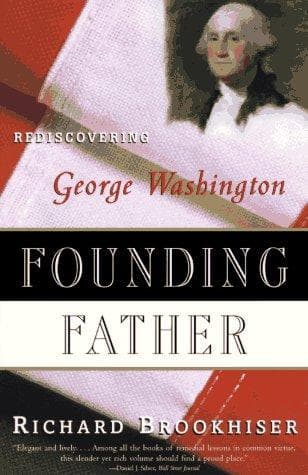
Founding Father
A short, opinionated portrait that argues George Washington was less a marble statue than a self-made man who worked hard at character, and shows why that matters.
What It's About
Richard Brookhiser's Founding Father is a brief biography of George Washington written by a historian with a clear point of view. Brookhiser, a longtime editor at National Review, is not trying to produce an exhaustive life. He moves through Washington's career at a brisk pace, from his Virginia youth and surveying work through the French and Indian War, the Revolution, the presidency and his retirement, while returning again and again to one question: how did a man of modest beginnings become the figure everyone else measured themselves against?
The answer Brookhiser favors is character, and specifically character as something Washington built on purpose. He shows a man who was intensely aware of how he appeared to others, who guarded his temper, and who treated restraint as a discipline rather than a natural gift. That emphasis works as a counterweight to the image of Washington as a cold, wooden figure, though Brookhiser's admiration is open and can read as partisan rather than neutral.
The experience is that of a compact, essay-length life rather than a deep archive dive. Expect a steady narrative and a lot of attention to judgment and decision-making in war and politics. You will finish with a clear sense of the man's temperament and of why his choices set precedents for the young republic, but not with the full texture of eighteenth-century life or the private Washington found in his finances and household papers.
Read this if you…
- want a short, opinionated biography rather than a multi-volume life
- are interested in how leaders build their character and public image
- want a conservative-leaning reading of the founding era
Skip it if you…
- want a thorough, archive-based account of Washington's private life and finances
- prefer historians who keep their own judgments largely out of the story
Key Ideas
- 1
Character as something built
Brookhiser argues that Washington's self-command was cultivated through repeated effort, including his well-known boyhood habit of copying out rules of conduct. The point is that his famous composure was a skill he practiced, which makes him more relatable and more instructive than a figure of pure temperament.
- 2
Awareness of public image
Washington understood that he was always being watched, and he used that awareness deliberately in his dress, bearing and conduct in office. The book treats this not as vanity but as a form of responsibility, a way to hold authority in a new republic without relying on charisma or force.
- 3
Restraint as political strength
Brookhiser makes a case that Washington's refusals to seize power, including stepping away from command and leaving the presidency after two terms, were central to the republic's early survival. Readers see how a willingness to give up power became a source of authority in itself.
- 4
Judgment over brilliance
In war and government, Brookhiser stresses prudence, steadiness and patience over flashy genius. The book makes the argument that these qualities are underrated in how we remember leaders, and it asks readers to weigh Washington's choices by their consequences rather than by drama.
Limitations
Because the book is brief, it moves quickly over many episodes and leaves little room for debate among historians. Its admiration is open, and some readers will find the portrait too favorable. The moral weight of Washington's enslaved workforce, a major subject in newer scholarship, gets far less room here than it would in a longer study, so readers should look to more recent work for that part of his story.
Questions Readers Ask
- Is this a good first book about George Washington?
- Yes, if you want a short starting point. It is readable and gives a clear shape to his life, from youth through the presidency. Once you finish, a longer biography can fill in the gaps, and you will know which questions to bring to it.
- How does it compare to Ron Chernow's Washington: A Life?
- Chernow's book is much longer and more comprehensive, drawing on wider research and giving more attention to Washington's finances, family and enslaved workforce. Brookhiser is briefer and more interpretive, with a sharper thesis about character. Read Chernow for completeness and Brookhiser for a focused argument.
- Is the book still relevant?
- The core argument about Washington's character and self-discipline remains a useful lens, though the book predates many newer studies of the founding era. Treat it as one informed view rather than the final word, and read it alongside more recent scholarship for a fuller picture.
- Published
- 1996
- ISBN
- 9780684822914
- Difficulty
- beginner
- Category
- Biographies
Book details and cover from Google Books.
Ready to read Founding Father?
Get your copy on Amazon, or listen to it on Audible. We earn a commission if you buy through these links.