
We earn a commission if you buy through these links. Learn more
Fool's gold
by Gillian Tett
Tett, a Financial Times journalist trained as an anthropologist, traces how a small JP Morgan derivatives team's bets on credit products helped set the stage for the 2008 financial crisis.
What It's About
Fool's Gold is a narrative account of how modern finance drifted into the complex credit derivatives that played a central role in the 2008 crisis. Tett focuses on a close-knit group of JP Morgan bankers who helped develop credit default swaps and related products in the late 1990s, and follows how those tools spread through the wider financial system. Rather than offering a dry explainer of the instruments, she puts people, meetings, and internal politics at the center, so the reader sees how decisions made inside one firm and one culture ended up shaping markets far beyond it.
The approach is reportorial and character-driven, with a strong sense of place and institutional detail. Tett's background as an anthropologist shows in how she examines the habits, jargon, and unspoken assumptions of the banking world, and why smart people could miss what was building around them. The book reads more like a well-told investigation than a textbook, though it does require some patience with the mechanics of the products.
The experience is part history of finance, part warning about how institutions talk themselves into risk. Readers come away with a clearer picture of how complexity can hide danger, and of why the people closest to a problem are not always the ones who see it. It works best for those who want the story behind the crisis rather than a policy-focused post-mortem.
Read this if you…
- want the human and institutional story behind the 2008 crisis rather than a policy summary
- are curious how a financial product started and spread through one firm and then the wider market
- enjoy long-form reporting that explains complicated systems through people and their decisions
Skip it if you…
- want a technical manual on how derivatives are priced or structured
- need a short, fast read or a clear list of regulatory fixes
Key Ideas
- 1
How credit derivatives were born inside one bank
Tett traces the origins of credit default swaps to a specific group at JP Morgan that wanted to manage loan risk more flexibly. The book shows how a practical idea for moving risk off a balance sheet grew into a trading market that few outside the business understood, and how that early innovation set patterns that later spread across Wall Street.
- 2
Silos and the cost of narrow thinking
A recurring theme is how departments within large banks often failed to share information about the risks they were building. Tett argues that these organisational boundaries, more than any single bad actor, allowed dangerous exposures to grow unnoticed, and that the people responsible for oversight frequently lacked the full picture.
- 3
Financial innovation outpacing understanding
The book examines how instruments designed to spread risk could also concentrate it in hidden ways. Tett shows regulators, executives, and even traders relying on models and assumptions they did not fully test, leaving the system vulnerable when conditions changed and the models stopped working as expected.
- 4
Culture as a driver of financial risk
Using an anthropologist's eye, Tett looks at the rituals, incentives, and shared beliefs inside banking. She suggests that a culture that rewards novelty and short-term results can make excessive risk feel normal, which helps explain why warning signs were so often dismissed by people who were otherwise capable.
Limitations
Some readers find the book's focus on one bank and a relatively small group of people too narrow for understanding the whole crisis, since mortgage lending, housing markets, and wider macroeconomic forces get less space. The story also leans on interviews and insider accounts, which can make it hard to check every claim independently. Because the book was written shortly after the crisis, later research and regulatory changes have added perspectives it does not reflect. Readers wanting a full economic analysis may need to pair it with other sources.
Questions Readers Ask
- Is Fool's Gold a good first book on the 2008 financial crisis?
- It can be, especially for readers who prefer narrative to analysis. Tett explains the key ideas as she goes, but the book assumes you are willing to follow financial jargon. If you want a broader overview of mortgages, housing, and government responses, consider pairing it with a book that covers those areas more directly.
- How does Fool's Gold compare to The Big Short?
- The two books cover similar ground but feel very different. The Big Short is a fast, character-driven story about a few investors who bet against the housing market. Fool's Gold is slower and more analytical, focusing on the institutions and culture that created the instruments behind the crisis.
- Published
- 2009
- ISBN
- 9781408701645
- Difficulty
- intermediate
- Category
- Business
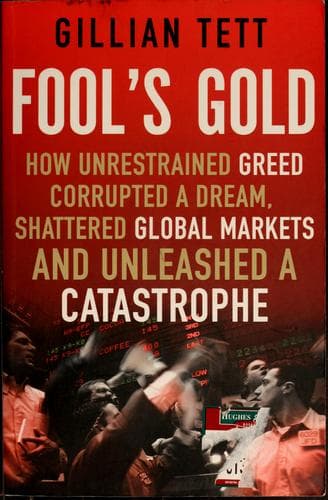
Book details and cover from Google Books.
Ready to read Fool's gold?
Get your copy on Amazon, or listen to it on Audible. We earn a commission if you buy through these links.