
We earn a commission if you buy through these links. Learn more
Flowers for Algernon
by Daniel Keyes
Guide by the Books of the Day editors · Updated · How we write our guides
Told through one man's progress reports as an experimental surgery changes his mind, this short novel makes you feel how intelligence shapes the way people treat us, and it stays with you long after the last page.
What Creators Say About Flowers for Algernon
2 creators reviewed Flowers for Algernon on YouTube between 2020 and 2023, with 121.2K views between them. Their opinions are their own; we picked these reviews, we didn't write them.
What It's About
Flowers for Algernon is a novel told as a series of progress reports written by Charlie Gordon, a man in his thirties with an intellectual disability who works sweeping floors at a bakery in New York and attends an adult education class. He volunteers for an experimental surgery that has already been tried on a laboratory mouse named Algernon, and the reports track his changing mind as the procedure takes effect.
The form is the point. The early reports are written in simple, misspelled sentences, and as Charlie grows more capable, the prose becomes fluent, self-aware, and sometimes showy. You watch the story change through the writing itself. Keyes uses the gap between what Charlie understands and what he can express to create both tension and quiet humor. Some entries are personal rather than clinical, which lets you see the people around him more clearly than he can at first.
Reading it is an emotional experience more than an intellectual puzzle. It asks uncomfortable questions about how we value intelligence, how people treat those they consider lesser, and what a person owes to the self they used to be. It is short enough to finish in a few sittings, but it lingers.
Read this if you…
- want an emotionally direct novel you can finish in a weekend
- are interested in how society treats intelligence and disability
- enjoy report-style or diary-style narration that changes as the story unfolds
Skip it if you…
- want a fast-moving plot, thriller pacing, or a lighter read
- prefer science presented accurately and in detail, since the surgery is fictional and the science is simplified
Key Ideas
- 1
Intelligence as a measure of human worth
The novel shows how Charlie's value shifts in other people's eyes as his intelligence rises and falls. Friends, coworkers, and scientists often treat him according to his test results rather than the person he is, and the book makes you notice how easily we make the same judgment in everyday life.
- 2
Language as a window into the mind
Because the narration changes with Charlie's abilities, you experience cognition from the inside. Keyes makes the reader feel how thought shapes expression, and how a richer vocabulary can bring new insight and new loneliness at the same time.
- 3
Loneliness that intelligence does not fix
Charlie's growing mind does not automatically bring him belonging. He struggles to connect with people who once accepted him, and the book suggests that understanding more does not guarantee being understood.
- 4
The ethics of experimenting on people
The scientists are driven by ambition and scientific curiosity, while Charlie is the subject of their work. The novel asks whether a person can consent meaningfully to something that may change who they are, and who gets to decide what counts as progress.
Limitations
The science is dated and simplified, and the surgery is a plot device rather than a realistic procedure. Some critics argue that the novel uses Charlie's disability as a narrative tool, and that its portrayal of disability reflects the attitudes of its era. The supporting characters are sketched more than developed, and the book's direction is signaled early, so some readers may find its emotional beats familiar. These criticisms don't erase its power, but they're worth knowing before you start.
Questions Readers Ask
- Is Flowers for Algernon really a psychology book?
- No, it is a novel, although its category reflects how often it appears in psychology, education, and ethics courses. It is fiction, but it engages seriously with questions about cognition, identity, and how people judge one another. If you want nonfiction on the same themes, look for books on the psychology of intelligence or disability studies.
- Should I read the short story before the novel?
- You don't need to. Keyes first published a short story in 1959 and later expanded it into the novel. The novel is complete on its own, and it develops the characters and the emotional arc far more fully than the shorter version does.
- How does it compare to The Curious Incident of the Dog in the Night-Time?
- Both are emotionally direct novels narrated by a character whose mind works differently from most people's. Haddon's book is more playful and mystery-driven, while Keyes's is more intimate and focused on a single transformation. If you liked the voice in one, the other is a natural next read.
- Published
- 1966
- ISBN
- 9782081620445
- Difficulty
- beginner
- Category
- Psychology
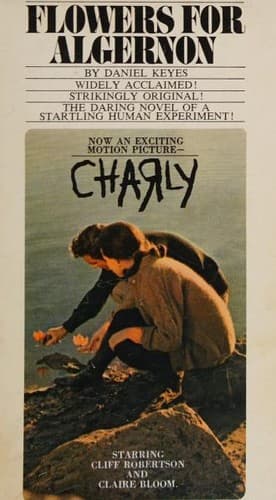
Book details and cover from Google Books.
Ready to read Flowers for Algernon?
Get your copy on Amazon, or listen to it on Audible. We earn a commission if you buy through these links.