
We earn a commission if you buy through these links. Learn more
Fifty Shades of Grey
by E. L. James
On screen: Fifty Shades of Grey (film, 2015)
Guide by the Books of the Day editors · Updated · How we write our guides
A bestselling erotic romance that began as Twilight fan fiction, worth reading for its compulsive pacing and as a cultural touchstone, but only if you can tolerate its repetitive prose and lopsided power dynamics.
What Creators Say About Fifty Shades of Grey
2 creators reviewed Fifty Shades of Grey on YouTube between 2013 and 2025, with 1.1K views between them. Their opinions are their own; we picked these reviews, we didn't write them.
What It's About
Fifty Shades of Grey, published in 2011, started life as fan fiction built on the Twilight series before being reworked into an original novel. It became one of the best-selling books of its era, and it is still a reference point for anyone curious about modern mainstream erotica. The story is narrated in the first person by Anastasia Steele, a young woman near the end of her college degree who is sent to interview Christian Grey, a wealthy and guarded businessman. Their relationship develops into one built around his specific sexual preferences and a formal arrangement that gives him considerable control.
The writing is fast, dialogue-heavy, and built around emotional and physical tension. Chapters are short, emails and messages are inserted directly into the text, and much of the book runs on Ana's self-doubt and her constant, exaggerated physical reactions to Christian. The experience is less like reading a literary novel and more like following a serial that keeps asking one question: will these two get together, and on what terms?
Expect explicit sexual content throughout. Its appeal lies in longing, mystery around the hero, and the pull of an intense romance rather than in any careful exploration of the world it depicts. Readers who go in knowing it is a romance first, with the kink serving as a frame, will likely have the most satisfying time with it.
Read this if you…
- want a fast, emotionally charged romance with a brooding, wealthy lead
- are curious about why this book became a major cultural phenomenon
- enjoy dialogue-driven stories where tension builds slowly across many scenes
Skip it if you…
- want a nuanced or accurate portrayal of BDSM or consent
- find repetitive prose and frequent physical description tiring
Key Ideas
- 1
Romance built on an unequal power dynamic
The central tension comes from Christian's wealth, authority, and emotional guardedness set against Ana's relative inexperience. Much of the book's heat and anxiety comes from her trying to read him and decide how far she is willing to go. Readers who find this dynamic compelling will find the book absorbing; those who find it unsettling will find it hard to enjoy.
- 2
Consent framed as a plot device
The book repeatedly stages discussions about boundaries, contracts, and what each partner agrees to. These scenes are central to the story, but they often work more to build suspense and character than to examine consent in any rigorous way. Whether you read them as meaningful or as window dressing will shape your reaction.
- 3
Ana's internal voice as the main lens
Everything is filtered through Ana's first-person perspective, including her wry commentary and her self-conscious inner voice. This gives the book its humor and its sense of intimacy, and it is also why the story feels so immediate. Her perspective is limited, and the book seldom steps outside it to offer a broader view.
- 4
Origins in Twilight fan fiction
Understanding that the novel grew out of fan fiction helps explain its structure, its pacing, and its focus on a brooding male lead seen through a devoted female narrator. Knowing this history does not change the book, but it makes its popularity and its quirks easier to place.
Limitations
The prose is often criticized for repetition, overused descriptive phrases, and a heroine whose self-doubt is relentless. The plot moves slowly, with a lot of time spent on gifts, luxury, and emotional back-and-forth rather than on developments in the wider world. Many readers and practitioners in the BDSM community have said the portrayal is shallow and sometimes misleading about safety and negotiation. The book's treatment of power and control is debated, and its gender politics have not aged especially well for many readers.
Questions Readers Ask
- Is Fifty Shades of Grey worth reading if I have already seen the films?
- It depends on what you enjoyed in the films. The book contains more interior monologue, more repetition, and far more explicit content than the movies. If you want the full story as Ana experiences it, the book is worth reading. If you mainly want the plot, a summary may give you what you need.
- Is this book good for readers who like Twilight?
- Some readers who enjoyed Twilight find the same pattern of intense devotion and a brooding male lead appealing here, which is part of the book's origin. Others find the adult content and the power dynamics a jarring change. It is a closer match for readers who enjoyed the romantic tension of Twilight than for those who liked its fantasy elements.
- Published
- 2000
- ISBN
- 9781101911600
- Difficulty
- beginner
- Category
- Fiction
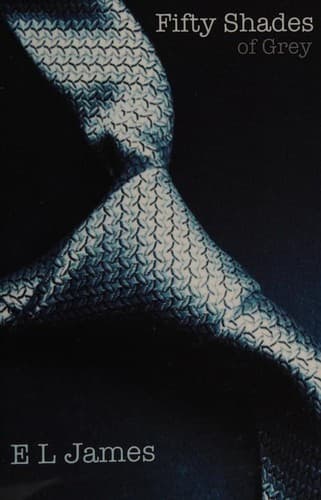
Book details and cover from Google Books.
Ready to read Fifty Shades of Grey?
Get your copy on Amazon, or listen to it on Audible. We earn a commission if you buy through these links.