
We earn a commission if you buy through these links. Learn more
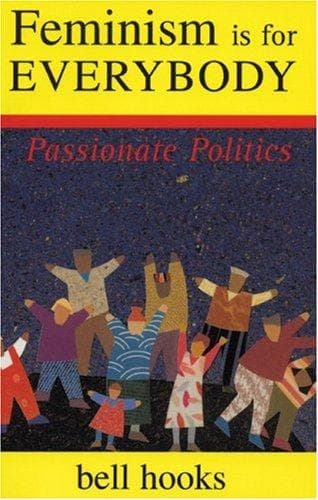
Feminism Is for Everybody
by bell hooks, Amaia Apalauza Ollo
A short, plain-spoken case that feminism is a movement to end domination for everyone, not a club for people who already agree, and a useful starting point for readers wary of the label.
What It's About
Feminism Is for Everybody is a short, plain-spoken introduction to feminism by bell hooks, first published in 2000. Its core argument is that feminism is not a club for women who already agree with each other but a movement aimed at ending sexism and the wider systems of domination that sexism supports, including racism, class exploitation, and violence. hooks wrote it to answer a common frustration: people hear the word feminism and picture something narrow, angry, or irrelevant to their lives, and she wants to show why it belongs to everyone.
The book is organized as a series of brief, topic-based essays rather than one sustained argument, so you can read it in a single sitting or dip into sections. Her voice is direct and conversational, closer to a teacher talking across a kitchen table than to an academic lecture. She draws on everyday situations from family life, school, work, media, and politics, and she is willing to name uncomfortable truths about how people, including feminists, reproduce the same hierarchies they oppose.
Reading it feels less like studying a theory and more like being asked to examine your own habits. It is brisk, sometimes blunt, and built to provoke reflection rather than offer a complete program. Expect a book that poses questions and challenges easy assumptions more than one that supplies detailed policy proposals or scholarship.
Read this if you…
- are curious about feminism but wary of the label
- want a short, accessible introduction before tackling longer feminist theory
- are interested in how gender roles affect men as well as women
Skip it if you…
- want rigorous scholarship, detailed data, or specific policy proposals
- prefer a long, linear argument over short, punchy essays
Key Ideas
- 1
Feminism as a movement to end domination
hooks defines feminism by its goal, ending sexist oppression, rather than by the sex of the people involved. That framing makes it open to men and women alike. Her point is that anyone raised in a sexist culture has something to unlearn, so the work is shared rather than assigned to one group.
- 2
Sexism harms men as well as women
hooks argues that rigid gender roles pressure men to suppress emotion and to equate power with masculinity, and that this produces damage to men themselves and to the people around them. This is a key reason she sees men as having a real stake in feminism rather than being its opponents by default.
- 3
Race, class, and sexism are linked
She criticizes feminist movements that centered privileged white women and ignored how sexism intersects with racism and economic inequality. For hooks, a movement that does not address these links is both less honest and less effective at changing the conditions women actually face.
- 4
Feminism as everyday practice
Rather than treating feminism mainly as an identity to declare, hooks asks readers to practice it in daily life: in how they raise children, treat partners, talk about work, and respond to media. The book's emphasis is on small, ongoing changes in ordinary behavior.
Limitations
Written around 2000, the book's examples from media, technology, workplaces, and activism feel dated, and its references to culture and statistics are not updated. Some readers find the tone preachy or repetitive, and its brevity means many topics receive only a few pages. Its treatment of gender leans on a fairly binary framing, and it does not explore transgender experience or disability in depth. Later writers have extended many of its ideas, so it works best as a foundation rather than a final word.
Questions Readers Ask
- Is Feminism Is for Everybody still relevant today?
- Its central arguments about domination, gender roles, and the links between sexism and racism or class remain widely discussed, so the core ideas hold up. The specific examples are dated, and newer feminist writing covers gender identity, disability, and global issues more fully. Read it as a foundation and pair it with more recent work.
- How does it compare to hooks's Feminist Theory: From Margin to Center?
- Feminist Theory: From Margin to Center is more academic and historically detailed, with a sharper focus on theory and the history of feminist movements. Feminism Is for Everybody is shorter, more conversational, and aimed at general readers. If you want an accessible entry point, start here; if you want the deeper scholarly foundation, read the earlier book next.
- Published
- 2000
- ISBN
- 9788494719615
- Difficulty
- beginner
- Category
- Tech
Book details and cover from Google Books.
Ready to read Feminism Is for Everybody?
Get your copy on Amazon, or listen to it on Audible. We earn a commission if you buy through these links.