
We earn a commission if you buy through these links. Learn more
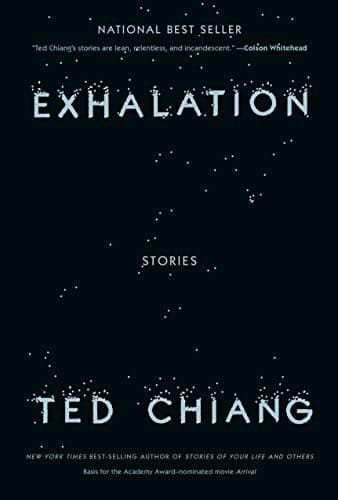
Exhalation
by Ted Chiang
Guide by the Books of the Day editors · Updated · How we write our guides
Ted Chiang's 2019 story collection of precise thought experiments on free will, memory, and labor, for readers who want big ideas carried by real human feeling.
What Creators Say About Exhalation
2 creators reviewed Exhalation on YouTube between 2020 and 2026, with 264.4K views between them. Their opinions are their own; we picked these reviews, we didn't write them.
What It's About
Exhalation is a collection of short science fiction stories by Ted Chiang, a writer known for slow, careful builds around a single unusual premise. Most of the pieces start from a what-if about technology, physics, or the nature of the mind, then follow that premise to its consequences with patience. The stories are less about action than about reasoning, and they reward readers who enjoy watching an argument unfold through characters who are trying to understand their own situations.
Chiang's prose is clean and unshowy. He rarely chases lush description or fast plot twists. Instead he uses a steady, almost essayistic voice, often framed as a journal, a report, or a personal account, which makes the speculative elements feel grounded. Several stories hinge on a concept that is explained in plain language and then tested against human relationships, grief, and ambition.
Reading the collection is quiet and absorbing. You will likely finish each story wanting to think about it for a while afterward, and some ideas will stay with you longer than the plots do. The experience suits a reader who likes to sit with a question. It is less suited to anyone who wants comfort, momentum, or a large cast of colorful characters.
Read this if you…
- enjoy science fiction that is driven by ideas more than action
- like stories that examine philosophical questions through ordinary people
- want to read something thoughtful that rewards slow, attentive reading
Skip it if you…
- want fast plots, big battles, or cliffhanger endings
- prefer rich, sensory world-building over precise logical premises
Key Ideas
- 1
Speculative premises driven by careful reasoning
Each story is built on one carefully chosen change to the world, such as a new kind of information technology or a shift in how we perceive time or choice. Chiang then works out the logic of that change in detail, so the fiction feels like a controlled experiment rather than a vague fantasy.
- 2
Free will and determinism under pressure
Several pieces ask what choice means when the future can be known, predicted, or observed. The stories treat these questions as practical problems people must live with, not as abstract debates, and they show how knowledge can change behavior and emotion.
- 3
Technology as a mirror for human anxiety
The collection returns repeatedly to tools that promise to record, remember, or replace human abilities. Chiang is interested in what such tools do to parenting, work, and trust, and he tends to ask what people lose and gain rather than offering a simple verdict.
- 4
Science and faith as ways of knowing
Some stories set scientific explanation beside religious or spiritual frameworks and examine whether they answer the same questions. Chiang does not mock either side; he is curious about how each shapes the way people face uncertainty and meaning.
Limitations
Chiang's stories are often cool and cerebral, and some readers find the characters more like vehicles for the ideas than fully developed people. The prose is intentionally restrained, which can feel flat to those who expect lyrical language. A few pieces lean toward expository passages that explain the premise at length, and readers who want emotional intensity above all may find the collection more admirable than moving. Because it is a set of short stories, the mood changes from piece to piece, and not every idea lands with equal force.
Questions Readers Ask
- Is Exhalation a good first Ted Chiang book?
- It can be, though many readers start with Stories of Your Life and Others, his earlier collection that includes the story behind the film Arrival. Exhalation is a good choice if you already know you like idea-driven fiction. It is equally rewarding for a new reader who wants to see Chiang's range across several premises.
- Is Exhalation still relevant with today's technology debates?
- Yes. Many of the stories deal with memory, automation, and the ethics of tools that extend human capacity, which feel close to current conversations about AI and surveillance. Chiang tends to explore consequences rather than predict specific products, so the ideas remain useful long after the tech details have shifted.
- How does it compare to other short story collections of speculative fiction?
- Chiang is more methodical than many short fiction writers in the genre. Where others may lean on atmosphere or social satire, he builds each story around a precise logical question. Readers who enjoy that rigor often find his work more satisfying than broader, more impressionistic collections.
- Published
- 2014
- ISBN
- 9788381168731
- Difficulty
- intermediate
- Category
- Fiction
Book details and cover from Google Books.
Ready to read Exhalation?
Get your copy on Amazon, or listen to it on Audible. We earn a commission if you buy through these links.