
We earn a commission if you buy through these links. Learn more
Every last word
Guide by the Books of the Day editors · Updated · How we write our guides
A warm, honest YA novel about living with obsessive-compulsive disorder, where a small poetry group becomes the place a guarded teen finally starts telling the truth.
What Creators Say About Every last word
2 creators reviewed Every last word on YouTube between 2015 and 2021, with 10.2K views between them. Their opinions are their own; we picked these reviews, we didn't write them.
What It's About
Every Last Word is a young adult novel narrated by Sam, a high school junior whose obsessive-compulsive disorder shapes nearly every part of her day. Her thoughts loop, her rituals take up time she would rather spend living, and she has worked hard to keep her condition hidden from the people around her. When she finds her way into a small group of students who share their poems, she starts to hear her own feelings in other voices.
The style is accessible and fast-moving, written in the first person so that you stay close to Sam's anxious, self-critical thinking. Poems appear as a regular thread, and they do real work: they give the characters a way to say things they cannot say out loud. The book is short enough to finish in a few sittings, though its emotional stakes are heavier than the page count suggests.
Reading it is less like following a plot than sitting with someone who is trying to tell the truth about herself. Some readers will find the depiction of compulsions uncomfortably close, while others will find it clarifying. Expect a hopeful book that does not pretend recovery is simple, and that trusts teenage readers with hard questions about secrecy, honesty, and how much of yourself to show other people.
Read this if you…
- want an honest, close-up portrayal of living with obsessive-compulsive disorder
- enjoy short contemporary YA novels that focus on emotional change more than plot twists
- are interested in how poetry can help people talk about what they feel
Skip it if you…
- want a clinical or practical guide to treating OCD, since this is a story, not a self-help book
- prefer dense, plot-driven thrillers or fiction with complex structure and surprising reveals
Key Ideas
- 1
Living with OCD from the inside
The novel's main achievement is its point of view. Sam's compulsions and intrusive fears are rendered as she experiences them, so the reader feels the logic of the rituals and the shame that comes with hiding them. It is less an explanation of the disorder than an immersion in what it feels like to be trapped by your own mind, which makes the story persuasive even for readers with no personal experience.
- 2
Secrecy as a slow form of exhaustion
Much of the tension comes from the effort of concealment. Sam spends energy managing how others see her, planning around her habits, and deflecting questions. The book shows how keeping a secret can feel like safety while quietly costing a great deal, and it asks what it takes to stop performing being fine.
- 3
Poetry as a way to speak honestly
Poems give characters permission to say what ordinary conversation makes difficult. The group's writing becomes a bridge between private feeling and public speech, and it shows how a form with rules and white space can make room for things that would otherwise stay unsaid. The verse is more an emotional device than a showcase of technical craft.
- 4
Friendship that requires being known
The relationships in the book test whether friendship can survive honesty. Sam has to decide how much to trust the people around her, and they have to decide how to respond when she finally opens up. The novel treats friendship as something built through disclosure and mistakes, not just shared routines or easy company.
Limitations
As a YA novel, the book keeps its language and scope accessible, so readers looking for deep literary experimentation may find it straightforward. It centers one main experience of OCD, and it does not try to represent the full range of how the disorder appears in different people. Some readers may find the resolution of Sam's story more tidy than real recovery usually is. Its treatment of mental health is sincere, but it is a novel, so it should not be taken as guidance on therapy or medication.
Questions Readers Ask
- Who is Every Last Word best suited for?
- It suits teenage readers and adults who enjoy contemporary young adult fiction, especially those interested in mental health stories told from the inside. It is a good match for readers who have OCD or who love someone who does, though its portrayal is emotional rather than clinical. Readers who want a fast, emotionally direct novel will likely find it rewarding.
- Is the book useful for understanding OCD?
- It can build empathy and give a sense of how intrusive thoughts and compulsions feel, but it is not a reliable source of medical information. For accurate guidance on symptoms and treatment, readers should turn to clinical resources or a professional. The novel works best as a personal story that complements that kind of learning.
- Published
- 2015
- ISBN
- 9781682622056
- Difficulty
- beginner
- Category
- Education
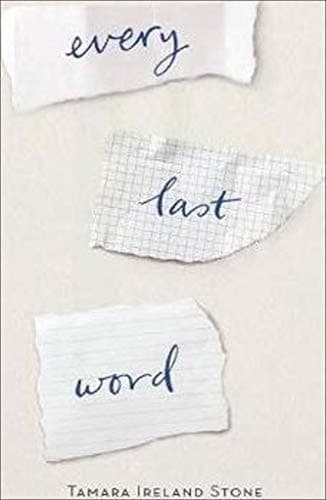
Book details and cover from Google Books.
Ready to read Every last word?
Get your copy on Amazon, or listen to it on Audible. We earn a commission if you buy through these links.