
We earn a commission if you buy through these links. Learn more
Endurance
Guide by the Books of the Day editors · Updated · How we write our guides
A gripping, plainly told survival narrative about Shackleton's stranded Antarctic expedition, built from survivor accounts and well suited to readers who want tension without heavy analysis.
What It's About
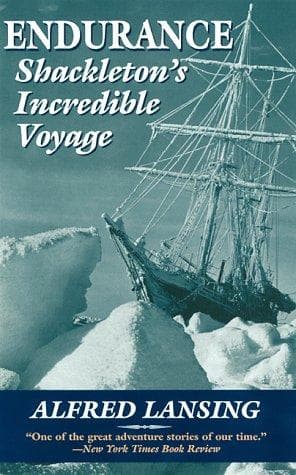
Alfred Lansing's Endurance tells the story of Ernest Shackleton's Imperial Trans-Antarctic Expedition of 1914 to 1917. The plan was to cross Antarctica on foot. Instead, the expedition ship was locked in pack ice in the Weddell Sea and slowly crushed, leaving its men camped on drifting ice with little hope of rescue. The book follows the logistics of that ordeal in detail: how the party lived, what they ate, how they moved their boats and supplies, and how the decisions that followed were made.
Lansing built the narrative from interviews with survivors and from the expedition's records, so the book reads like a steady, chronological adventure rather than a literary reconstruction. Its emphasis is on the everyday texture of survival: cold, monotony, hunger, minor friction among men with nothing to do, and the constant calculation of what could be done next. The prose is clear and unfussy, and the pacing rewards patience.
The experience is tense without being grisly. You feel the long stretches of waiting as much as the sudden crises. Shackleton's leadership is central, but Lansing does not turn him into a saint, and the story's emotional weight comes from ordinary men making hard choices together. Readers who know the outcome will still find the book absorbing, because its interest lies in how it was done.
Read this if you…
- Want a survival story grounded in real logistics and decisions rather than melodrama
- Are curious about polar exploration and how plans collapse under extreme conditions
- Prefer steady, plain narrative nonfiction to dense analysis or lyrical prose
Skip it if you…
- Want a modern critical look at Shackleton's legacy, imperial context, or the expedition's politics
- Need sharp, literary prose or a deeply personal account from a single man's perspective
Key Ideas
- 1
Leadership when the plan has failed
The expedition's original goal died within months, so the book is really about what leadership looks like afterward. Shackleton's choices about abandoning the ship, moving camp across the ice, and finally risking a small boat show how a leader reshapes an objective without losing the group. Lansing shows the reasoning and the costs, not just the outcomes.
- 2
Waiting as the real ordeal
Much of the suffering was not dramatic danger but prolonged idleness in extreme cold. The men had to keep their routines, their spirits, and their bodies functioning through months with no clear end. Lansing gives the monotony real weight, which makes the moments of action feel earned rather than inserted for drama.
- 3
How a group kept itself functioning
The party depended on shared work, rationing, and the particular skills of sailors, navigators, and carpenters. The book shows how discipline, humor, and small compromises held a diverse group together. It is a useful study in how teams behave when they cannot leave and cannot easily fix their situation.
- 4
The open-boat voyage and the crossing
The climax comes when a small group sails a lifeboat across some of the most dangerous water in the world, then crosses unmapped mountainous terrain on foot. Lansing explains the navigation and physical demands in clear, concrete terms, so the reader understands why each step was so precarious.
Limitations
Lansing's book is a product of its era, and its prose can feel dated, with a reporterly distance from the men. Because much of the account rests on survivors' recollections, some details are reconstructed and the interior lives of the crew are only partly visible. The book gives limited attention to the wider imperial and commercial motives behind the expedition. Later works, including Caroline Alexander's The Endurance from 1998, which uses photographs and newer research, offer a richer and more current picture of the same events.
Questions Readers Ask
- Is Endurance still worth reading when newer books exist?
- Yes, especially for the narrative drive and the clear account of the ordeal. Readers who want more visual material or updated research can pair it with Caroline Alexander's later book on the same expedition. Lansing's version remains the more streamlined read.
- Do I need any background in Antarctica or polar history?
- No. Lansing explains the navigation, the ice conditions, and the sequence of events as he goes. A general adult reader who likes adventure nonfiction will follow the story without preparation.
- How does it compare with Shackleton's own account?
- Shackleton's South, written from his perspective, offers a firsthand voice and his own justifications. Lansing's book is more detached and built from many sources, so it gives a broader view of the men and a less personal view of the leader.
- Published
- 1959
- ISBN
- 9780465062881
- Difficulty
- beginner
- Category
- Biographies
Book details and cover from Google Books.
Ready to read Endurance?
Get your copy on Amazon, or listen to it on Audible. We earn a commission if you buy through these links.