
We earn a commission if you buy through these links. Learn more
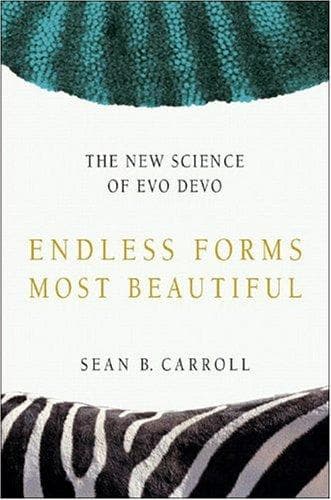
Endless Forms Most Beautiful
Guide by the Books of the Day editors · Updated · How we write our guides
Sean B. Carroll explains how a young field of developmental biology reshaped our picture of animal diversity, showing that most body differences come from changes in how genes are switched on, not from new genes.
What It's About
Endless Forms Most Beautiful, published in 2005, is Sean B. Carroll's attempt to explain how the enormous variety of animal body plans came about, using the then-young field of evolutionary developmental biology, or evo-devo. Carroll is a developmental biologist, and he writes from inside the laboratory, so the book reads as a tour of experiments rather than a survey of fossils. The central puzzle is easy to state: humans and fruit flies share many of the same genes that build bodies, so where does the difference come from?
His answer runs through the control of genes. Much of the action, he argues, lies in regulatory DNA that determines when and where a gene is active, rather than in the protein-coding genes themselves. He walks through examples such as the spots on fly wings, the eyespots on butterflies, and the loss of limbs, showing how a change in one regulatory switch can add, remove, or reposition a structure. The prose is brisk and enthusiastic, full of analogy and of stories about the scientists who did the work.
Reading it feels less like a textbook and more like being guided through a series of lab stories that build toward one argument. Diagrams help with the genetic mechanisms, and Carroll is generally clear about where the evidence is strong and where it is still a hypothesis. Expect to meet unfamiliar terms such as Hox genes and enhancers, but high school biology is enough to follow along.
Read this if you…
- want a clear, story-driven introduction to how genes shape body form
- are curious how evolution can produce large changes from modest genetic adjustments
- enjoy science written by an active researcher who explains experiments in detail
Skip it if you…
- want a narrative history of evolutionary theory or a deep dive into fossils
- need the most current genomics, since the field has moved well beyond this book
Key Ideas
- 1
A shared genetic toolkit across animals
Animals as different as insects and mammals use closely related sets of genes to lay out their bodies. Carroll uses this surprising overlap as the starting point for the whole book, arguing that the question is no longer which genes make animals but how the same genes get deployed in different ways.
- 2
Evolution works through switches more than parts
Changes in regulatory DNA, which controls when and where a gene operates, often matter more than changes to the gene's protein product. Because these switches tend to act in specific tissues, altering one can change a feature in one place without disrupting the whole organism, which makes it a plausible route for evolutionary change.
- 3
Hox genes and the layout of the body
Hox genes help define the head-to-tail sequence of body segments and their identities. Carroll explains how small shifts in how these genes are used can alter which appendages develop where, offering a mechanism for large-scale changes in body form.
- 4
Diversity from reused and rewired parts
Many new forms are built by reusing existing developmental machinery in new places or at new times. The book's examples suggest that much of the variety in nature comes from recombining old components rather than inventing entirely new ones, a theme that makes the diversity of life seem both creative and economical.
Limitations
The book is now about twenty years old, and evo-devo has advanced considerably since, so some examples and interpretations have been refined or revised. Carroll's enthusiasm for the regulatory-switch story can make the case sound tidier than the evidence supports, and critics note that developmental constraints and non-adaptive processes receive less attention than they might. The book also concentrates on a relatively small set of model organisms, so readers should not expect a broad survey of the animal kingdom.
Questions Readers Ask
- Do I need a biology background to read Endless Forms Most Beautiful?
- No specialist training is required, but a high school understanding of genes, DNA, and cells helps. Carroll introduces terms like Hox genes and enhancers as he goes, and the stories of experiments keep the material concrete. Some chapters on genetic regulation take more concentration than the rest.
- How does it compare with other popular books on evolution?
- It is narrower and more technical than general overviews such as those by Richard Dawkins, focusing on how development shapes evolution rather than on the broad case for natural selection. If you want the big picture of evolutionary theory, pair it with a more general introduction. If you want the mechanics of how bodies are built, this is a strong choice.
- Is the book still worth reading today?
- Yes, for the core ideas about regulatory DNA and shared developmental toolkits, which remain central to the field. Readers should treat specific claims as a snapshot of 2005 and look for newer work if they want the latest findings on particular organisms or genes.
- Published
- 2005
- ISBN
- 9780297850946
- Difficulty
- intermediate
- Category
- Science
Book details and cover from Google Books.
Ready to read Endless Forms Most Beautiful?
Get your copy on Amazon, or listen to it on Audible. We earn a commission if you buy through these links.