
We earn a commission if you buy through these links. Learn more
Embassytown
by China Miéville, China Miville
Guide by the Books of the Day editors · Updated · How we write our guides
Miéville's science fiction novel turns a dense question about language into a gripping colonial story, asking what happens when a people's speech cannot carry a lie.
What Creators Say About Embassytown
2 creators reviewed Embassytown on YouTube between 2016 and 2024, with 4.8K views between them. Their opinions are their own; we picked these reviews, we didn't write them.
What It's About
Embassytown is a 2011 science fiction novel by China Miéville. It is narrated by Avice Cho, who grows up in a human settlement on the planet Arieka, a world shared with the Ariekei, an alien people whose language is unlike any human tongue. Humans can talk with them only through a small class of specially trained speakers, and the colony's survival depends on that fragile channel. Avice's story moves between her childhood, her adult life as an outsider inside her own community, and the strange, escalating crisis that tests everything the colony believes about communication.
The book is dense and deliberately strange. Miéville builds a vocabulary of invented terms, and he is more interested in how meaning works than in spectacle, so the prose asks for patience and rereading. Avice's voice is reflective and precise, which gives the novel an intimate quality even when it is wrestling with big linguistic and political ideas. The first half is slower, with long stretches of worldbuilding, before the pace picks up.
Reading Embassytown feels like working on a puzzle that slowly becomes personal. It rewards close attention to sentences and the logic behind them, and by the end the book's questions about language, loyalty, and belonging have a real emotional weight. It is not a light read, but for the right reader it is one of the most thought-provoking novels in its field.
Read this if you…
- enjoy science fiction that treats language as its central subject
- are happy to work through dense prose and invented vocabulary
- want a novel that mixes political tension with philosophical questions
Skip it if you…
- want fast plot momentum from the first page
- prefer clear, self-contained worldbuilding with little technical density
Key Ideas
- 1
Language as the foundation of a society
The Ariekei can only speak in ways that are tied to reality, and the human colony's whole existence rests on being able to use that speech. Miéville makes the reader feel how fragile and political a shared language becomes when only a few people can use it correctly.
- 2
What happens when lies and metaphors fail
The Ariekei struggle with figurative language, and their inability to process lies or abstractions raises the question of what meaning really requires. The novel treats figurative speech not as decoration but as something close to the core of human thought and culture.
- 3
Belonging as an outsider inside your own world
Avice is a colonist who never quite fits into the community that shaped her. Her sense of being both insider and outsider gives the novel its emotional center and makes its linguistic puzzles feel personal rather than abstract.
- 4
Power hidden inside communication
Whoever controls the channel to another people holds real power over them. The book examines how colonial relationships are built on who gets to speak, who interprets, and who is trusted to translate.
Limitations
The first part of the novel moves slowly, and the invented terminology can feel heavy until you settle into it. Some readers find the linguistic ideas more vivid than the alien culture itself, which remains partly opaque by design. Character development outside Avice is limited, so secondary figures can feel more like functions of the plot than fully realized people. The ending may also feel abrupt to readers who expected a more conventional resolution.
Questions Readers Ask
- Do I need a background in linguistics to enjoy Embassytown?
- No. Miéville explains his central ideas through the story and Avice's experience rather than through technical lectures. Some passages reward familiarity with how language works, but a general reader who is willing to slow down and reread a few sentences will follow the book without trouble.
- How does Embassytown compare to other novels about first contact?
- Many first contact stories focus on the arrival of aliens or on conflict between species. Embassytown is more interested in what happens after communication has already been established, and how fragile that understanding can be. Readers who enjoy Ted Chiang's thoughtful approach to language may find a kindred spirit here, though Miéville's style is considerably more ornate and political.
- Published
- 2011
- ISBN
- 9780345524492
- Difficulty
- intermediate
- Category
- Fiction
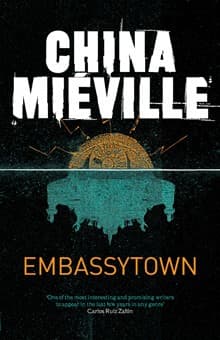
Book details and cover from Google Books.
Ready to read Embassytown?
Get your copy on Amazon, or listen to it on Audible. We earn a commission if you buy through these links.