
We earn a commission if you buy through these links. Learn more
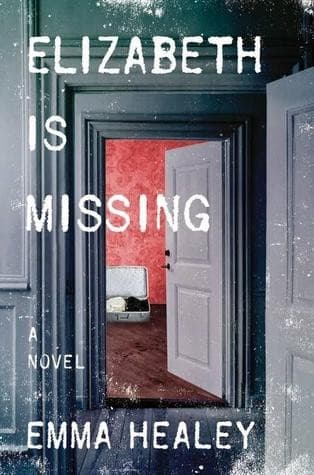
Elizabeth Is Missing
by Emma Healey
Guide by the Books of the Day editors · Updated · How we write our guides
Emma Healey's debut gives a dementia narrator's memory gaps the force of a detective story, making a lost friend and a long-buried family loss both urgent.
What Creators Say About Elizabeth Is Missing
2 creators reviewed Elizabeth Is Missing on YouTube in 2015, with 6.4K views between them. Their opinions are their own; we picked these reviews, we didn't write them.
What It's About
Maud is in her eighties and her memory is slipping. Her close friend Elizabeth has vanished, and the people around Maud seem to brush the disappearance aside. Maud is convinced something is wrong and sets out to find her, relying on notes, reminders, and her own stubbornness, because she cannot fully trust what she remembers from one hour to the next. The novel is told from inside her head, so the reader shares her lurches: a train of thought that starts clearly and then dissolves, a room entered without purpose, a conversation she is sure she had.
Running alongside the present-day search is a second story from Maud's youth, set in the 1940s, about her sister Sukey, who disappeared when they were young. The two timelines are braided together so that memories surface in fragments and slowly gain meaning. Healey's prose is plain and warm, with a dry wit that keeps the sadness from becoming heavy, and she trusts the reader to assemble what Maud cannot.
Reading it feels less like a tragedy than a careful, unsettling puzzle with a tender core. The pacing is deliberately uneven, and some readers will find the repetition frustrating, but that unevenness is part of the experience. Expect to read at an unhurried pace and to carry a steady, low-level anxiety throughout.
Read this if you…
- want a mystery where the detective's own memory is the main obstacle
- are drawn to novels about aging, memory, or family and can handle a sad but humane tone
- prefer quiet, interior fiction that rewards patience over fast plot turns
Skip it if you…
- need a brisk plot with clear answers arriving at a steady pace
- are currently caring for someone with dementia and find memory loss too painful to read about right now
Key Ideas
- 1
Memory as an unreliable narrator
The book's central device is that the reader cannot fully trust the teller. Maud's notes, lists, and repeated reminders show how she builds a working life out of scraps. Healey uses this to make the reader feel the gap between what happened and what Maud can hold onto, so every clue arrives with doubt attached.
- 2
A mystery driven by a failing mind
The search for Elizabeth works like a crime plot, with questions, suspicions, and small discoveries. But the obstacle is not a villain. It is Maud's own memory, which keeps undoing her progress. That turns ordinary errands into tense scenes and makes the investigation feel personal rather than procedural.
- 3
Two timelines braided across decades
The 1940s strand about Sukey is not a flashback that simply explains the present. It runs alongside the search and sheds light on it in uneven ways. Healey lets the past intrude unpredictably, which mirrors how memory works for Maud and rewards readers who pay close attention to small details.
- 4
Dignity, dismissal, and the cost of being overlooked
Much of the emotional weight comes from how others treat Maud: kindly but dismissively, as if her concerns are symptoms rather than information. The book asks what it means to be taken seriously when your own account of the world is in doubt, and it handles this with sympathy rather than melodrama.
Limitations
Some readers find the narrative repetitive, and the middle section can feel slow as Maud circles the same questions. Because the story is seen only through Maud's perception, the wider picture of dementia, including the views of carers and family members, is sketched rather than explored in depth. The 1940s strand is sometimes less fully drawn than the present day, and a few readers may find the mystery's resolution more emotional than satisfying as a puzzle.
Questions Readers Ask
- Do I need to know about dementia to enjoy this book?
- No. The book is written so that you learn what you need as Maud does, through her confusion and her attempts to make sense of it. Some readers who know the condition well appreciate how closely it matches what they have seen, but no prior knowledge is required to follow the story or feel its impact.
- Is Elizabeth Is Missing a crime novel?
- It has the structure and suspense of a mystery, with questions to solve and clues to follow. However, it is more interested in character and memory than in crime and detection. If you want a conventional thriller with a satisfying tidy solution, you may find it more melancholy and reflective than you expect.
- Published
- 2014
- ISBN
- 9781445099132
- Difficulty
- beginner
- Category
- Fiction
Book details and cover from Google Books.
Ready to read Elizabeth Is Missing?
Get your copy on Amazon, or listen to it on Audible. We earn a commission if you buy through these links.