
We earn a commission if you buy through these links. Learn more
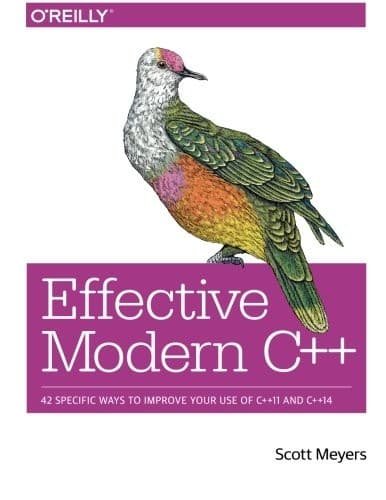
Effective Modern C++: 42 Specific Ways to Improve Your Use of C++11 and C++14
by Scott Meyers
A dense, opinionated guide to writing idiomatic C++11 and C++14 code, where each of its 42 items corrects a habit that modern features make tempting but risky.
What It's About
Effective Modern C++ is Scott Meyers' guide to writing idiomatic code under the C++11 and C++14 standards, which changed the language more than any update since its first standardization. Rather than surveying new features, the book is organized as 42 numbered items. Each one makes a specific claim, explains the reasoning, and shows the mistake it targets, so you can read it in a sitting or dip into a single item when a problem comes up.
The early chapters cover type deduction, auto, and decltype, which many programmers find confusing because the compiler now infers so much. Later sections take on move semantics, smart pointers, lambdas, and the concurrency library. Meyers keeps returning to one question: what does a new feature buy you, and what new trap comes with it? His tone is dry and direct, and he is willing to say that a popular habit is wrong.
Reading it feels like a series of pointed code reviews from an experienced colleague. You will get the most from it if you already write C++ daily and have used older standards, because the book assumes you know the basics and rarely stops to explain them. Expect to slow down in the move and forwarding material, and plan to reread those items after a first pass.
Read this if you…
- already write C++ and want to update habits from C++98 or C++03
- want to understand type deduction and move semantics well enough to debug them
- prefer short, self-contained lessons with reasoning over a long tutorial
Skip it if you…
- are new to C++ and need the language basics first
- want coverage of C++17, C++20, or later standards
Key Ideas
- 1
Type deduction explains most of modern C++
Auto and template argument deduction follow the same rules, and much of the confusion people have with modern code comes from not knowing how the compiler picks types. Meyers walks through those rules so you can predict what a declaration will produce and spot cases where the inferred type surprises you, such as braced initializers and proxy objects.
- 2
Prefer specific tools over old habits
Many long-standing idioms have better replacements in the new standards. The book argues for nullptr over 0 or NULL, alias declarations over typedefs, scoped enums, and override markers. Each recommendation is framed as a concrete improvement in clarity or safety, not as a style preference.
- 3
Ownership should be explicit in the type
The smart pointer chapters push you to express who owns a resource through unique_ptr and shared_ptr instead of raw pointers and manual delete calls. Meyers pays close attention to when each pointer type is appropriate and to the cost and behavior of creating shared ownership.
- 4
Move and forward require careful thought
Rvalue references, std::move, and std::forward are the book's hardest material. It explains why std::move does not actually move, how universal references behave differently from rvalue references, and why overloading on them can backfire. The payoff is an understanding of when your code avoids copies and when it quietly does not.
Limitations
The book targets C++11 and C++14 and does not cover features added in later standards, so parts of its advice, particularly around certain library choices, have been overtaken by newer language versions. Its item format is compact and assumes you already know the language, which can leave beginners stuck. Some readers find the tone blunt, and a few items are narrow enough that their value depends on how much you use the specific feature they discuss.
Questions Readers Ask
- Do I need to read Effective C++ first?
- No, but it helps. Meyers' earlier Effective C++ covers general design habits that this book assumes in passing. Effective Modern C++ focuses on what changed in C++11 and C++14, so you can read it on its own if you already know the basics of class design, templates, and pointers.
- Is it still worth reading now that newer C++ standards exist?
- Yes, for the core ideas. Type deduction, move semantics, and smart pointer ownership remain central to modern C++ and are still widely misunderstood. Some specific guidance is dated, so pair the book with a reference for C++17 and C++20 to see what has changed since.
- Published
- 2014
- ISBN
- 9781491903995
- Difficulty
- advanced
- Category
- Tech
Book details and cover from Google Books.
Ready to read Effective Modern C++: 42 Specific Ways to Improve Your Use of C++11 and C++14?
Get your copy on Amazon, or listen to it on Audible. We earn a commission if you buy through these links.