
We earn a commission if you buy through these links. Learn more
Eat the Document
by Dana Spiotta
A sharp, restless novel about radical politics, the pull of the camera, and a marriage under pressure, for readers who enjoy demanding fiction.
What It's About
Eat the Document is a novel about what happens when a political movement, a relationship, and a camera start to blur together. Dana Spiotta builds the story around two people whose radical commitments push them into a life lived partly for the record. Documenting becomes a form of action, then a form of self-protection, and the book keeps asking what gets lost when experience is turned into footage.
The structure is restless. Scenes move across time, and the narration shifts in ways that reward close attention rather than fast reading. Spiotta writes in dense, precise prose that favors interior observation and concrete detail, so the reader often has to assemble the timeline and the stakes from fragments. It is less a story you follow in a straight line than a set of pressures that build as you go.
Reading it is an emotionally demanding experience. The book takes ideology seriously without turning into a lecture, and it treats family, aging, and disappointment without sliding into sentiment. You come away with a sharper sense of how images shape memory, and how the past gets reshaped by the people who chose to record it, sometimes long after the events themselves.
Read this if you…
- want fiction that treats political ideas as lived, messy, and personal
- enjoy fragmented structures that ask you to assemble the story yourself
- are interested in how images and archives shape what we remember
Skip it if you…
- want a plot-driven novel with a clear, steady forward momentum
- prefer warm, character-first books that explain their emotional beats
Key Ideas
- 1
Documentation as a political act
The novel treats recording as more than a way to remember. Making a record can shape what a movement looks like from outside, and it can change how the people involved behave. Spiotta asks whether the urge to document an event undercuts the event itself, and whether a record can serve a cause or quietly replace it.
- 2
The afterlife of a radical movement
Much of the book looks at what remains once the urgency of a political project fades. Its characters must live with the gap between what they believed and how they now live. The novel is useful for readers interested in how activists reckon with failure, compromise, and the way history softens the edges of their choices.
- 3
Memory shaped by media
Footage, tapes, and images keep reappearing as sources of truth and distortion. The book is interested in how a recorded version of events can crowd out private memory, and how people end up arguing with their own archives. It makes this question feel personal rather than theoretical.
- 4
Intimacy strained by secrets and commitments
The central relationship is shaped by shared purpose and by private withholding. Spiotta explores how loyalty, love, and fear can coexist and pull against each other. The emotional drama is quiet and cumulative, built from small moments rather than large set pieces.
Limitations
Readers often find the fragmented structure disorienting, especially early on, and the prose can feel dense and withholding. Some critics feel the book's interest in ideas sometimes outpaces its characters, and that certain reflections repeat the same concerns. Its focus is a specific cultural moment of American radicalism, so readers looking for a broad survey of the period, or for a sympathetic portrait of activism, may find it more ambivalent than they expect.
Questions Readers Ask
- Is Eat the Document a good first Dana Spiotta novel?
- It can be, but many readers start with Stone Arabia or Innocents and Others, which are more immediately accessible in their narration. Eat the Document rewards patience and is best approached once you are comfortable with fragmented, nonlinear storytelling. If you already like Spiotta's sharp observation and interest in media, this is a rich next step.
- Is the book still relevant today?
- Yes, its questions about recording, public image, and the gap between ideals and daily life feel even more pressing in an age of constant self-documentation. Readers who care about the history of the American left will find it especially resonant. Its period details may feel distant to some, but the core concerns about memory and performance remain current.
- Who is this novel best suited to?
- It suits readers who enjoy literary fiction that prioritizes ideas, structure, and psychological texture over plot. If you like books that ask you to work a little, and you have an interest in politics, media, or the way families and couples carry their pasts, you will likely find it worthwhile. Readers wanting straightforward storytelling may find it frustrating.
- Published
- 2005
- ISBN
- 9780743272988
- Difficulty
- advanced
- Category
- Fiction
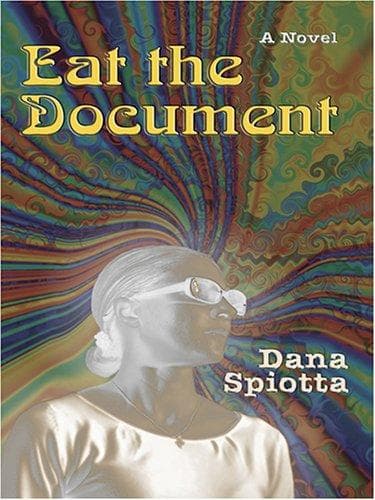
Book details and cover from Google Books.
Ready to read Eat the Document?
Get your copy on Amazon, or listen to it on Audible. We earn a commission if you buy through these links.