
We earn a commission if you buy through these links. Learn more
Drown
by Junot Díaz
Raw, funny, and sharp stories of Dominican immigrant boys in New Jersey and the Dominican Republic, told in a street-smart voice that makes poverty, longing, and family feel immediate.
What It's About
Drown is a 1996 collection of linked short stories, most narrated by Yunior, a young man who grows up in a working-class Dominican household in New Jersey and, in several stories, in the Dominican Republic. The stories move between childhood on the island and the cramped, often bruising life of a family adjusting to America. Some run only a few pages, and the collection hangs together through recurring characters and the same restless narrator.
Diaz writes in a voice that shifts easily between English, Spanish, and Dominican slang, and he trusts readers to catch meaning from context. The prose is punchy and profane, full of pop-culture references and comic exaggeration, but it turns sharp when the subject is a father's absence, a brother's violence, or the shame of being poor in a country that promised more. Reading it feels like being let into a crowded apartment where everyone is talking at once.
The pleasure is in the sentences and rhythm more than in plot. Expect fragments, abrupt cuts, and emotional turns that arrive without warning. It is not a comfortable book, and it asks you to sit with grief, masculinity, and sexual aggression rendered without tidy moral commentary.
Read this if you…
- Care more about voice and attitude than about plot
- Want an unsentimental look at immigrant family life in working-class New Jersey
- Have read The Brief Wondrous Life of Oscar Wao and want the rawer, earlier version of Diaz's world
Skip it if you…
- Need tidy stories with clear resolutions and redemptive endings
- Are put off by heavy profanity, graphic sexual content, or frequent violence
Key Ideas
- 1
Immigration as loss and reinvention
The stories show migration as something that costs families as much as it gives them. Parents work punishing jobs, children learn a new country faster than their elders, and the old home keeps pulling at everyone. Díaz is less interested in the success story than in what gets quietly lost along the way, including authority, language, and a sense of who you were supposed to become.
- 2
Masculinity shaped by poverty and absence
Many characters learn to be men from fathers who are gone, distant, or damaged, and from streets where toughness is currency. The book examines how bravado, humiliation, and desire combine into a way of behaving that hurts the people closest to the narrator. It does this without offering easy redemption, which is part of why it still feels honest.
- 3
Language as a border you cross daily
Switching between English, Spanish, and street slang is both a survival skill and a source of friction. The narrator often sounds funny and confident in one register and vulnerable in another. Díaz uses this code-switching not as decoration but as a way of showing identity being negotiated in real time, sentence by sentence.
- 4
The island as both longing and wound
The Dominican Republic appears as a place of memory, family, and inherited hardship rather than a postcard. Scenes there carry a different emotional weight than those in New Jersey, and the contrast between the two places shapes how the narrator understands home. The island is not idealized, and it is never fully left behind.
Limitations
The stories are uneven in intensity, and some readers find the narrator's treatment of women and his sexual behavior difficult to sit with, even when the book seems to be examining those flaws. Women characters often exist mainly as they relate to the narrator's desires and failures, so their inner lives get less room. The short form also means that many characters are sketched rather than fully developed. Some Spanish and slang goes untranslated, which can slow readers who are not familiar with it.
Questions Readers Ask
- Is Drown a novel or a short story collection?
- Drown is a short story collection, not a novel, although the stories share a narrator and recurring characters, so they connect in a loose way. Many are brief, and you can read one at a time. That format suits readers who like to dip in and out, but it also means emotional arcs unfold in fragments rather than through a single long plot.
- How does Drown compare with The Brief Wondrous Life of Oscar Wao?
- Oscar Wao is a longer, more structured novel with a broader historical sweep and more deliberate use of footnotes and genre references. Drown is looser, more immediate, and often more raw. If you enjoy Oscar Wao's voice, Drown gives you the same sensibility in smaller, sharper pieces, though it is less polished as a whole.
- Is Drown still worth reading today?
- Yes, for readers interested in immigrant fiction and in how a distinct American voice emerged in the 1990s. Some of its attitudes toward women and masculinity read as dated or troubling now, so it works best as a book to read critically and with some context rather than as a model to follow.
- Published
- 1996
- ISBN
- 9780571190638
- Difficulty
- intermediate
- Category
- Fiction
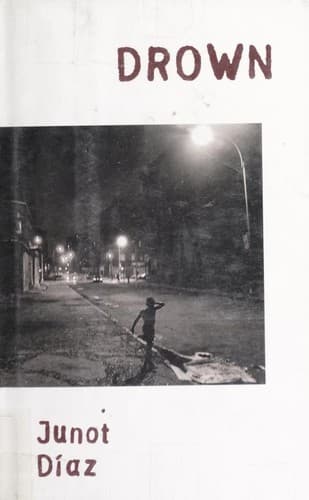
Book details and cover from Google Books.
Ready to read Drown?
Get your copy on Amazon, or listen to it on Audible. We earn a commission if you buy through these links.