
We earn a commission if you buy through these links. Learn more
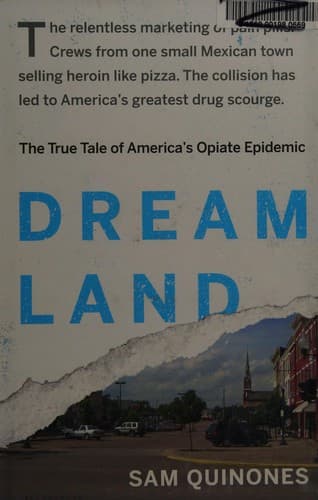
Dreamland
by Sam Quinones
Dreamland explains how prescription painkillers and cheap Mexican heroin reached small American towns, using vivid reporting that makes a sprawling public health disaster easy to follow.
What It's About
Dreamland is narrative nonfiction about the American opioid epidemic, told mostly through the small towns that were hit hardest, especially in the river valleys of southern Ohio. Quinones follows two threads that look unrelated at first: the aggressive marketing of prescription painkillers, OxyContin above all, and the arrival of inexpensive, potent black tar heroin from a cluster of villages in western Mexico. The book shows how the two came together and why the response kept lagging behind the damage.
The approach is reporting-driven and people-centered. Quinones moves between Ohio communities, the Mexican sources of the drug trade, and the offices where pharmaceutical strategy was set. The structure can feel loose at times, since the book is pulling together several investigations, but the storytelling is clear and the pace is brisk. He writes with evident sympathy for people who became addicted and with sharp skepticism toward institutions that profited or failed to act.
Reading it is grim but rarely numbing. The most useful takeaway is not a list of villains but a sense of how incentives, local economies, and policy blind spots combined into a crisis that many people saw coming in pieces without anyone seeing the whole. It rewards readers who want to understand the mechanics behind the headlines.
Read this if you…
- want a clear, reported explanation of how the opioid crisis spread beyond its medical origins
- are interested in how markets, marketing, and organized crime interact at the local level
- prefer narrative nonfiction built around people and places rather than dense policy analysis
Skip it if you…
- want a medical guide to addiction treatment or recovery, since that is not the book's focus
- need a tightly argued policy blueprint with detailed proposals for reform
Key Ideas
- 1
Prescription painkillers as a marketing product
Quinones details how OxyContin was promoted in ways that downplayed addiction risk, and how sales pressure reached doctors and patients. The book treats the epidemic's start as a business decision with predictable consequences, not a random medical accident.
- 2
Pill mills and the local economy of addiction
Clinics that dispensed large volumes of opioids with little oversight took root in struggling towns. Quinones shows how these operations became part of local life, drawing in patients, dealers, and sometimes the people who were supposed to police them.
- 3
Black tar heroin and a distribution network
The book traces how cheap, potent heroin from a small region of Mexico reached American markets through a decentralized network of sellers. Its operational detail about delivery and organization is one of the book's most distinctive contributions.
- 4
Why enforcement kept failing
Quinones argues that arresting individual dealers and doctors did little against a system that kept regenerating. Readers come away with a clearer sense of why supply-side responses struggled and why treatment and prevention were so hard to scale.
Limitations
Some readers find the book's narrative sprawling, moving between Ohio, Mexico, and corporate history in ways that can feel episodic. Critics also note that it leans on journalistic reconstruction and personal accounts, so readers who want rigorous statistical analysis or extended academic citation will need other sources. Because the epidemic has continued to evolve, especially with fentanyl, parts of the picture have aged, and the book is better read as a history of how the crisis took shape than as an up-to-date account of the current drug supply.
Questions Readers Ask
- Is Dreamland still relevant today?
- Yes, as a history. The book explains the origins of the opioid crisis, which still shapes prescribing, enforcement, and public debate. However, the drug supply has changed a great deal since it was written, with fentanyl now dominating many overdose deaths. Pair it with more recent reporting if you want the current picture.
- How does Dreamland compare to Dopesick?
- Both cover how the opioid crisis unfolded, but they differ in focus. Dreamland gives more attention to the drug trade and the Mexican supply chain alongside pharmaceutical marketing. Dopesick concentrates more on the corporate and legal story and on the people affected. Readers interested in the trafficking side will likely find Dreamland more distinctive.
- Who is this book best suited for?
- It suits general readers who want to understand how a public health emergency developed, including students, journalists, and people affected by addiction in their own communities. It is accessible without specialist background, though its heavy stream of names and places can take some attention to follow.
- Published
- 2015
- ISBN
- 9781620402504
- Difficulty
- beginner
- Category
- American Dream
Book details and cover from Google Books.
Ready to read Dreamland?
Get your copy on Amazon, or listen to it on Audible. We earn a commission if you buy through these links.