
We earn a commission if you buy through these links. Learn more
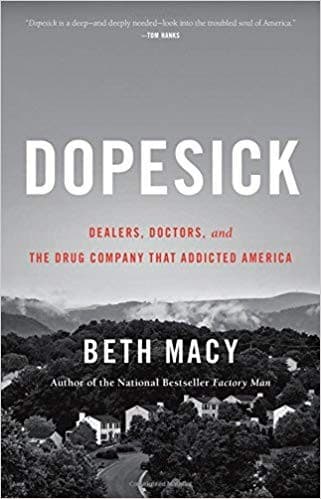
Dopesick
by Beth Macy
A reporter's patient, humane account of how OxyContin and the opioid crisis reshaped Appalachia, weaving families, doctors, and corporate conduct into one clear story.
What It's About
Dopesick is narrative nonfiction, not fiction, despite the category listed for it here. Beth Macy, a journalist who spent years reporting in Appalachia, tells how the opioid epidemic took hold in Virginia and the surrounding mountain communities. The book moves between people who were hurt by injuries and then by addiction, the doctors and pharmacists caught in the middle, law enforcement and treatment workers, and the executives at Purdue Pharma, the company that marketed OxyContin.
Her method is reported and patient. Macy builds scenes from interviews and documents, so the book reads closer to a long investigative feature than a policy report. The narrative shows how a prescription painkiller became a pathway to heroin and, later, to more dangerous synthetic opioids. The tone is angry where the facts warrant it but mostly restrained, which makes the grief land harder.
Expect a heavy read. The subject is painful, the cast of characters is large, and the legal and corporate threads demand attention. It suits readers who want to understand how the crisis happened and why so many communities were unprepared, more than readers looking for a single villain or a tidy list of fixes. Read it slowly and you will come away with a much more detailed picture of the forces behind the epidemic.
Read this if you…
- want a detailed, reported account of how the opioid crisis started and spread
- are interested in how corporate marketing and regulation interact in public health
- can handle emotionally difficult stories told with care and restraint
Skip it if you…
- want a quick overview or a book focused mainly on solutions and policy prescriptions
- prefer fiction or a lighter read, since this book is demanding and often grim
Key Ideas
- 1
Marketing shaped how painkillers were prescribed
Macy traces how OxyContin was promoted as a long-acting drug with a lower risk of abuse, and how sales tactics and that message spread through prescribers. The book makes clear that the crisis was not only a matter of individual bad choices but of a deliberate commercial push.
- 2
Economic decline set the stage
The epidemic struck hardest in places already struggling with lost industrial and coal jobs, limited health care, and chronic pain among workers. Macy shows how these conditions made pills an easy path for people who were already vulnerable.
- 3
Accountability arrived slowly and only partly
The book follows the legal reckoning, including criminal pleas, lawsuits, and settlements, and questions how much responsibility was ever fully assigned. Readers will leave with a sharper sense of why justice in cases this large tends to feel incomplete.
- 4
Personal stories carry the argument
Rather than relying on statistics alone, Macy grounds the policy history in specific families, patients, and recovery workers. This approach makes the human cost concrete and explains why stigma and shame kept many people from getting help.
Limitations
Macy's reporting centers on Virginia and Appalachia, so readers looking for urban patterns or a national overview will find gaps. Some critics want more analysis of policy alternatives and treatment models. Written in 2018, the book does not cover the later shift toward stimulants and newer synthetic drugs in depth, so it is best read alongside more recent reporting.
Questions Readers Ask
- Is Dopesick still relevant today?
- Yes, because the history it documents explains why the epidemic unfolded as it did. The book was published in 2018 and does not cover later drug trends in detail. Pairing it with newer reporting gives you the full arc, from prescription pills to the synthetic opioids that followed.
- How does Dopesick compare to Dreamland by Sam Quinones?
- Both cover the opioid epidemic in the American heartland, but they differ in focus. Dreamland centers on Portsmouth, Ohio, and the heroin distribution networks that expanded the crisis. Dopesick focuses more on Virginia and Appalachia and on the drug company's role, so readers often find them complementary.
- Published
- 2018
- ISBN
- 9791399074451
- Difficulty
- intermediate
- Category
- Fiction
Book details and cover from Google Books.
Ready to read Dopesick?
Get your copy on Amazon, or listen to it on Audible. We earn a commission if you buy through these links.