
We earn a commission if you buy through these links. Learn more
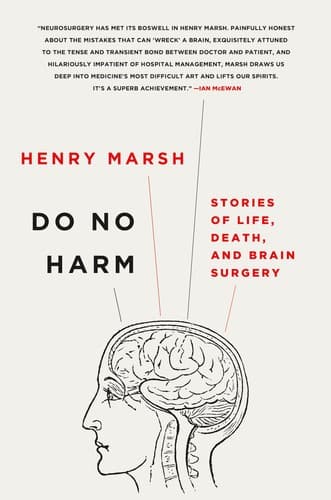
Do No Harm
Guide by the Books of the Day editors · Updated · How we write our guides
A candid memoir from a senior British neurosurgeon about operations that went wrong, the limits of medical certainty, and the moral weight of deciding when to operate.
What Creators Say About Do No Harm
2 creators reviewed Do No Harm on YouTube in 2018, with 10.8K views between them. Their opinions are their own; we picked these reviews, we didn't write them.
What It's About
Do No Harm is a memoir by Henry Marsh, a senior neurosurgeon who spent decades operating on brains in a major London hospital. Rather than a tidy story of triumph, the book is built around difficult cases, the patients he could not help, and the doubts that stayed with him after he went home. Marsh writes as someone who has lived with irreversible decisions, and the book is at its strongest when he describes the moment of choosing whether to cut.
The style is conversational, blunt and often wry. Chapters move between scenes in the operating theatre, memories of training, and reflections on how medicine is practised inside a stretched health service. He does not hide his self-doubt or his frustration with hierarchy and bureaucracy, and he is frank about how surgeons can be wrong, and how little anyone can know about a particular tumour until it is opened.
Reading it feels like sitting with a clinician who trusts you with the unglamorous parts of the job. It is emotionally direct without being sentimental, and short enough to finish in a few sittings. Some passages are harrowing, so expect to stop and think. It is a book about judgment, humility and the ethics of medicine more than about surgical technique.
Read this if you…
- are curious about what it is really like to make high-stakes medical decisions
- want an honest account of medical failure rather than a success story
- enjoy memoirs that combine personal reflection with plain, direct writing
Skip it if you…
- want a detailed, technical explanation of neurosurgical procedures
- prefer uplifting stories where the doctor's skill always wins through
Key Ideas
- 1
Irreversible decisions under uncertainty
Marsh argues that neurosurgery is a field where the brain is never fully known in advance, even with good scans. Surgeons must act on probabilities, and a good decision can still end badly. The book shows how that gap between what is known and what is hoped for shapes every operation and every conversation with a patient's family.
- 2
The surgeon's fallibility and honesty
A recurring theme is the refusal to pretend infallibility. Marsh describes errors, near misses and outcomes he did not expect, and he treats admitting them as part of the job rather than a personal failure. For readers outside medicine, this is a rare look at how professionals talk to themselves about mistakes.
- 3
When to operate and when not to
Some of the most affecting material concerns patients for whom surgery would do more harm than good, or might only extend life at a cost to its quality. Marsh questions the pull toward intervention that can affect surgeons and patients alike, and he asks what doing no harm really requires in practice.
- 4
Medicine as a system under strain
Beyond the operating room, the book looks at hospital hierarchy, funding pressures and the way institutions can shape clinical choices. Marsh's criticism is specific rather than abstract, and it gives the memoir a broader concern with how the health service works for the people inside it and the people it treats.
Limitations
The book is one surgeon's perspective, shaped by his particular career in a particular health system, and it can read as self-absorbed to some readers who want more on patients' experiences. Some critics find the frankness uneven, with reflections on the NHS that lean heavily on personal opinion. Because it is a memoir, it does not offer a systematic account of ethics or policy, and readers looking for research-based evidence on surgical outcomes will need other sources.
Questions Readers Ask
- Is Do No Harm suitable for readers with no medical background?
- Yes. Marsh explains surgical problems in plain language, and the book is written for a general audience. Medical details appear when they matter to the story, and the emotional and ethical material does not depend on technical knowledge. Some readers may find the descriptions of operations graphic, so it helps to be prepared for that.
- How does it compare with Atul Gawande's Being Mortal?
- Both books tackle medicine's limits and the question of when intervention helps. Gawande writes more as an essayist focused on end-of-life care and wider policy, while Marsh writes from inside the operating theatre and draws on his own cases. If you want the clinical texture of surgery and personal confession, Marsh is the closer read.
- Published
- 2014
- ISBN
- 9781250065810
- Difficulty
- beginner
- Category
- Biographies
Book details and cover from Google Books.
Ready to read Do No Harm?
Get your copy on Amazon, or listen to it on Audible. We earn a commission if you buy through these links.