
We earn a commission if you buy through these links. Learn more
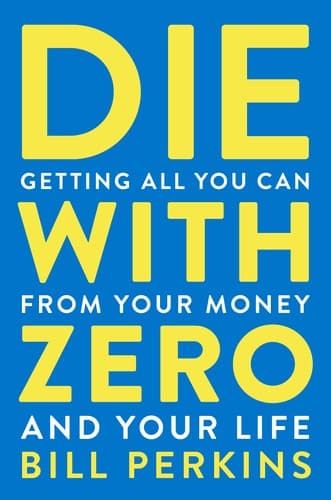
Die with Zero
by Bill Perkins
Guide by the Books of the Day editors · Updated · How we write our guides
Perkins makes a provocative case that money matters for the experiences it buys, so saving too much and leaving it unspent is a real loss. It's a useful jolt for anyone who has never priced their own time.
What Creators Say About Die with Zero
2 creators reviewed Die with Zero on YouTube between 2023 and 2026, with 379.4K views between them. Their opinions are their own; we picked these reviews, we didn't write them.
What It's About
Die with Zero is a personal finance book built on a deliberate reversal of standard advice. Instead of treating savings as the goal, Perkins argues that money is a tool for living, and that dying with a large balance means some experiences, gifts, and years of enjoyment went unpurchased. The book asks readers to plan their finances as a path from now until the end of life, with the aim of spending down their resources rather than hoarding them.
The approach is practical rather than academic. Perkins mixes plain reasoning about time, health, and money with worked examples and a framework for deciding which expenses are worth making sooner rather than later. The tone is brisk and conversational, and the book reads quickly, though some passages restate the central argument in different forms.
Reading it feels less like studying a retirement handbook and more like being pushed to reconsider your priorities. It works best as a provocation. Even readers who reject the extreme version will likely come away with a sharper sense of what they are saving for and when they plan to use it.
Read this if you…
- are close to retirement and suspect you are saving more than you will ever use
- have a comfortable financial base and want to think harder about how to spend it
- want a short, direct book that challenges your assumptions about money and time
Skip it if you…
- lack an emergency fund or steady income, since the advice assumes a secure starting point
- want detailed investment strategy, tax guidance, or a step-by-step retirement plan
Key Ideas
- 1
Money is a means, not the score
The book's central claim is that wealth only matters for what it enables. A rising account balance is not in itself a success. Perkins pushes readers to ask what each dollar is actually for, and to notice when saving has quietly replaced living as the goal.
- 2
Time and health are finite resources
Perkins treats the years when you can still enjoy travel, physical activity, and shared experiences as limited. That makes the timing of spending as important as the amount. The argument is that an experience has a value that depends on when you can still fully enjoy it.
- 3
Spending earlier often buys more life
A recurring theme is that spending on experiences while younger and healthier can produce more satisfaction than spending the same money later. The book uses this to challenge the habit of deferring pleasure indefinitely in the name of future security.
- 4
Giving and leaving money are choices
Perkins asks readers to weigh the value of helping family or causes during their lifetime against passing money on through an inheritance. The point is not that generosity is wrong, but that the timing and form of giving deserve the same deliberate thought as any other spending.
Limitations
The central argument rests on a comfortable baseline, and critics note that it can read as advice for people who already have options. It says less about emergency savings, healthcare costs, supporting dependents, or the risk of outliving resources. Some of its numerical framing depends on assumptions about life expectancy and future spending that readers should test against their own circumstances. Readers looking for technical financial planning will need other sources.
Questions Readers Ask
- Is Die with Zero still relevant?
- Yes, the core question of how to balance saving with living remains widely debated, and the book's emphasis on experience over accumulation still resonates. Its specific numerical assumptions may need updating for current interest rates, inflation, and health costs, so treat its framework as a way of thinking rather than a precise plan.
- Who is Die with Zero best for?
- It suits readers who already have a reasonable financial cushion and feel they are postponing experiences out of habit. Younger readers with debt or thin savings will get less from it. It works well alongside a more conventional planning book that covers risk, budgeting, and investing.
- Published
- 2020
- ISBN
- 9780358310280
- Difficulty
- beginner
- Category
- Finance
Book details and cover from Google Books.
Ready to read Die with Zero?
Get your copy on Amazon, or listen to it on Audible. We earn a commission if you buy through these links.