
We earn a commission if you buy through these links. Learn more
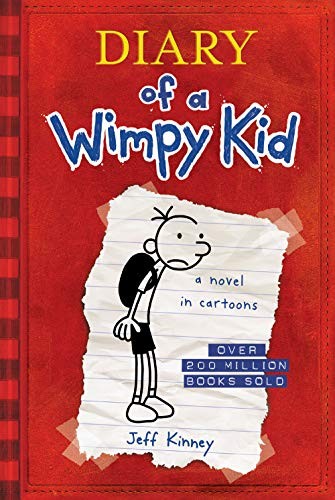
Diary of a Wimpy Kid
by Jeff Kinney
Guide by the Books of the Day editors · Updated · How we write our guides
Jeff Kinney's bestselling comic-diary lets an overconfident middle schooler undermine himself on every page, making it a fast, funny read for kids and the adults who share it.
What Creators Say About Diary of a Wimpy Kid
2 creators reviewed Diary of a Wimpy Kid on YouTube between 2024 and 2026, with 687.6K views between them. Their opinions are their own; we picked these reviews, we didn't write them.
What It's About
Diary of a Wimpy Kid is a middle-grade novel written as the journal of Greg Heffley, a middle school boy who is certain he is more mature and capable than the people around him. Kinney's pages are mostly short lines of handwritten text paired with loose cartoon sketches, so a single spread can be read in a minute or two and the whole book in an afternoon.
The humor comes from the gap between how Greg sees himself and how everyone else sees him. He schemes, rationalizes, and misreads his own failures, and the reader is placed in the position of noticing what he cannot. Life at home with his parents and older brother, along with his friendship with Rowley at school, gives the book a steady rhythm of small embarrassments that feel recognizable even when they are exaggerated.
The experience is quick, conversational, and dry. It reads more like flipping through a notebook someone left lying around than like a traditional novel, and it rewards attention to the drawings as much as the words. Adults who pick it up often finish in one sitting, and it works well as a shared read with a child who is hesitant about longer books.
Read this if you…
- enjoy dry, observational humor about school and family life
- want a fast, easy read for a reluctant young reader
- are looking for a light entry point into middle-grade fiction
Skip it if you…
- want a plot with sustained momentum, suspense, or a clear arc
- expect a book with dense prose, deep literary craft, or a direct moral lesson
Key Ideas
- 1
An unreliable narrator as the engine of humor
Greg believes he is clever and fair, but his entries keep revealing the opposite. The comedy lives in the distance between his self-assessment and what the reader sees happening. Kids often enjoy spotting this gap before the narrator does, which gives them a sense of being in on the joke.
- 2
Wanting to seem grown up
Much of the book circles around the desire to be taken seriously by peers, teachers, and family. Greg's schemes to gain status or avoid blame are small and specific, which makes them relatable. The book treats this need with affection rather than contempt, even while it shows how badly the plans go.
- 3
Family and friendship as the emotional core
Beneath the gags, the book is interested in the everyday tensions of siblings, parents, and a close but sometimes strained friendship. These relationships give the episodes weight and keep the humor from being purely situational. Readers looking for warmth alongside the jokes will find it here.
- 4
Sketches doing half the storytelling
The drawings are not decoration. They carry tone, reaction, and sometimes information that the text leaves out, so the book works as a hybrid of prose and comic art. This makes it accessible to reluctant readers and gives adults a reason to look closely at each page.
Limitations
Critics have pointed out that Greg is often unlikable, and that some of the humor depends on mean-spirited situations and stereotyped portrayals of family members. The book is also thin on description and vocabulary, which is part of its appeal for young readers but may frustrate those wanting richer language. Because it became a large commercial franchise with many sequels, adaptations, and spin-offs, quality varies across the series, and the first book is the one most readers find the strongest.
Questions Readers Ask
- Who is Diary of a Wimpy Kid really written for?
- It is aimed at middle-grade readers, roughly ages eight to twelve, and it is a common choice for kids who have not yet developed a love of reading. Adults also enjoy it, especially parents reading alongside a child, because the humor works on more than one level. It is short and visual, so it suits both quick reads and reluctant readers.
- How does it compare to Dork Diaries or Captain Underpants?
- Dork Diaries uses a similar diary format but leans more toward friendship drama and a girl-focused voice. Captain Underpants is more slapstick and absurd, with much less focus on the narrator's self-image. Diary of a Wimpy Kid sits between them, with dry, character-based humor and a protagonist whose blind spots drive most of the laughs.
- Published
- 2007
- ISBN
- 9781613128848
- Difficulty
- beginner
- Category
- Education
Book details and cover from Google Books.
Ready to read Diary of a Wimpy Kid?
Get your copy on Amazon, or listen to it on Audible. We earn a commission if you buy through these links.