
We earn a commission if you buy through these links. Learn more
Dept of Speculation
by Jenny Offill
Guide by the Books of the Day editors · Updated · How we write our guides
Offill's short, fragmented novel turns a marriage's breakdown into a sharp, funny, and quietly devastating study of love, anxiety, and how a mind holds together under strain.
What Creators Say About Dept of Speculation
2 creators reviewed Dept of Speculation on YouTube between 2016 and 2026, with 2K views between them. Their opinions are their own; we picked these reviews, we didn't write them.
What It's About
Dept of Speculation follows an unnamed narrator through the early years of her marriage to a writer, from the excitement of new love through the strains of pregnancy, new parenthood, and a crisis of trust. The book does not present this as a continuous story. It arrives as a series of brief entries, some only a sentence or two, some a paragraph, arranged more by emotional logic than by calendar. Readers who expect scenes and dialogue will need a few pages to adjust, but the rhythm soon becomes its own pleasure.
The prose is dry, precise, and often wry. Offill moves between domestic detail and large questions about art, fidelity, and what it means to make a life with someone, and she is willing to be funny about the narrator's own worst habits of worry. Scraps of other writers' thinking and everyday observations appear alongside the narrator's own, which gives the book the feel of a notebook kept by someone who reads constantly and cannot stop noticing things.
Reading it is an intense, compressed experience. It takes an evening or two, and it asks you to keep track of what the fragments imply rather than what they state outright. Many readers find it moves them more than a conventional novel of the same subject would, because so much is left for them to assemble.
Read this if you…
- want a short novel that reads almost like poetry and rewards slow attention
- are interested in marriage, motherhood, and creative work seen through an anxious, observant mind
- enjoy experimental form as long as it serves an emotional purpose
Skip it if you…
- need a conventional plot with scenes, steady momentum, and clear turning points
- find clipped, aphoristic prose tiring over a full book
Key Ideas
- 1
Fragments as a way of feeling
The short, numbered-feeling entries mirror a mind that cannot hold a story still. Gaps between entries carry as much weight as the text, so the reader feels the narrator's disorientation instead of only hearing about it. The form makes the reader do some of the emotional work of connecting dots.
- 2
Speculation as the central anxiety
The title points to the narrator's habit of imagining outcomes, reading meaning into small signs, and building theories about her husband's inner life. The book shows how speculation can feel like intelligence and still be a form of fear. It asks whether any intimate relationship can escape this kind of guessing.
- 3
Motherhood and creative life in tension
Pregnancy and early parenthood pull against the narrator's own sense of herself as a thinker and maker. The book treats the loss of time, sleep, and attention with a candor that is neither sentimental nor bitter. It is one of the more honest accounts of how caring for a child reshapes a creative mind.
- 4
Humor that sits beside grief
Offill keeps the tone light enough that the pain lands with more force. Jokes, odd observations, and self-mockery appear in the same breath as genuine distress. This balance is a large part of why the book feels true rather than melodramatic.
Limitations
The fragmented structure is the book's great strength and also its main obstacle. Readers who want to be drawn into character and setting may find the narrator hard to get close to, since much of her inner life arrives in quick glimpses. Some critics have felt the wit can become a kind of armor, and that certain emotional beats are offered more as impressions than as fully developed scenes. The book is also firmly rooted in a particular milieu of educated, mostly urban, creative professionals, which some readers will find narrow. It does not offer a wide social view, and it is not interested in being one.
Questions Readers Ask
- Is Dept of Speculation a good first novel by Jenny Offill?
- It can be, but it is more demanding than a typical debut-style read. Its short entries are easy to read one by one, yet they ask you to follow emotional threads across pages. If you are new to experimental fiction, you may find it rewarding if you read it in a couple of sittings rather than in small bites.
- How does it compare to Offill's other work or to Ben Lerner-style autofiction?
- It shares with much autofiction an interest in a narrator who is a writer and who examines her own mind. Offill's version is more compressed and more openly funny about its own anxieties. If you like the blend of essay, diary, and fiction in that tradition, this book will likely suit you, though it is leaner than most novels in that vein.
- Is the book still relevant today?
- Its concerns about trust, domestic labor, and the strain of raising children while trying to work remain widely recognized. The fragmented, digressive style also still feels contemporary. Readers may find the specific details of the narrator's milieu dated in places, but the emotional logic of the book has not faded much.
- Published
- 2014
- ISBN
- 9781847088734
- Difficulty
- intermediate
- Category
- Fiction
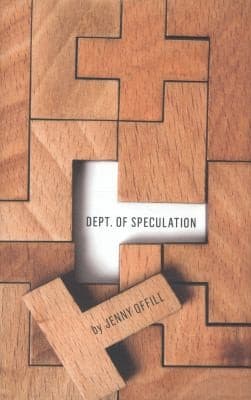
Book details and cover from Google Books.
Ready to read Dept of Speculation?
Get your copy on Amazon, or listen to it on Audible. We earn a commission if you buy through these links.