
We earn a commission if you buy through these links. Learn more
Demon Copperhead
Guide by the Books of the Day editors · Updated · How we write our guides
A Pulitzer-winning reimagining of David Copperfield in a fierce Appalachian voice, and a hard, humane look at foster care and the opioid crisis.
What Creators Say About Demon Copperhead
2 creators reviewed Demon Copperhead on YouTube in 2023, with 118.7K views between them. Their opinions are their own; we picked these reviews, we didn't write them.
What It's About
Demon Copperhead takes the bones of Dickens's David Copperfield and moves them to Lee County, a corner of southwest Virginia where coal work has dried up and painkillers filled the gap. Kingsolver's narrator is Damon Fields Copperhead, born to a young mother after his father has died, who grows up passed between relatives, a strained foster system, and rough households. The book follows his life from childhood into young adulthood, with a Dickensian cast of benefactors, rivals, and near-family figures reshaped for a present-day rural setting.
The defining feature is the voice. Demon tells his story in a first-person idiom that is wry, bruised, and quick, full of Appalachian speech and sharp observations about class, school, and the adults who fail him. Kingsolver lets the rhythm of his talk carry much of the emotional weight, so the book reads more like being told a story by someone who has lived it than like a historical novel. Its length rewards patience, and the middle stretches can feel slow as the hardships pile up.
Expect a book that is angry about how institutions treat poor kids and also funny in places. It is not a grim checklist of misery, because Demon's stubbornness and loyalty keep it alive. Reading it is an immersive and sometimes uncomfortable experience, and it asks you to sit with a community that is often reduced to shorthand in the news.
Read this if you…
- want a long, immersive novel with a strong first-person voice
- are interested in rural America, class, and the opioid crisis
- enjoy Dickens or want a modern take on a classic with a social conscience
Skip it if you…
- want a light, fast read or a plot-driven thriller
- find graphic depictions of abuse, addiction, and poverty hard to sit with
Key Ideas
- 1
Dickens transplanted to Appalachia
The Copperfield framework supplies familiar relationships and turning points, but Kingsolver maps them onto a rural world of trailers, clinics, and tight-knit grudges. Readers who know the original will enjoy the parallels, yet the book stands on its own. The departures from Dickens are where the author makes her argument about the present day.
- 2
Poverty as a system, not a personal failure
The novel shows how foster care, schools, employers, and the pharmaceutical economy shape what a child can become. Demon makes poor choices, and the book does not excuse them, but it places them inside the pressures that produced them. The result is a portrait of structural neglect told through one stubborn kid's experience.
- 3
The opioid crisis seen from the ground
Addiction arrives in this book through relatives, neighbors, and friends rather than statistics or policy debates. Kingsolver shows how prescriptions, dependence, and loss move through households and a town over years. The approach gives the crisis human scale, which can be more affecting than any summary of its toll.
- 4
A voice that carries the book
Demon's idiom is the engine of the novel. His humor and candor make hard material bearable, and his vivid, sometimes profane observations give the setting texture. Some readers will tire of the dialect over hundreds of pages, but many find the narration the best reason to keep going.
- 5
Loyalty and the families we choose
Much of the emotional core lies in the bonds between Demon and the unlikely people who take him in, teach him, or stand by him. These relationships are messy and often unequal, but they show how care can come from outside blood ties. The book treats community as something built through effort rather than inherited.
Limitations
Some readers find the length uneven, with the middle sections repeating hardship and the book's politics arriving a little heavily. The dialect-heavy narration can be tiring across hundreds of pages. Others question how well the portrayal of Appalachia lands, and that debate is worth knowing about before you start. Readers hoping for a close retelling of Dickens's plot may find the departures significant. It is also a novel about trauma, so it is not a book to pick up casually.
Questions Readers Ask
- Do I need to have read David Copperfield first?
- No. The book is written to stand alone, and Demon's story makes sense without any Dickens background. Readers who know the original will catch the parallels, which add a layer of pleasure, but the characters and events are reshaped for a modern rural setting. Even Dickens fans will encounter surprises along the way.
- Is it still relevant, given how the opioid crisis has changed?
- The book is anchored in the opioid era that reshaped Appalachia over the past two decades, and it still reads as current because the underlying issues of addiction, poverty, and strain on foster care persist. It is less a news story than a portrait of how those forces land on one family and one town.
- Published
- 2022
- ISBN
- 9780571376490
- Difficulty
- intermediate
- Category
- Fiction
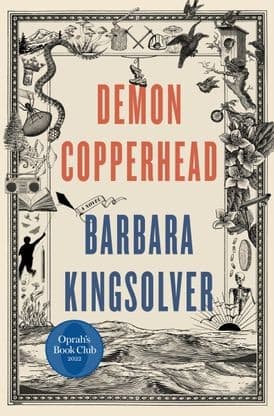
Book details and cover from Google Books.
Ready to read Demon Copperhead?
Get your copy on Amazon, or listen to it on Audible. We earn a commission if you buy through these links.