
We earn a commission if you buy through these links. Learn more
Dead man walking
On screen: Dead Man Walking (film, 1995)
Sister Helen Prejean's account of becoming a spiritual adviser to a condemned man in Louisiana is a direct, unsparing look at capital punishment from the inside, told without the usual distance.
What It's About
Dead Man Walking, published in 1993, is Sister Helen Prejean's account of becoming a spiritual adviser to men on Louisiana's death row. It begins with a letter from a condemned inmate and follows her through the visits, correspondence, court proceedings, and appeals that surround a case. The book is built from her own experience, so it reads more like a witness's testimony than a textbook on the death penalty.
What sets it apart is that Prejean does not stop at the prisoner. She also meets the families of the people who were murdered, and she sits with them as well as with the men she is counseling. She describes attending executions, which gives the book its most harrowing passages. Her prose is plain and direct, closer to the account of a working nun than to a political essay, although her opposition to capital punishment is clear from the start.
Reading it feels like watching one person's conscience being tested in public. It is short and moves quickly, and the pages on the execution itself are hard to forget. Prejean is not a neutral narrator and says so openly about her faith and her doubts. Expect a book that asks hard questions about guilt, mercy, and what the state is doing in your name.
Read this if you…
- want a firsthand account of capital punishment rather than a statistical overview
- are interested in how faith and moral conviction hold up under hard, institutional pressure
- can handle painful, detailed material and want to think through questions of guilt and mercy
Skip it if you…
- want a balanced, neutral analysis of the death penalty debate, since Prejean is clearly arguing a position
- need a light or uplifting read, because much of the book is grim and heavy
Key Ideas
- 1
Treating the condemned as a whole person
Prejean insists that a man on death row is more than the worst thing he did. She shows the slow work of building a relationship with someone the justice system has already written off, including his fear, shame, and attempts to face what he has done. The book makes the case that this kind of contact is a moral act in itself, not a courtesy extended to someone who doesn't deserve it.
- 2
The grief of victims' families
The book refuses to treat murder victims' relatives as props in an argument about the death penalty. Prejean records their anger, their longing for closure, and their doubts about whether an execution will give them any peace. This material complicates the usual debate, because it shows that the people most affected by a killing do not agree about what justice should look like.
- 3
Witnessing an execution firsthand
Prejean describes what happens in the execution chamber, moving the abstract idea of state killing into specific, physical detail. These passages are the book's strongest argument, not because they are graphic for effect, but because they make it hard to accept the process as routine. Readers who expect a policy discussion will find something more immediate here.
- 4
Faith tested by the justice system
Prejean's Catholic faith drives the book, but it is not a devotional text. She wrestles with the gap between Christian teaching about mercy and forgiveness and the institutions that carry out executions in its name. Her struggle is honest and sometimes uncomfortable, and it gives the book an emotional center that a purely political argument would lack.
Limitations
Prejean writes from one perspective and is open about it, so readers who support capital punishment may find the book one-sided. Its focus on Louisiana and on a small number of cases means it does not survey the national picture or the legal history in depth. Some readers also find the narrative shaped by its author's personal journey, which can make certain passages feel more about her growth than about the wider system.
Questions Readers Ask
- Is Dead Man Walking still relevant today?
- Yes. The death penalty remains legal in many U.S. states, and the book's questions about the fairness of appeals, the role of clergy, and the impact on victims' families are still debated. The specific legal details reflect the early 1980s and 1990s, so readers may want to look up current developments alongside the book.
- How does it compare to the film adaptation?
- The 1995 film based on the book is well known and shares its central story. The book offers more of Prejean's inner reflections, her faith, and her interactions with the families, which the film can only suggest. Readers who have seen the movie will find the book more detailed and less focused on dramatic moments.
- Published
- 1993
- ISBN
- 9780679751311
- Difficulty
- beginner
- Category
- Biographies
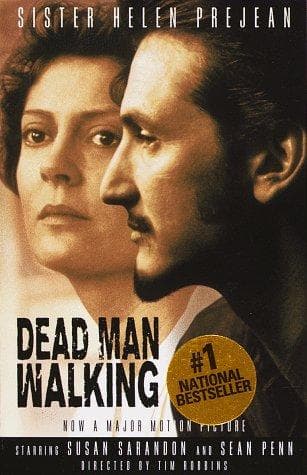
Book details and cover from Google Books.
Ready to read Dead man walking?
Get your copy on Amazon, or listen to it on Audible. We earn a commission if you buy through these links.