
We earn a commission if you buy through these links. Learn more
Creativity, Inc.
Guide by the Books of the Day editors · Updated · How we write our guides
Pixar co-founder Ed Catmull explains how his studio kept films original by building candor, peer review, and tolerance for early failure into its management.
What Creators Say About Creativity, Inc.
2 creators reviewed Creativity, Inc. on YouTube between 2016 and 2020, with 17.3K views between them. Their opinions are their own; we picked these reviews, we didn't write them.
What It's About
Creativity, Inc. is Ed Catmull's account of how Pixar came to be, and of the management habits he built to keep a film studio creatively healthy as it grew. Catmull co-founded Pixar and later helped lead Disney's animation studios after the 2006 acquisition, so the book draws on decades of making features rather than on theory alone. Co-written with Amy Wallace, it moves between studio history, specific productions, and the practical systems Catmull developed.
The book's central argument is that the forces working against creativity are predictable and can be countered. Catmull describes the Braintrust, a standing group of directors who give candid feedback on films in progress, and other routines meant to separate a person's worth from the quality of their current work. He is open about early drafts being rough and about the discomfort of hearing that something isn't working.
Reading it feels like sitting across from a thoughtful executive who is willing to admit mistakes. The tone is earnest and conversational, with fewer frameworks and more stories than typical business books. Some passages feel like a company history, which suits readers curious about Pixar and less so readers who want a tight list of takeaways.
Read this if you…
- run or work inside a creative team and want concrete examples of feedback and review systems
- are curious about how Pixar made its films and how its management culture developed
- prefer stories and practical examples over abstract models of leadership
Skip it if you…
- want a short, tightly structured list of management tips you can apply tomorrow
- are looking for a critical outsider's analysis of Pixar or the Disney acquisition
Key Ideas
- 1
Early drafts are supposed to be bad
Catmull argues that a film's first versions are almost always flawed, and that teams should expect this rather than treat it as a sign of failure. The useful question is whether the people involved can see the problems clearly and fix them. He presents early ugliness as a normal stage of making something good, and says that pretending otherwise leads to hiding problems until they are expensive to solve.
- 2
Candor needs a structure to work
Telling people the truth about their work is hard, especially when hierarchy and friendship are involved. Catmull describes how Pixar built forums where directors could give blunt notes without the note-giver taking over the project. The point is not that honesty is enough, but that candor has to be designed into how meetings, reviews, and decisions happen.
- 3
Protect the process, not the plan
Catmull distinguishes between plans, which go stale as the work reveals new facts, and the process that lets a team respond to them. He argues that managers should resist treating schedules and original concepts as sacred. Staying flexible, he suggests, is what allows a studio to respond to surprises instead of shipping something it already knows is weak.
- 4
Managers should expect and handle the unexpected
Catmull writes about the random events, both helpful and damaging, that shape creative projects. He suggests that leaders should watch for problems that come from how people relate to each other rather than from the work itself. His examples show how a leader's attention and restraint can matter more than any single decision about a film.
Limitations
Because Catmull was closely involved in the company he describes, the book reads as an insider's account and tends to present Pixar's culture in a favorable light. Readers may want more critical perspectives on the studio's labor practices, its relationship with Disney, or how well its methods translate to organizations without a similar talent base and budget. Some chapters lean on anecdote more than evidence, and the advice is most vivid when tied to film production, which can make it harder to apply to other fields.
Questions Readers Ask
- Is Creativity, Inc. only useful for people in animation or film?
- No. The specific examples come from Pixar, but the core problems of feedback, risk, and team trust show up in software, design, research, and many other fields. Readers outside entertainment often find the candor and review ideas easiest to adapt. Expect to translate the film-specific details into your own work rather than copying them directly.
- How does it compare to Radical Candor by Kim Scott?
- Both cover honest feedback, but Radical Candor offers a more compact framework and is aimed at everyday managers. Creativity, Inc. is more narrative and centered on one studio's long history. Pick Radical Candor if you want practical tools, and Creativity, Inc. if you want to see how a culture of candor was built over many years.
- Published
- 2001
- ISBN
- 9781448126286
- Difficulty
- beginner
- Category
- Business
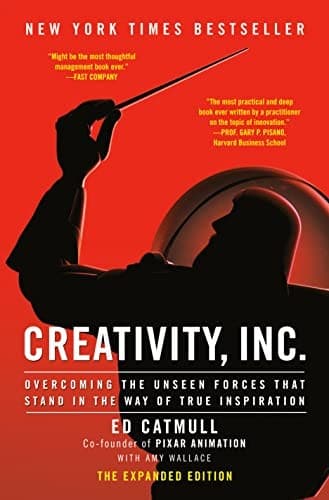
Book details and cover from Google Books.
Ready to read Creativity, Inc.?
Get your copy on Amazon, or listen to it on Audible. We earn a commission if you buy through these links.